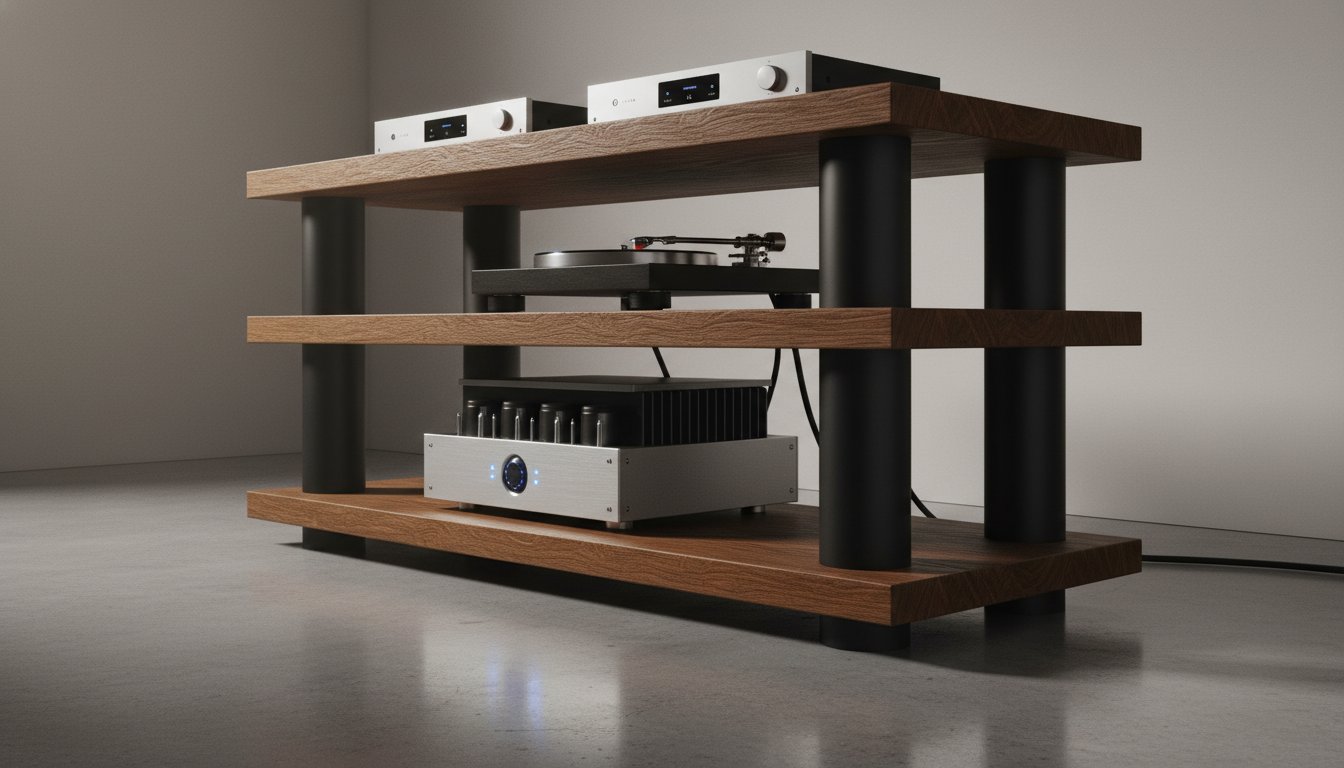
What if the most critical component in your high-fidelity system doesn't have a power cord, a DAC chip, or a single vacuum tube? It's a common realization for many who find their world-class gear hindered by muddy bass or a turntable that skips at the slightest footfall. You've likely spent years curating your signal path, yet a vibrating, enclosed shelf can easily choke the life out of your music. Selecting a dedicated audiophile rack isn't just about storage; it's about providing a silent, vibration-free foundation where your equipment can truly perform.
We believe your listening room should be a sanctuary of both performance and artisanal beauty. This guide will help you choose a foundation that serves as a precision-tuned component, eliminating resonance and elevating your system’s acoustic clarity. We'll explore the vital role of natural materials in heat dissipation and vibration control, ensuring your setup remains authentic and visually stunning. Discover how to move beyond basic furniture to a handcrafted solution where sound and style are one.
Key Takeaways
- Learn how mechanical resonance and micro-vibrations raise your system's noise floor, masking the fine details of your favorite recordings.
- Understand why natural hardwoods like Walnut and Ash provide superior damping properties compared to generic MDF or metal alternatives.
- Master the essentials of thermal management and weight capacity to ensure your high-end amplifiers remain cool and structurally secure.
- Discover how to select an audiophile rack that utilizes precision isolation accessories like spikes and platforms to drain unwanted energy.
- Find the perfect balance between technical performance and artisanal style to create a stunning visual centerpiece for your listening sanctuary.
What is an Audiophile Rack? Beyond Equipment Storage
Think of your audio system as a high-performance engine. You wouldn't mount a precision-engineered motor on a flimsy wooden pallet and expect it to run without vibration. In the world of high-fidelity audio, an audiophile rack serves as that critical mounting point. It's a specialized support system designed to manage mechanical resonance rather than just a place to stack your gear. By treating the rack as a foundational component, you ensure that your electronics operate in a state of acoustic grace.
For any enthusiast of high-fidelity sound reproduction, the ultimate goal is a lower noise floor. This isn't just about the hiss from your speakers; it's about the microscopic vibrations that cloud the signal. When your equipment sits on a standard shelf, it's subject to micro-vibrations that interfere with sensitive circuitry and turntable needles. A dedicated audiophile rack acts as a filter, separating the music from the mechanical chaos of the room.
To better understand why the foundation of your system matters so much, watch this helpful video:
The Role of Vibration Management
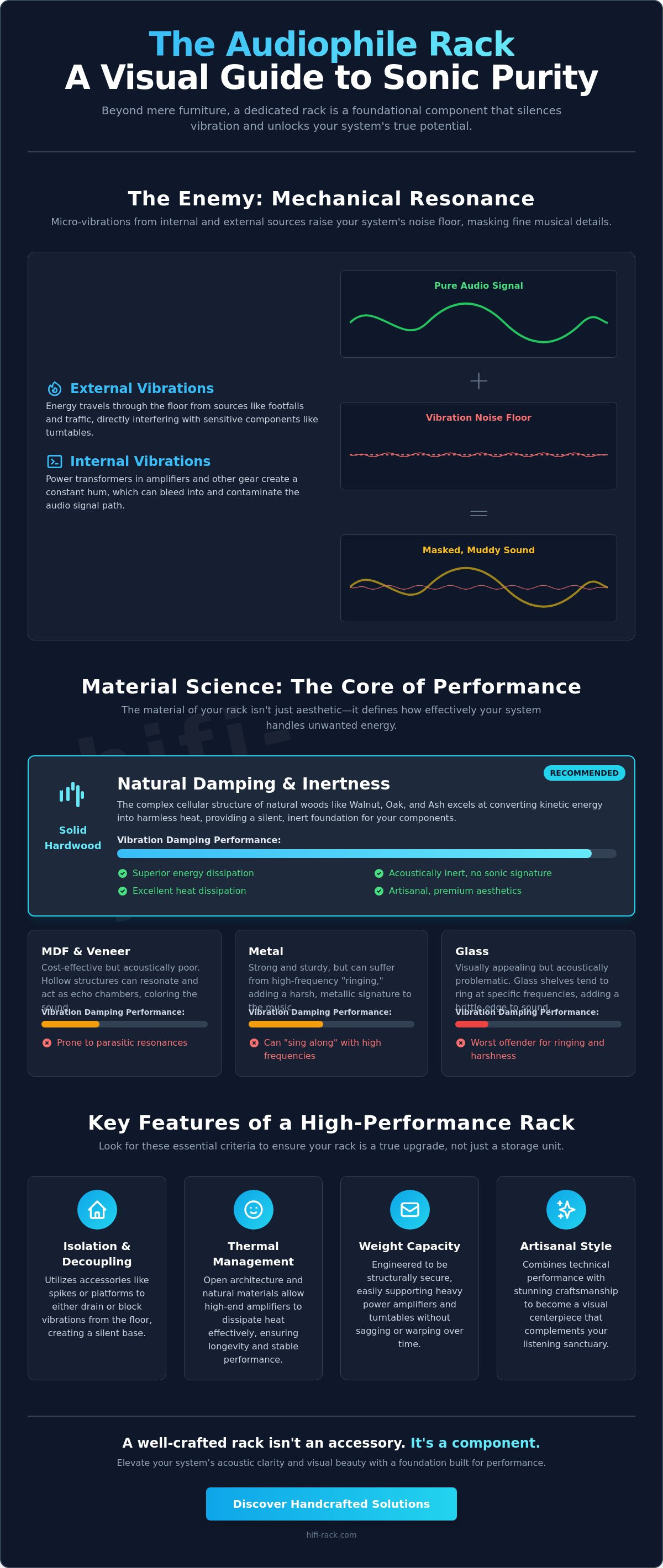
Vibrations enter your system from two directions. External forces, such as heavy footfalls on a hardwood floor or low-frequency traffic rumble from outside, travel through the floor and up into your turntable's stylus. Internal forces are just as damaging. The power transformers inside your amplifiers create a subtle but constant 50 or 60Hz hum. Without proper management, this energy bleeds into other sensitive components.
Effective racks use two primary strategies: damping and isolation. Damping involves using materials that absorb and dissipate kinetic energy as heat. Isolation, often achieved through decoupling, prevents the transfer of energy between the floor and the rack. Whether you choose to couple your rack to the floor with spikes to "drain" energy or decouple it with soft materials to block it, the goal remains a silent platform.
Why Standard Furniture Fails
Mass-market furniture is built for cost and aesthetics, not acoustics. Hollow cabinets and thin shelves often act as echo chambers, amplifying certain frequencies and coloring the sound of your system. Glass shelves are particularly problematic; they tend to "ring" at specific high frequencies, adding a harsh, metallic edge to the music. Thin metal supports can behave similarly, singing along with your speakers in a way that distorts the original recording.
Authentic listening requires a structure that remains inert. When you move away from veneers and hollow cores toward handcrafted solid wood solutions, you eliminate these parasitic resonances. A well-crafted rack doesn't just hold your equipment. It sets it free to sound exactly as the engineer intended.
Solid Hardwood vs. MDF and Metal: The Material Science
Material choice defines the soul of your audiophile rack. While many mass-market options rely on aesthetics alone, true high-fidelity performance requires an understanding of how different substances interact with sound energy. Natural hardwoods like Walnut, Oak, and Ash aren't just chosen for their grain; they possess a specific density and damping factor that synthetic materials cannot replicate. Acoustic impedance is the measure of a material's resistance to the passage of sound waves, and in solid wood, this property allows the structure to absorb and dissipate energy before it reaches your sensitive components.
Metal racks, while sturdy, often suffer from high-frequency ringing. When energy from your speakers or internal transformers hits a metal frame, it can vibrate at a resonant frequency that colors the audio. Solid wood behaves differently. It possesses a complex cellular structure that naturally converts kinetic energy into trace amounts of heat. This internal friction ensures that the rack remains inert, providing the benefits of a dedicated audio rack without adding its own sonic signature to the mix.
The Downside of MDF and Veneers
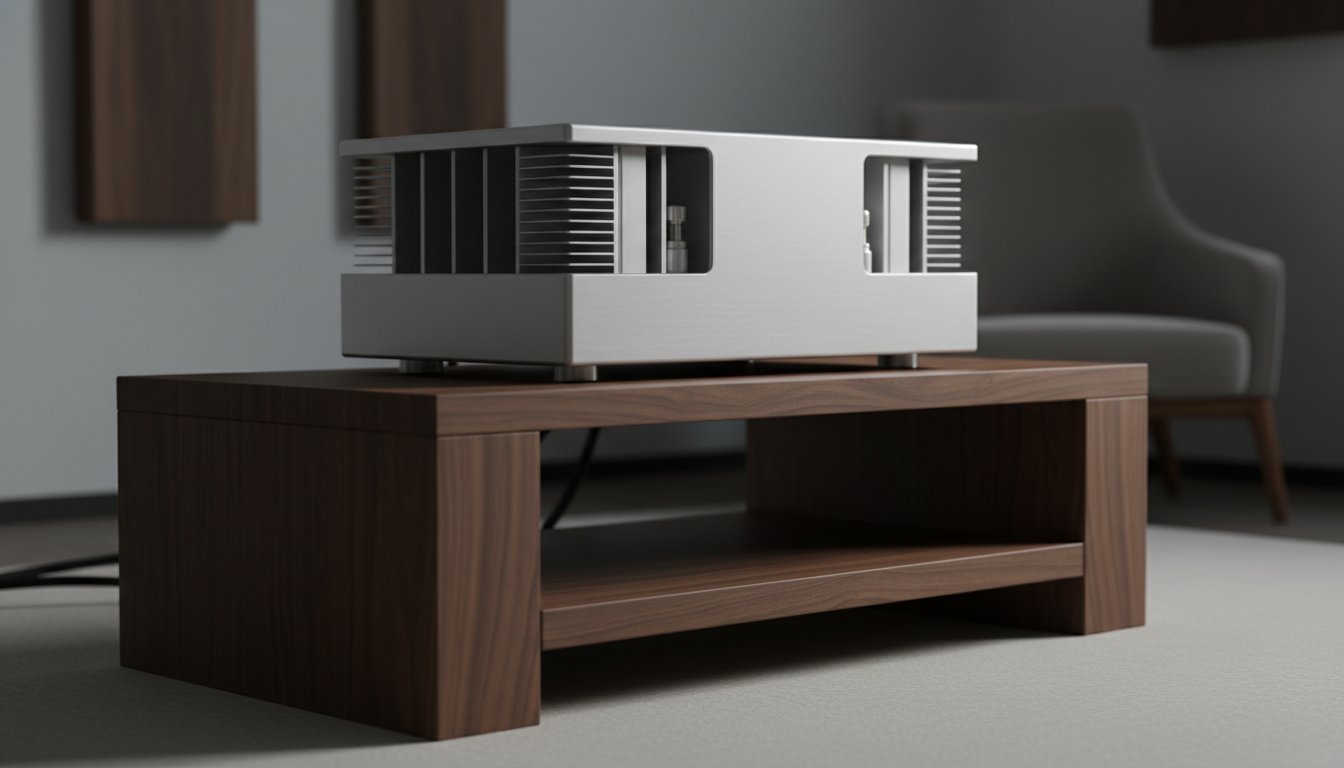
Medium Density Fibreboard (MDF) is a staple of budget furniture, but it's fundamentally flawed for high-end audio. It's composed of wood fibers bonded with chemical resins, creating a material that lacks the consistent grain structure needed for effective energy transfer. Over time, heavy Class A amplifiers or high-mass turntables often cause MDF shelves to "sag," compromising the level foundation your gear requires. The chemical binders in these composites also tend to trap heat rather than dissipate it. You can explore more about these distinctions in our deep dive on The Audiophile’s Guide to Custom Hardwood Audio Furniture: Myths vs. Reality.
Solid Wood: Nature’s Vibration Damper
We believe in the integrity of the material. This is why we strictly avoid MDF and veneers at HiFi Rack, opting instead for sustainably sourced, solid hardwoods. The tracheids and fibers within natural wood act as microscopic shock absorbers. This organic architecture provides a level of damping that feels as authentic as the music itself. A rack built from solid Oak or Walnut isn't just a purchase; it's a lifetime investment that ages with grace. If you're ready to elevate your system's foundation, consider browsing our collection of handcrafted solid wood racks to find the perfect match for your listening sanctuary.
Buying Criteria: How to Choose the Right Audiophile Rack
Selecting an audiophile rack requires more than a tape measure; it demands an understanding of your system's physical and thermal evolution. You aren't just buying furniture for today's components, but providing a home for the upgrades you'll make five years from now. For a deeper dive into these specifics, see our Ultimate Guide to Choosing a Solid Wood HiFi Rack for Audiophile Performance. Weight capacity is your first hurdle. A high-end power amplifier can easily exceed 30kg, and a rack that sags or vibrates under that mass will compromise your sound. Calculate the total mass of your current setup, then add a 20% buffer for future reference-grade additions.
Modularity is another vital consideration. Fixed designs offer a clean, minimalist look, but modular systems allow your foundation to grow. While some manufacturers experiment with advanced materials for vibration control like carbon fiber or stainless steel, we find that the inherent damping of solid wood provides a more natural, authentic presentation. Choosing a rack that allows you to swap shelf heights or add tiers ensures your investment lasts a lifetime.
Dimensions and Spacing
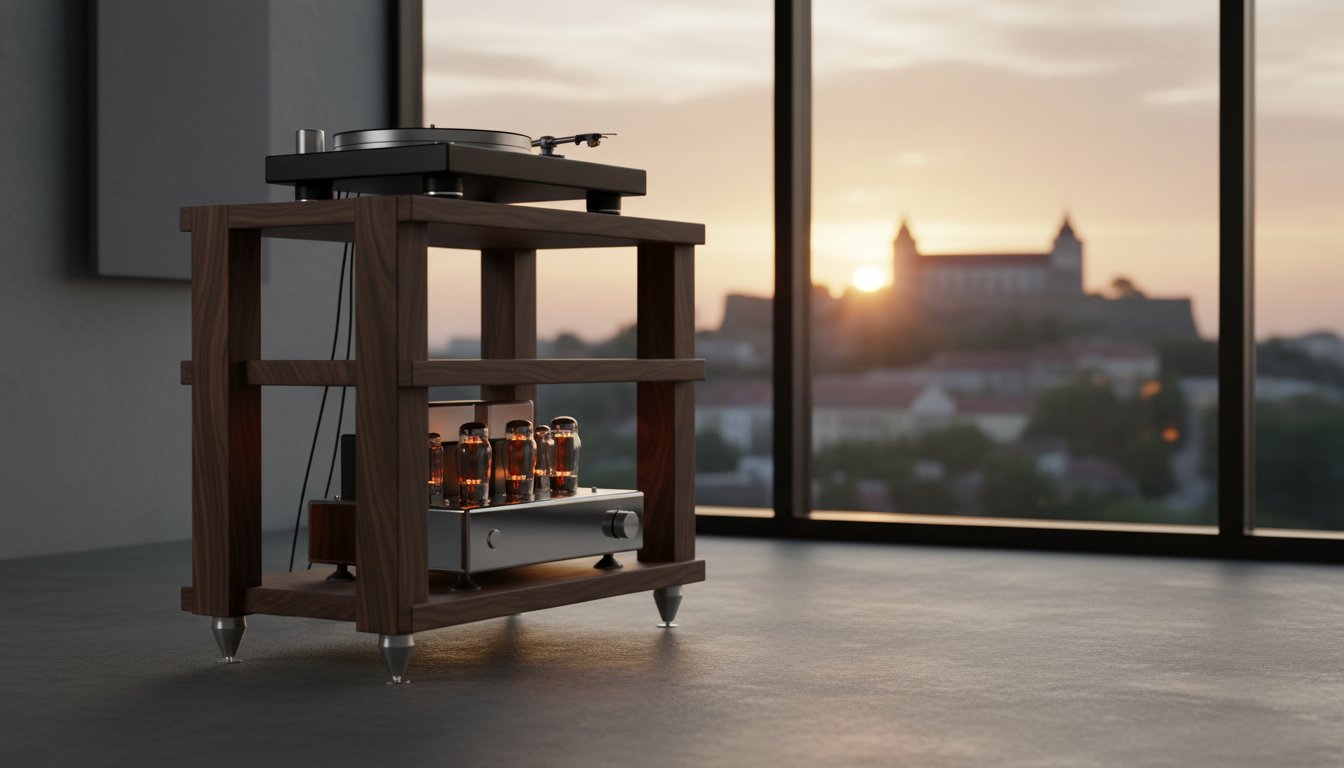
Thermal management is non-negotiable for anyone running tube or Class A amplifiers. These components are essentially high-precision heaters. We recommend the "3-inch rule": ensure at least three inches of vertical clearance above any heat-generating component. This allows for natural convection, preventing the premature aging of capacitors and delicate tubes. Depth is equally critical. Premium audio cables are often thick and unforgiving; you'll need extra room behind your gear to accommodate large connectors without forcing them into tight, stressful bends against a back wall.
Cable Management and Accessibility
Signal integrity depends on how you manage the "spaghetti" behind your gear. We strongly prefer open-back designs over enclosed cabinets. Enclosed spaces trap heat and can create a localized electromagnetic field that interferes with sensitive low-level signals. Open designs also make it much easier to swap interconnects or clean your equipment. To maintain the highest level of performance, you should also consider how your cables are supported off the floor. You can find more on this in our checklist for the essential cable risers for 2026. Reducing cable stress on your RCA and XLR inputs isn't just about safety; it's about ensuring a perfect, uninterrupted connection for your passion.
Isolation Accessories: Spikes, Feet, and Platforms
Finalizing your setup requires careful attention to the interface between the structure and the ground. Once you've chosen the right materials, the final stage of tuning your audiophile rack involves managing the energy that flows through its legs. Precision machined spikes aren't just for aesthetics. They function by concentrating the entire mass of your system onto four tiny points. This high-pressure contact helps drain mechanical energy from the rack into the subfloor, effectively grounding your equipment. For more on how this logic applies to your monitors, read our Speaker Feet and Acoustic Isolation: The Complete Audiophile Reference.
Maintaining sonic integrity shouldn't mean sacrificing your interior design. If you're placing your gear on hardwood or stone, floor protectors are essential. These small, solid discs sit beneath the spikes to prevent surface damage while maintaining a rigid, stable connection. Without them, spikes can penetrate the wood over time, leading to a loss of stability and a potential increase in unwanted vibration transfer. Mass is silence. A stable foundation is the only way to hear what your components are truly capable of delivering.
Turntable Isolation Platforms
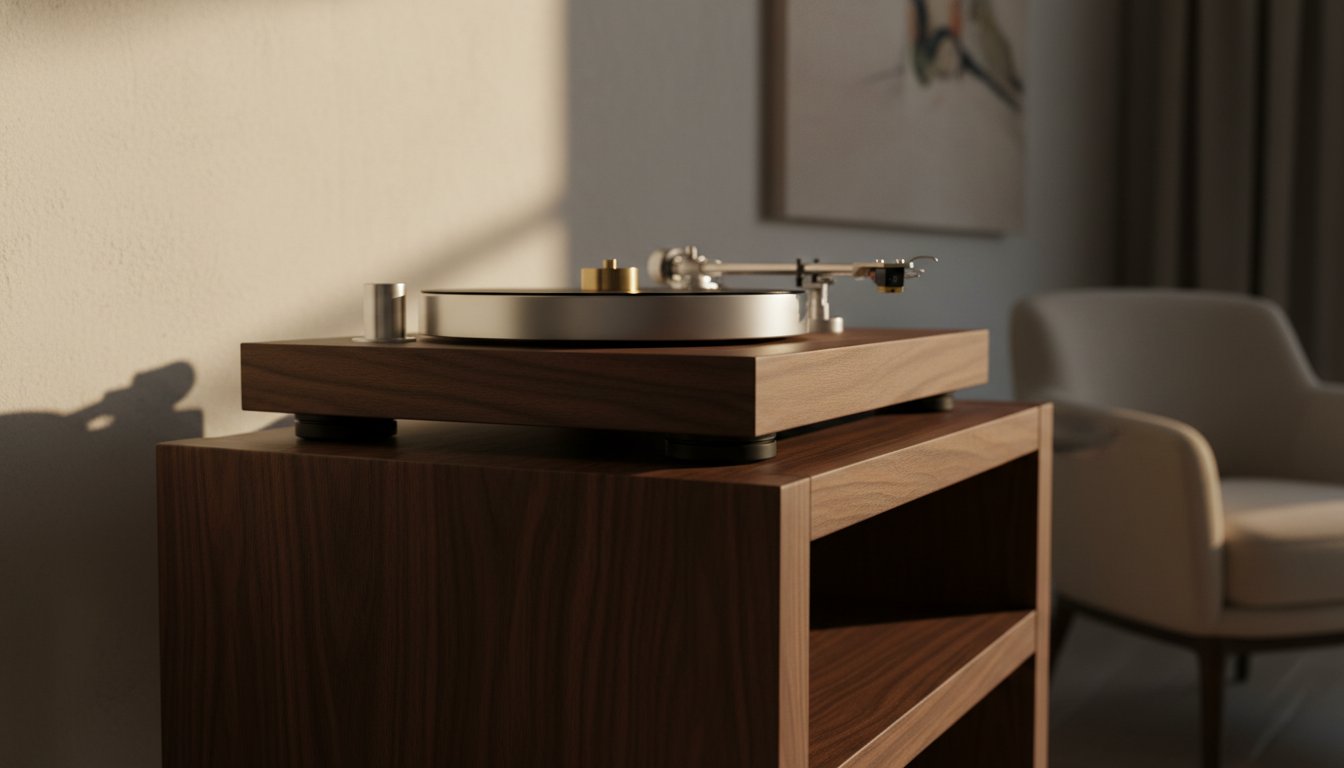
The top shelf of any audiophile rack is the most vulnerable position in the room. It sits furthest from the floor and remains highly exposed to airborne vibrations from your speakers. For analog enthusiasts, a dedicated high-mass solid wood platform is a transformative addition. These platforms provide an extra layer of damping specifically for the turntable's sensitive motor and stylus, preventing feedback loops that muddy the bass. We've detailed everything you need to know in The Ultimate Guide to Turntable Isolation Platforms and Shelves (2026).
Precision Machined Spikes
Materiality matters at the point of contact. Brass is often preferred for its slightly warmer, more natural resonance profile, while stainless steel offers a faster energy transfer. Choosing between them depends on your system's existing tonal balance. Beyond material, the ability to level each spike individually is critical. A perfectly horizontal shelf is non-negotiable for accurate turntable tracking. If your rack is even slightly tilted, the anti-skate and tracking force of your tonearm will suffer. Explore our Reference HiFi Rack for a solution that integrates these precision isolation elements into a single, handcrafted masterpiece.
The HiFi Rack Collection: Serbian Craftsmanship for Global Sound
The journey to musical perfection ends with the foundation you choose. At Myro HiFi Rack, we translate the complex physics of vibration management into tangible, artisanal beauty. Every audiophile rack we create is a testament to our four-pillar philosophy: CUSTOM | HANDMADE | NATURAL | AUTHENTIC. We don't just build furniture; we craft instruments designed to help you live your passion for music without compromise. By aligning high-end engineering with natural aesthetics, we ensure that your listening room remains a soulful sanctuary.
Our collection offers a solution for every level of audiophile commitment. For those seeking the pinnacle of isolation and mass, the Reference HiFi Rack provides the necessary stability to ground the most sensitive reference-grade components. If you're looking for a perfect harmony between aesthetic elegance and technical performance, the Classic HiFi Rack serves as a stunning centerpiece for any high-fidelity system. For space-conscious listening rooms where every inch matters, the Slim HiFi Rack delivers uncompromising support in a compact, minimalist footprint.
Bespoke Manufacturing in Novi Sad
Our workshop in Novi Sad, Serbia, carries a family tradition of woodworking that spans over 100 years. This heritage allows us to offer a level of intimacy and quality that mass-produced factory units simply cannot match. We maintain a strict policy of using zero MDF or veneer in our construction. Instead, we rely on the authentic damping properties of solid hardwood to treat your gear with the respect it deserves. Because every system is unique, we offer bespoke manufacturing. You can order a custom-sized audiophile rack tailored specifically to your equipment list, ensuring a perfect fit for oversized amplifiers or vintage turntables. Our commitment to responsibility means every piece is built to endure for a lifetime.
Investing in a Lifetime Foundation
A high-quality rack is an investment that pays dividends in both sound and longevity. By managing heat through natural convection and open designs, our racks reduce the thermal stress on your electronics, potentially extending the life of your amplifiers and DACs. Unlike composite furniture that loses value and structural integrity, solid hardwood audio furniture retains its beauty and resale value for decades. It's a foundation built to last as long as your love for music. Where sound & style are One, you find a listening experience that is as smooth as the wood itself. We invite you to explore our full range of handcrafted audiophile racks and discover the difference that artisanal pride makes in your home.
The Foundation of Your Musical Legacy
Your journey toward sonic perfection shouldn't be compromised by the furniture holding your equipment. We've explored how the right material density and precision isolation can lower your noise floor and breathe new life into your recordings. An audiophile rack is more than a shelf; it's a dedicated component that ensures your amplifiers stay cool and your turntable remains inert. By choosing solid hardwood over hollow composites, you're investing in a lifetime of clarity and warmth.
Since 2015, we've remained committed to our zero MDF or veneer policy, crafting every piece by hand in our Serbian workshop. We ship worldwide from Novi Sad, delivering authentic craftsmanship directly to your sanctuary. It's time to treat your passion with the reverence it deserves and experience the harmony that occurs when sound and style are one.
Build your custom foundation at the HiFi Rack Shop
We look forward to helping you create the silent, beautiful foundation your music deserves.
Frequently Asked Questions
Does an audiophile rack really improve sound quality?
Yes, a dedicated audiophile rack improves sound quality by neutralizing the mechanical resonance that clouds your music. By providing an inert foundation, it lowers the noise floor and allows your gear to reveal the finest details in a recording. This is especially noticeable in analog playback where even microscopic vibrations can cause audible distortion and a muddy bass response.
Is solid wood better than glass or metal for audio racks?
Solid wood is superior because it naturally damps energy rather than reflecting it. Glass and thin metal frames tend to "ring" at specific frequencies, which colors the sound of your system. Solid hardwood possesses a complex cellular structure that converts kinetic energy into trace amounts of heat, keeping the audio signal pure, authentic, and free from parasitic resonances.
How many shelves do I need for a standard HiFi system?
Most standard systems require three to four shelves to accommodate a source, a preamplifier, and a power amplifier. If you use a separate DAC, streamer, or a turntable, you might need additional tiers. It's always wise to choose a modular design that allows for future expansion as your passion for high-fidelity sound grows and your equipment list evolves.
Can I use a regular bookshelf instead of an audiophile rack?
Regular bookshelves are generally unsuitable because they lack the structural integrity and vibration management needed for high-end gear. Most mass-market furniture uses hollow cores or MDF that act as echo chambers for sound. Additionally, bookshelves often lack the necessary airflow, which can lead to equipment overheating and the premature failure of sensitive internal components.
What is the best wood for a HiFi rack?
Dense hardwoods such as Walnut, Oak, and Ash are the gold standard for audio furniture. These species offer the ideal balance of mass and internal damping to neutralize vibrations effectively. We strictly use these natural materials because they provide a stable, authentic foundation that lasts a lifetime without the structural "sag" common in cheaper composite materials.
How do I stop my turntable from vibrating on a wooden floor?
You can stop turntable vibration by using a high-mass audiophile rack combined with a dedicated isolation platform. Wooden floors often act as a drum, transferring footfalls directly to the stylus. A solid wood rack with precision-machined spikes will help drain this energy, while a separate platform adds an extra layer of decoupling to ensure a silent analog experience.
Should I use spikes on a hardwood floor?
You should use spikes to drain vibration, but always pair them with solid floor protectors to avoid damaging your hardwood. Spikes create a high-pressure contact point that grounds the rack to the floor. Without protectors, the sharp points will penetrate the wood surface; with them, you maintain both sonic integrity and your listening room's aesthetic beauty.
What is the difference between decoupling and coupling in audio furniture?
Coupling involves creating a rigid connection to the floor, usually with spikes, to "drain" mechanical energy away from your components. Decoupling uses soft or suspended materials to isolate the gear from floor-borne vibrations. A truly effective setup often utilizes a combination of both strategies to ensure your equipment operates in a completely silent, vibration-free environment.