Your high-end turntable is a sensitive seismic instrument that detects vibrations smaller than a human hair. When you place a turntable shelf on hifi rack setups made of hollow metal or resonant veneer, you aren't just supporting your gear; you're inviting noise into the groove. It's a mechanical battle where your stylus fights against footsteps and speaker feedback. You likely know the frustration of muddy bass or the anxiety of a skipping needle on bouncy floors.
We believe your listening sanctuary deserves better than mass-produced compromises. This guide will help you master vibration management to unlock the hidden clarity in your vinyl collection. We'll look at the latest 2026 tech, including the $199 Pro-Ject Ground it E and the $229.99 IsoAcoustics zaZen I, while explaining why natural, solid-core materials are essential for authentic sound. You'll discover how the right isolation strategy creates a space where sound and style are one. It's time to stop compromising your equipment and start living your passion through crystal-clear analog playback.
Key Takeaways
- Understand the mechanical trio of mass, damping, and decoupling to effectively shield your stylus from microscopic interference and floor-borne noise.
- Learn why solid-core natural hardwoods provide superior acoustic damping compared to the uniform, "dead" structure of MDF or thin cosmetic veneers.
- Discover how to correctly position a turntable shelf on hifi rack systems to eliminate muddy bass response and restore the authentic depth of your vinyl.
- Identify the specific environmental triggers, such as springy floorboards, that necessitate a move from floor-standing furniture to a dedicated wall-mounted foundation.
- Explore the performance benefits of bespoke, handcrafted platforms designed to accommodate the unique mass and dimensions of high-end transcription decks.
Why Your Turntable Needs a Dedicated Isolation Shelf
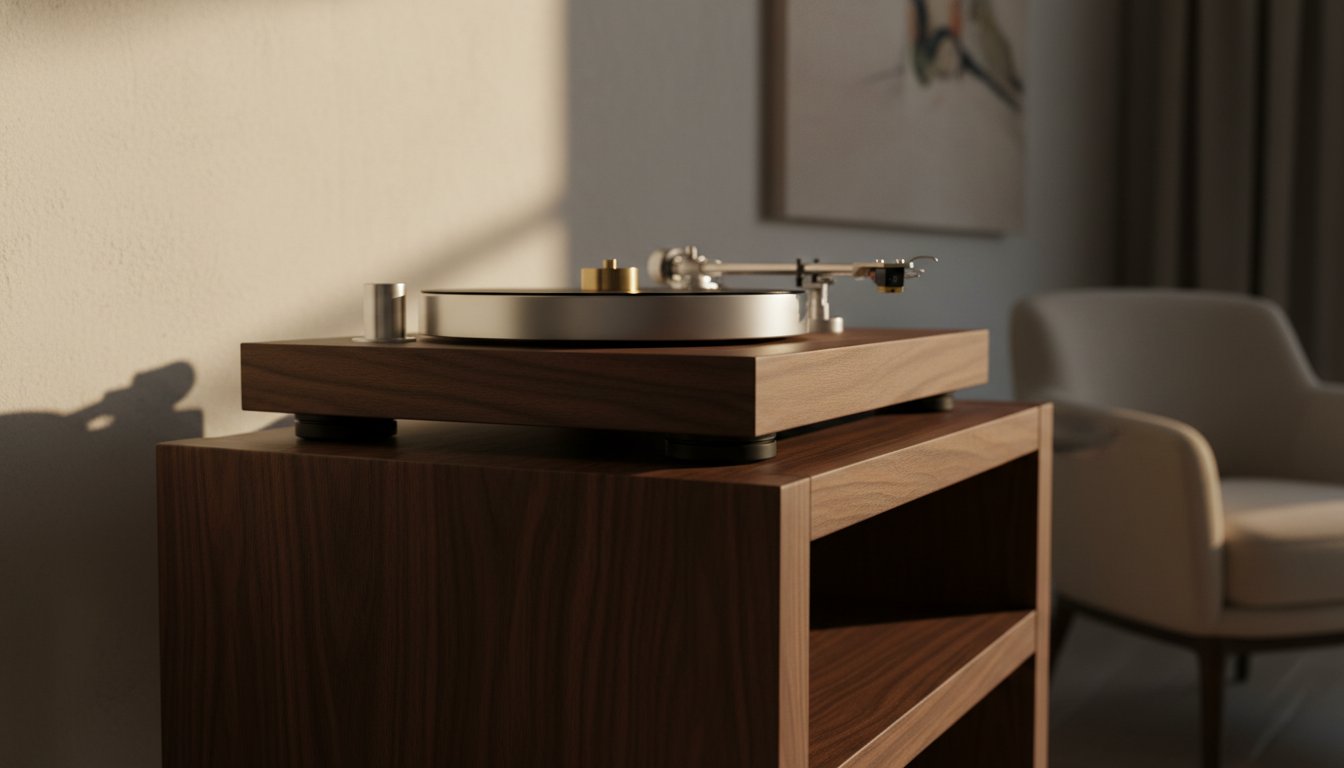
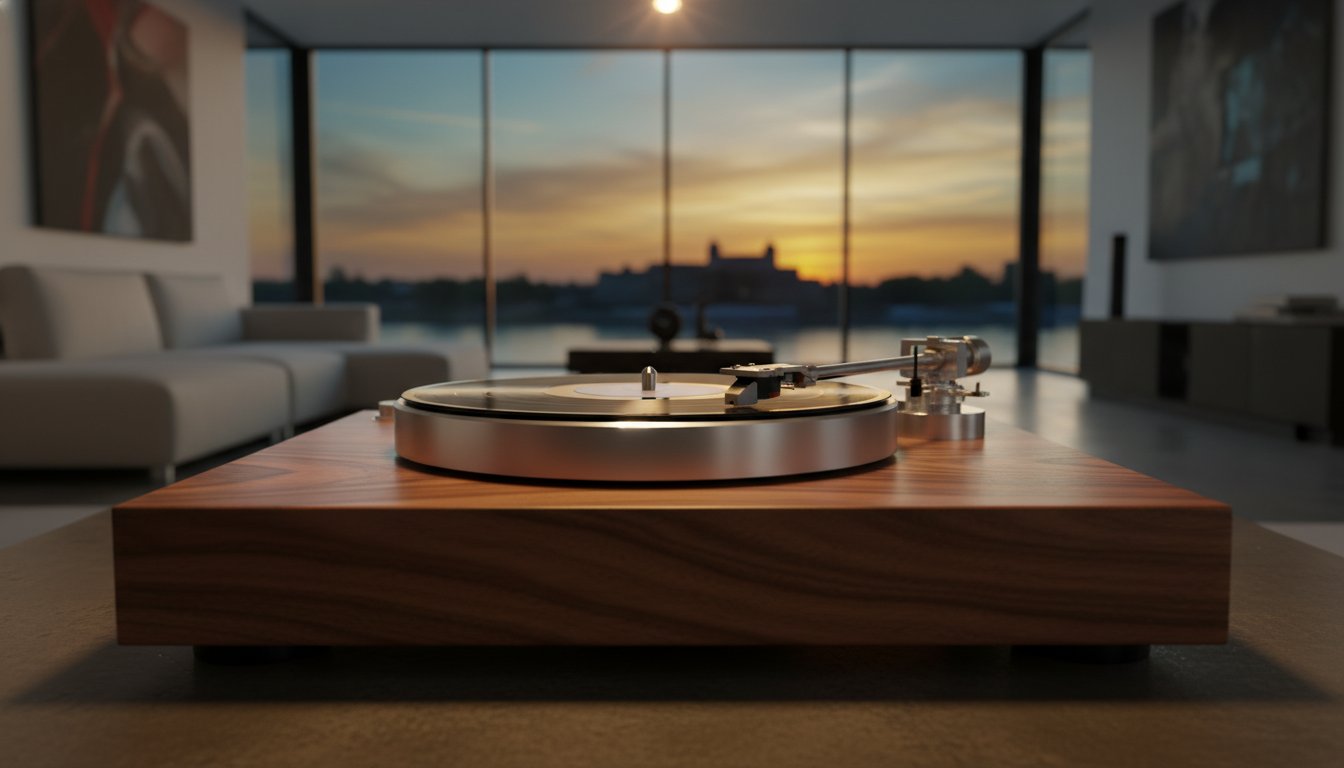
A high-end turntable is a precision instrument designed to measure microscopic variations within a vinyl groove. To capture the full emotional weight of a recording, you need a specialized surface that decouples the player from its environment. A dedicated turntable shelf on hifi rack foundations acts as a mechanical firewall. It prevents external energy from entering the playback loop. This isn't merely a piece of furniture; it is a vital component in your signal chain. At Myro HiFi Rack, we view the foundation of your system as an instrument itself, one that ensures the only movement your cartridge tracks is the music.
Acoustic feedback is the silent enemy of the audiophile. When your speakers produce deep bass, those sound waves travel through the air and the floor, vibrating your equipment. If your turntable sits on a resonant surface, these vibrations loop back into the stylus, creating a muddy, distorted signal. By 2026, with the 30% increase in high-resolution audio service subscriptions, listeners are becoming more sensitive to these imperfections. True high-fidelity playback requires a "slow-made" approach to isolation, where natural materials provide the mass and damping necessary to ground your passion in absolute silence.
The Stylus as a Micro-Seismograph
Your cartridge is a transducer that converts mechanical kinetic energy into electrical voltage. Because a stylus detects movements as small as a micron, it cannot distinguish between the music in the groove and the vibration of a heavy footstep. When these external forces reach the platter, they are "read" by the needle and amplified alongside your music. This interference causes "smearing," a phenomenon where fine details and transient peaks are lost in a haze of mechanical noise. Understanding The Mechanics of Isolation is essential for protecting the integrity of this delicate signal conversion.
Common Symptoms of Poor Isolation
Poor isolation doesn't always result in a dramatic skip. More often, it manifests as a subtle degradation of the soundstage. You might experience the following symptoms in a compromised setup:
- Bloated Bass: Low frequencies sound "thick" or "muddy" rather than punchy and defined.
- Congested Soundstage: The music feels trapped between the speakers instead of filling the room with an authentic, airy presence.
- Mechanical Hum: A low-frequency drone that becomes more apparent as you increase the volume.
If you're unsure about your current setup, try a simple "tap test." While a record is playing with the volume at a moderate level, gently tap the frame of your rack. If you hear a distinct "thump" through your speakers, your system is vulnerable. This is a common frustration for the 70% of consumers now focused on equipment longevity and performance. Especially in homes with springy wooden floors, a stable turntable shelf on hifi rack setups is the only way to ensure your music remains clear, authentic, and undisturbed.
The Mechanics of Isolation: How Platforms Protect Your Sound
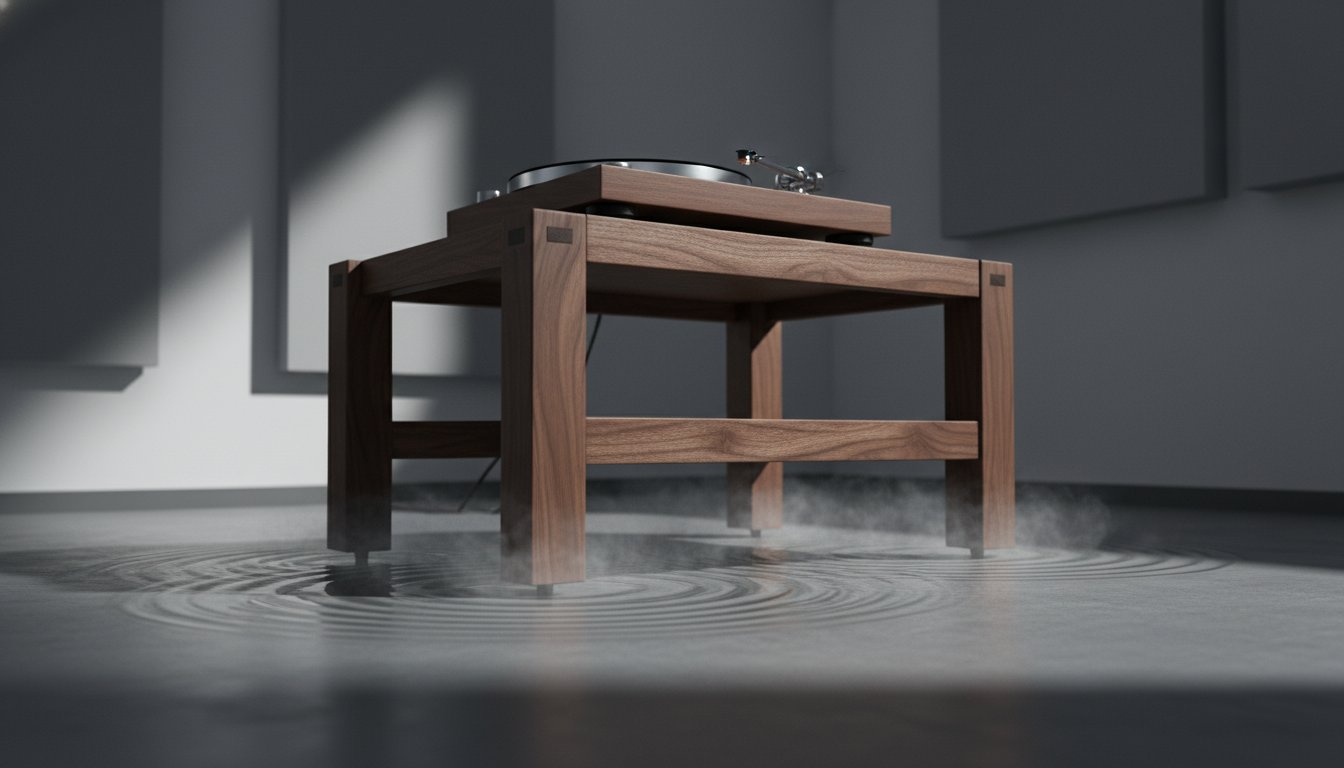
Managing vibration isn't a dark art; it's a matter of precise physics. To protect the integrity of your vinyl playback, you must master the three pillars of isolation: mass, damping, and decoupling. Each plays a distinct role in ensuring your stylus only reads the music. High-mass platforms create essential inertia. By increasing the weight of your turntable shelf on hifi rack systems, you effectively lower the resonant frequency of the entire assembly. This ensures the system doesn't vibrate in sympathy with low-frequency bass notes or external environmental noise.
While mass provides the anchor, damping and decoupling handle the energy transfer. Damping involves the absorption of kinetic energy within a material, converting it into microscopic amounts of heat. This is where material choice becomes critical. While metal frames often suffer from high-frequency "ringing," solid natural wood excels at dissipating energy. When Choosing the Right Material, the cellular structure of authentic hardwood provides a level of internal damping that mass-produced materials simply cannot match. Decoupling then acts as the final break, physically separating the turntable from the floor's vibration.
Damping vs. Decoupling: What is the Difference?
Damping happens inside the shelf itself. It's the material's ability to "quiet" vibrations that have already entered the structure. Decoupling is the act of blocking those vibrations from entering in the first place. A high-performance foundation requires both. If you only have mass without damping, the shelf will store energy and release it back into the stylus. If you have decoupling without mass, the system remains unstable. Our Reference HiFi Rack is designed to balance these forces, creating a silent stage for your music.
The Role of Spikes and Precision Feet
Spikes and feet act as "mechanical diodes." By focusing the entire weight of the system onto a tiny surface area, spikes allow energy to drain away from the equipment while making it difficult for floor vibrations to travel back up. This one-way street for energy is vital for clarity. For a deeper technical exploration of this concept, see our guide on Speaker Feet and Acoustic Isolation. Beyond energy transfer, precision feet allow for the perfect leveling of your turntable shelf on hifi rack foundations. Even a slight tilt can affect tracking force and anti-skate settings, compromising the life of your records and the accuracy of the sound. Where sound and style are one, every millimeter of adjustment matters.

Solid Hardwood vs. MDF: Choosing the Right Material
The choice of material for your turntable shelf on hifi rack foundations is a sonic decision, not just an aesthetic one. Most mass-market furniture manufacturers rely on Medium Density Fibreboard (MDF) because it is cheap and easy to mass-produce. However, for the serious listener, MDF presents a significant technical hurdle. It is a uniform, "dead" material composed of compressed wood fibers and synthetic glues. This uniformity allows energy to travel through it predictably, often storing vibrations and releasing them as a high-frequency "ring" that interferes with the delicate movement of your stylus.
In contrast, solid natural hardwood is an heirloom-quality material with a complex, non-uniform cellular structure. This organic variation is its greatest strength. Because the density of the grain changes throughout the board, standing waves are naturally broken up and dissipated. By 2026, the global audio equipment market is projected to reach $17.45 billion, yet many brands still hide inferior MDF cores behind thin cosmetic veneers. At Myro HiFi Rack, we reject this "cosmetic cheat." We believe that where sound and style are one, the beauty must go all the way to the core. A solid wood foundation doesn't just look premium; it provides the mass and damping required for a lifetime of musical perfection.
The Acoustic Signature of Natural Wood
Every species of wood carries a unique acoustic fingerprint. Walnut, cherry, and oak are the preferred choices for high-end audio because of their specific damping ratios. These hardwoods excel at absorbing mechanical energy before it can reach the platter. The varying density of the natural grain ensures that resonance is scattered rather than amplified. This results in a noticeably "blacker" background and improved micro-dynamics in your playback. For a technical breakdown of how different timbers affect your system, see our Audiophile’s Guide to Custom Hardwood Audio Furniture.
Why We Avoid MDF and Veneer
MDF is essentially a composite of waste materials and chemical binders. Beyond its poor acoustic performance, it lacks the longevity required for a high-end investment. It is prone to sagging under the weight of heavy transcription decks and is easily damaged by moisture. Furthermore, by 2026, over 70% of consumers have become significantly concerned about the environmental footprint of electronic and household goods. Our commitment to Responsibility means we only use sustainably sourced, natural timber. We avoid the glue-heavy production of composites to ensure your turntable shelf on hifi rack is as authentic and healthy for your home as the music it supports. Your passion deserves a foundation that is handmade, natural, and built to last.
Racks vs. Wall Shelves: Finding the Best Mounting Strategy
The environment where you listen is just as influential as the components you choose. In many homes, especially those built before 1950 or modern apartments with lightweight joists, the "springy floor" problem is a major hurdle for analog lovers. Every footstep becomes a seismic event for your stylus. Choosing between a floor-standing unit and a wall-mounted solution depends entirely on your room's structural integrity. While some enthusiasts view wall shelves as a last resort, they're actually a strategic tool for decoupling. However, a high-mass, solid wood turntable shelf on hifi rack foundations often provides a superior level of damping that a lightweight wall bracket cannot match.
By 2025, home entertainment accounted for 42.30% of the audio equipment market share, reflecting a shift toward dedicated listening sanctuaries. In these spaces, the foundation must be uncompromising. If your floor is stable, a floor rack offers better accessibility and aesthetic harmony. If the floor flexes, you must look to the walls. Both strategies require a deep understanding of how energy moves through your home's architecture. Whether you're resting your deck on a floor-standing unit or a wall-anchored bracket, the goal remains the same: absolute stillness.
When a Floor-Standing Rack is Superior
If your listening room has a concrete subfloor or very stable timber joists, a floor-standing rack is almost always the better choice. Mass-loading becomes your best ally here. A heavy, handcrafted foundation like our Reference HiFi Rack uses its own weight to ground the system, absorbing vibrations before they reach the platter. Modular designs also offer practical benefits that wall shelves lack, such as better cable management and adequate spacing to prevent electromagnetic interference between components. For those focusing purely on a vinyl-centric setup, a dedicated Solid Wood Record Player Stand provides the focused stability required for high-end transcription decks.
Solving the Bouncy Floor with Wall Mounting
When floorboards flex, the only solution is to move the turntable to a load-bearing wall. By anchoring a shelf to masonry or solid timber studs, you effectively bypass the floor's movement. This is the ultimate form of decoupling from footfall vibration. However, wall mounting requires precision. You must ensure the shelf remains perfectly level, as even a 1-degree tilt can cause tracking errors and uneven wear on your records. If you choose this path, integrating a solid timber turntable shelf on hifi rack brackets ensures that you still benefit from the natural damping properties of wood grain. This combination protects your stylus while maintaining the authentic, handcrafted aesthetic of your room.
Ready to build a foundation that respects your music? Explore our collection of handcrafted HiFi racks and find the perfect stage for your passion.
Handcrafting the Perfect Foundation: The HiFi Rack Philosophy
The pursuit of high-fidelity sound is a deeply personal journey. It's a passion that demands more than just electronic precision. Your turntable shelf on hifi rack setups should be viewed as a silent partner in your audio chain; it is a foundational element that respects the art of the recording. At Myro HiFi Rack, we embrace a "slow-made" philosophy. This approach ensures that every piece of furniture we create is a vital instrument for your listening sanctuary. We don't just build storage. We craft foundations that bridge the gap between technical engineering and natural beauty.
By 2026, the global audio equipment market has grown into a $17.45 billion industry, yet much of that growth is driven by mass-produced, disposable solutions. We choose a different path. Our connection to the listener is rooted in a shared reverence for the craft. When you place a high-end deck on a handcrafted surface, you aren't just setting up equipment. You're completing a circuit of artisanal pride that begins in our workshop and ends in your home. This relationship between the master craftsman and the audiophile is what defines an authentic listening experience.
CUSTOM | HANDMADE | NATURAL | AUTHENTIC
Our refusal to use MDF or veneers is a matter of integrity. While over 70% of consumers in 2026 now prioritize the environmental footprint of their goods, we've always looked to nature for the answer. Every product in our Shop is born from solid, natural timber. We honor the multi-generational woodworking traditions of Novi Sad, where the master craftsman understands that wood is a living material. The sensory experience is unmistakable. You can smell the authentic oils, feel the unique texture of the grain, and hear the difference in the silent, dark background of your music. We don't use "cosmetic cheats" because your passion deserves the truth of solid wood.
Designing Your Custom Analog Sanctuary
High-end transcription decks often feature oversized dimensions or extreme weights that mass-produced racks simply cannot accommodate. We specialize in bespoke solutions that meet these specific demands. Whether you require the uncompromising mass of the Reference series, the timeless lines of the Classic, or the understated profile of our Slim HiFi Rack, we tailor the dimensions to your specific equipment. This ensures your turntable shelf on hifi rack provides the perfect, stable footprint for your system's unique requirements.
We invite you to contact us to discuss the custom dimensions of your next project. Your dedication to music deserves a foundation that is as uncompromising as your passion. It's time to create a space where sound and style are one.
Secure Your Sound with a Masterpiece of Isolation
Selecting the right turntable shelf on hifi rack foundations isn't just about furniture; it's about reclaiming the detail lost to resonance. You've seen how solid hardwood's natural grain breaks up standing waves and why decoupling from a bouncy floor is essential for clarity. A foundation built on mass and damping ensures your stylus remains undisturbed. This mechanical silence allows your cartridge to capture the full emotional depth of every record in your collection. It's the difference between hearing a recording and experiencing a performance.
At Myro HiFi Rack, we build these foundations to your exact equipment specifications in our workshop in Serbia. Each rack is handcrafted from solid hardwood. We refuse to use MDF or veneer. These instruments are engineered by audiophiles specifically for the most demanding vinyl systems. By choosing a "slow-made" foundation, you invest in a lifetime of musical perfection. It's time to treat your collection to the platform it deserves. Let your music breathe in a sanctuary where sound and style are one.
Explore our handcrafted Reference HiFi Racks for ultimate analog isolation
Your passion for analog deserves nothing less than an authentic, handmade stage. Trust your system to a foundation designed to last a lifetime.
Frequently Asked Questions
Do I really need a turntable isolation platform if my rack is already solid wood?
While a solid wood rack is a superior foundation, a dedicated isolation platform adds an extra layer of decoupling. This secondary barrier is essential for high-end transcription decks that require absolute silence to resolve micro-details. By adding a specialized turntable shelf on hifi rack setups, you create a dual-damping system. This ensures that any residual energy not absorbed by the main rack is dissipated before reaching the platter.
How can I tell if my turntable is picking up floor vibrations?
Perform a tap test while your system is idle but the volume is at a moderate listening level. Gently tap the floor or the rack frame and listen for a thump through your speakers. If you hear a sound, your system is vulnerable. In older homes with timber joists, these vibrations are often responsible for the muddy bass response that affects up to 40% of vinyl listeners in untreated rooms.
What is the best material for a turntable shelf?
Solid hardwood is the gold standard for managing analog resonance. Species like walnut and oak offer the ideal balance of density and internal damping. Unlike the uniform structure of MDF, the natural cellular variation in wood breaks up energy waves. This authentic material ensures your turntable shelf on hifi rack provides a neutral, life-like soundstage that honors the original recording.
Can I put a turntable on a regular bookshelf or desk?
Regular desks and bookshelves are typically too resonant for high-fidelity playback. These items are often built from thin composites or hollow metal, which act like a drum and amplify vibrations. A dedicated hi-fi foundation is necessary to prevent the skipping and sonic smearing that occurs when a stylus is subjected to the unstable environment of standard household furniture.
How do isolation spikes work on a turntable shelf?
Isolation spikes function as mechanical diodes that direct energy away from your equipment. By focusing the weight of the shelf onto a tiny point, they create a high-pressure contact area that makes it difficult for vibrations to travel upward. This one-way energy transfer is vital for maintaining the black background required for the 30% increase in high-resolution audio consumption observed in 2026.
Is a wall-mounted turntable shelf better than a floor stand?
A wall-mounted shelf is superior only if your floor suffers from significant flex or springiness. If your floor is concrete, a high-mass floor rack often provides better overall damping and stability. Wall mounting requires a load-bearing masonry wall to be effective. Without a solid anchor, a wall shelf can actually become a cantilever that amplifies structural noise rather than eliminating it.
Does the weight of the turntable affect what kind of shelf I need?
Heavier turntables require shelves with higher mass-loading capabilities to stay stable. A deck weighing over 15kg exerts significant pressure, which can cause inferior materials like MDF to sag over time. You need a handcrafted, solid wood foundation that can support this weight without flexing. This structural integrity is critical for maintaining the perfect horizontal plane required for accurate tracking.
How do I level my turntable shelf if my floor is uneven?
You should use adjustable precision feet or spikes to compensate for uneven surfaces. Most high-performance racks feature threaded feet that allow for micro-adjustments. Use a high-quality bubble level directly on the platter to ensure the system is perfectly flat. This precision is vital because even a 0.5-degree tilt can lead to uneven record wear and a loss of channel balance in your audio.