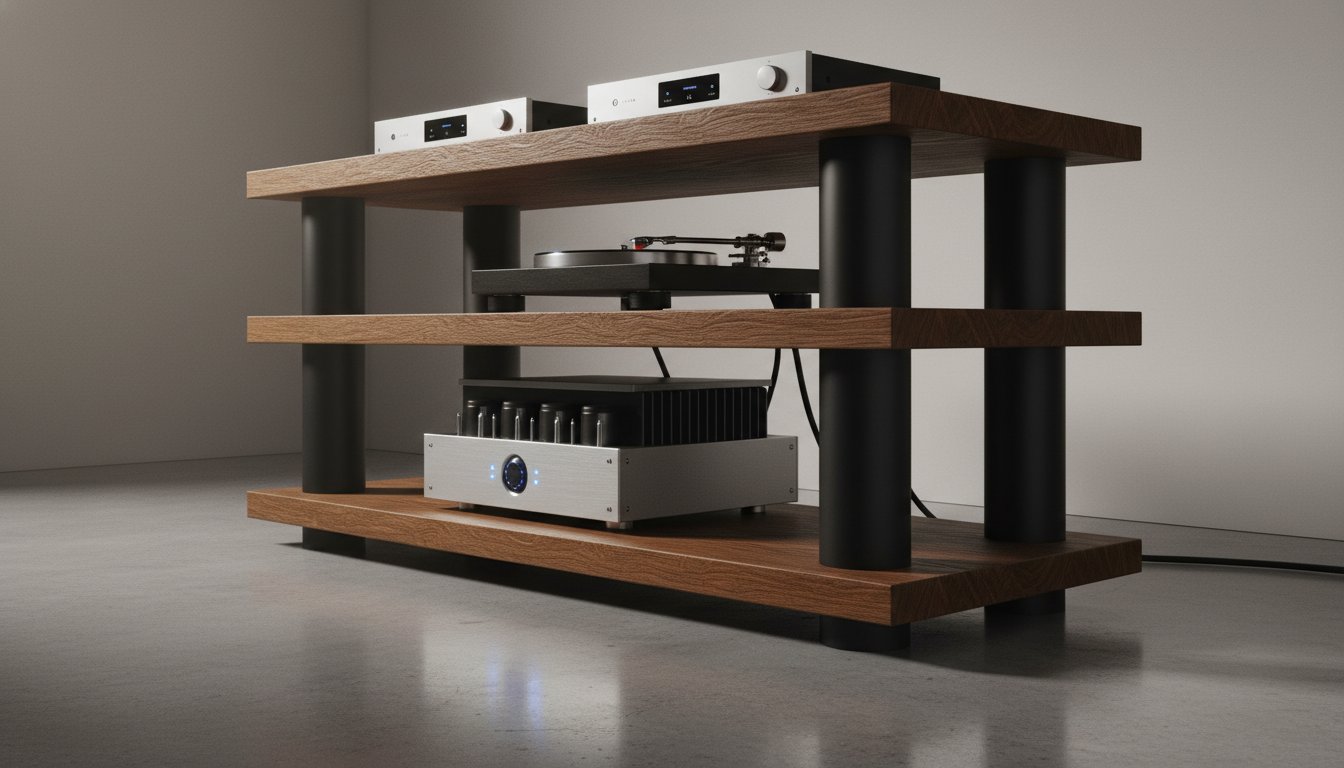

Your hi-fi rack is not furniture. It is a precision instrument designed to manage kinetic energy through material mass and natural damping. While many enthusiasts focus on electronics, the Stereophile Recommended Components list from April 10, 2026, confirms that specialist racks are essential for any system with components priced at $1,500 or higher. You have likely felt the frustration of muddy bass or a turntable that skips on bouncy floors. These aren't just technical flaws; they are barriers between you and the music you love.
This hifi rack buying guide helps you select a handcrafted support system that eliminates resonance and unlocks the full potential of your gear. You deserve a centerpiece that matches your home aesthetic and provides a lifetime solution for your evolving system. We will explore how choosing natural materials over MDF allows for improved instrument separation and a deeper emotional connection to every note. Discover how to create a sanctuary where sound and style are one, ensuring your passion for music is supported by the highest level of artisanal craft.
Key Takeaways
- Treat your rack as a precision instrument that isolates components from interference, serving as the essential foundation for musical perfection.
- Discover why solid hardwood is the superior choice for energy dissipation compared to the acoustic limitations of mass-produced MDF or veneer.
- Follow this hifi rack buying guide to verify material purity and ensure your support system uses handcrafted joints rather than cheap assembly hardware.
- Calculate precise dimensions for your setup, allowing for 10cm of ventilation space and ensuring shelf ratings of at least 50kg for high-end components.
- Learn how a custom, handmade solution from a master craftsman aligns technical audio performance with your home’s natural aesthetic.
What is a HiFi Rack and Why Does Your System Need One?
A specialized equipment support is much more than a simple shelf. It is a precision tool designed to isolate sensitive components from mechanical and acoustic interference. In the world of High-end audio, the rack serves as the foundation of the entire system. It's as critical to your signal chain as the amplifier or the speakers themselves. Without a stable base, the delicate electrical signals inside your equipment are subject to micro-vibrations that blur the soundstage and smear the fine details of a recording.
Managing the noise floor starts with structural rigidity. When your system operates, it generates and receives kinetic energy. If this energy isn't managed, it enters the signal path as audible distortion. This hifi rack buying guide emphasizes that a rack's primary job is to act as a mechanical ground, draining away unwanted energy before it can color your music. This is why specialist racks are recommended for systems with individual components priced at $1,500 or higher, as confirmed by industry standards in 2026.
To better understand how these components work together in a system, watch this helpful video:
Choosing a solid wood hifi rack also protects your long-term investment. High-quality materials and artisanal craftsmanship ensure component longevity by providing a stable, vibration-free environment. It's about protecting the passion you've built into your collection and ensuring every piece of gear performs at its peak for decades.
The Problem with Standard Furniture
Standard home furniture is rarely built for the demands of high-fidelity sound. Hollow cabinets and thin veneers often act as echo chambers, vibrating in sympathy with your speakers and creating unwanted resonance. This feedback loop muddies the bass and ruins instrument separation. Standard shelving also lacks the ventilation required for high-performance electronics. Without proper airflow, components can reach critical temperatures, leading to premature failure. Weight is another concern; while a Pyle rack mount shelf might handle 110 lbs, a standard decorative shelf will often sag under a heavy power transformer, compromising the levelness of your turntable.
Acoustic Isolation vs. Simple Storage
True isolation requires decoupling. This means breaking the physical link between the floor and your sensitive gear. By using specialized structures and natural materials, you prevent footfalls and low-frequency vibrations from reaching the stylus. Damping is the second half of the equation. It involves absorbing internal vibrations from spinning disc motors or humming transformers. When these forces are tamed, you reach a level of clarity where every note feels authentic. It transforms a room into a dedicated listening sanctuary where sound and style are one.
The Material Debate: Solid Hardwood vs. MDF and Metal
Choosing the right material is the most critical decision in any hifi rack buying guide. We strictly avoid MDF and veneer because they lack the natural acoustic properties required for high-fidelity sound. While mass-market manufacturers rely on these composites for cost-efficiency, they often result in a "dead" or over-damped sound that saps the life from your favorite recordings. Solid hardwood provides a non-uniform density that prevents standing waves within the rack itself. This molecular advantage comes from internal grain structures that naturally dissipate energy, turning micro-vibrations into heat rather than reflecting them back into your sensitive electronics.
When comparing metal to wood, the difference is often described as "clinical" versus "organic." Steel and aluminum racks can ring like a bell unless they are heavily filled with sand or lead shot. Even then, they often impart a cold, sterile character to the music. Timber, by contrast, offers a natural warmth and harmonic richness that feels deeply authentic. This commitment to material purity is a hallmark of The Absolute Sound's Editors' Choice equipment racks, where the world's finest systems are paired with supports that respect the soul of the music.
The Myth of MDF
MDF is a convenience for the factory, not the listener. Its uniform structure is achieved through industrial glue and sawdust, which creates a material that doesn't breathe or resonate naturally. This over-damping can make your system sound dull and uninspiring. Long-term durability is another concern. Solid wood outlasts glue-based composites by decades, as it doesn't peel or swell with age. If you want a system that grows with you, consider our Classic HiFi Rack, which honors the integrity of the tree and the art of listening.
Choosing Your Species: Walnut, Oak, and Cherry
Walnut is our gold standard for density and aesthetic sophistication. Its complex grain structure makes it ideal for high-gain preamplifiers that are sensitive to micro-phonics. Oak provides exceptional rigidity and mass. It's the preferred choice for heavy-duty power amplifiers that require a rock-solid foundation to perform their best. Cherry is prized for its balanced resonance profile. It has a slightly softer character that beautifully complements the liquid midrange and holographic imaging of tube electronics. Each species is selected not just for its beauty, but for how it helps you live your passion through better sound.

The Audiophile’s HiFi Rack Selection Checklist
Selecting the right support system is a defining moment for any listener. While mass-market retailers often focus on industrial rack units as a primary metric, a true hifi rack buying guide must prioritize the harmony between physical mass and acoustic transparency. It's not just about storage. It's about creating a stable environment where your electronics can breathe and perform without the interference of parasitic vibrations. Every detail matters when you're pursuing musical perfection.
Structural integrity is your first checkpoint. You should ask if the joints are handcrafted or held together by cheap cam-locks. Mass-produced furniture relies on these metal fasteners, which can loosen over time and become a source of rattling. In contrast, artisanal joinery ensures a lifetime of rigidity. Material purity is equally vital. You must verify that the rack is 100% solid wood. Many premium-looking options hide MDF layers under a thin veneer, which compromises the non-uniform density required to prevent standing waves. Performance is further enhanced by isolation features like precision-machined speaker feet or spikes that decouple the system from the floor.
Flexibility ensures your investment lasts. A modular design allows you to add shelves as your system evolves, perhaps moving from a simple integrated amp to a multi-chassis pre-power combination. This adaptability is part of our commitment to creating a lifetime solution that grows with your passion. Our workshop follows a strict mantra: CUSTOM | HANDMADE | NATURAL | AUTHENTIC. These pillars guide every piece we create, ensuring where sound and style are one.
The Construction Checklist
- Confirm the "Handmade" provenance to ensure each joint is fitted with master-craftsman precision.
- Verify the finish uses natural oils. These protect the timber without sealing it in a plastic-like lacquer, allowing the wood to breathe and age gracefully over decades.
- Ensure no magnetic metals are used near the signal path. We utilize non-magnetic stainless steel or brass to prevent electromagnetic interference from affecting your delicate low-level signals.
The Performance Checklist
- Leveling capabilities are non-negotiable. Your turntable requires a perfectly flat surface to track accurately and prevent uneven stylus wear.
- Cable management should provide ample space for heavy audiophile looms. You want to avoid designs that force tight bends or kinking in your high-end interconnects.
- Mass is a functional requirement, not a suggestion. A rack must have enough physical weight to stay grounded. As noted in April 2026 industry standards, a rack should be rated for at least 50kg per shelf to support high-end power transformers without any structural sagging.
Configuring Your Rack: Dimensions, Ventilation, and Weight Loading
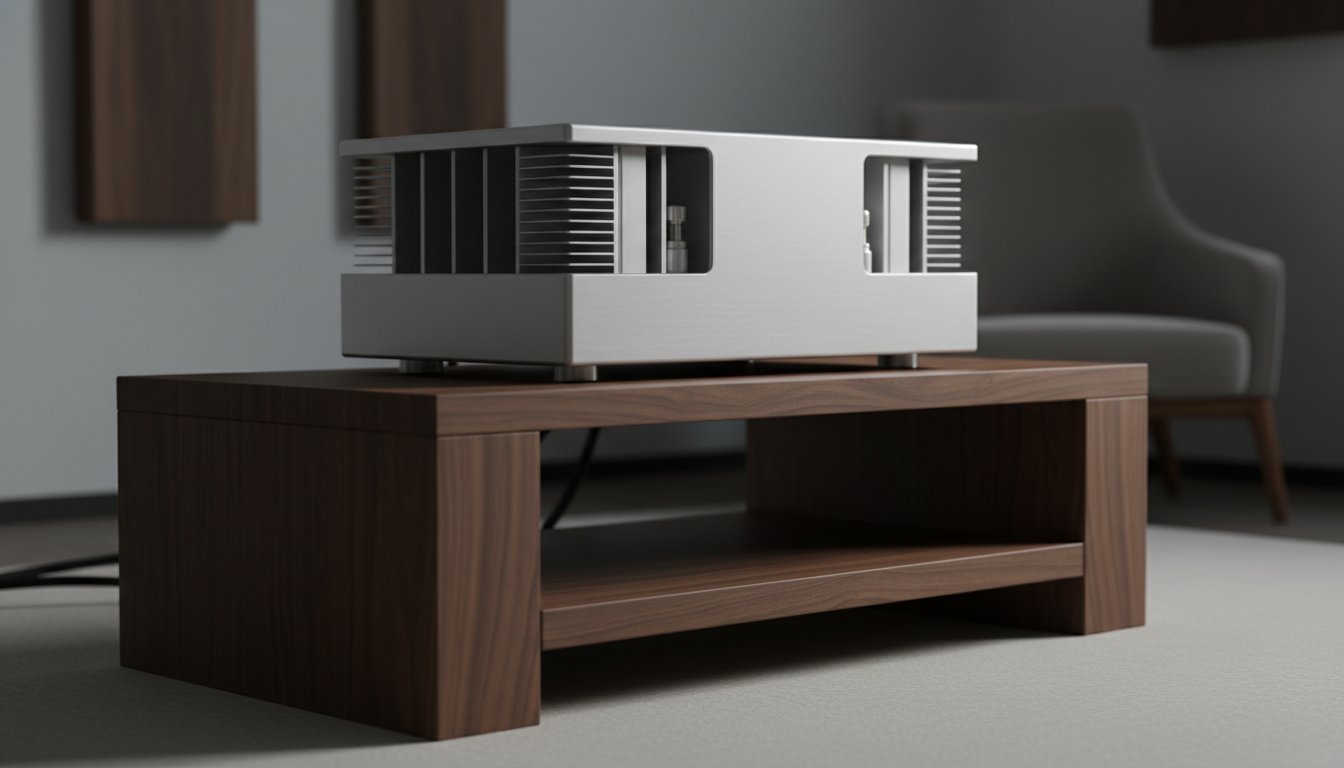
A successful configuration begins with precise spatial awareness. When you consult a hifi rack buying guide, you'll find that simply fitting a component onto a shelf isn't enough. You must allow for 5 to 10cm of "breathing room" around each piece of equipment. This space is vital for heat dissipation and provides the necessary clearance for thick, high-end interconnects that don't tolerate tight kinking. High-performance amplifiers, especially oversized Class A designs, require this margin to prevent thermal throttling and ensure the longevity of internal capacitors.
Structural integrity depends on mass and weight capacity. A high-fidelity rack audio system must be rated for at least 50kg per shelf. This ensures that even the most substantial power transformers won't cause the wood to bow or the joints to stress. We design our supports to handle these loads with quiet confidence, maintaining a perfectly level surface under extreme pressure. While you might start with a 3-tier rack, your passion for music will likely grow. Planning for future expansion now prevents the need for a total system overhaul later.
Managing Heat and Airflow
Audiophiles prefer open architecture for a reason. Closed cabinets trap heat, creating an oven-like environment for your gear. An open-back design facilitates the "Chimney Effect," where warm air rises naturally and is replaced by cooler air from below. This vertical airflow is essential for keeping sensitive circuitry within its optimal operating temperature. Side-clearance is equally important. It allows you to access the rear panels of your components without straining cables or disrupting the delicate connections that define your soundstage.
The Importance of Leveling
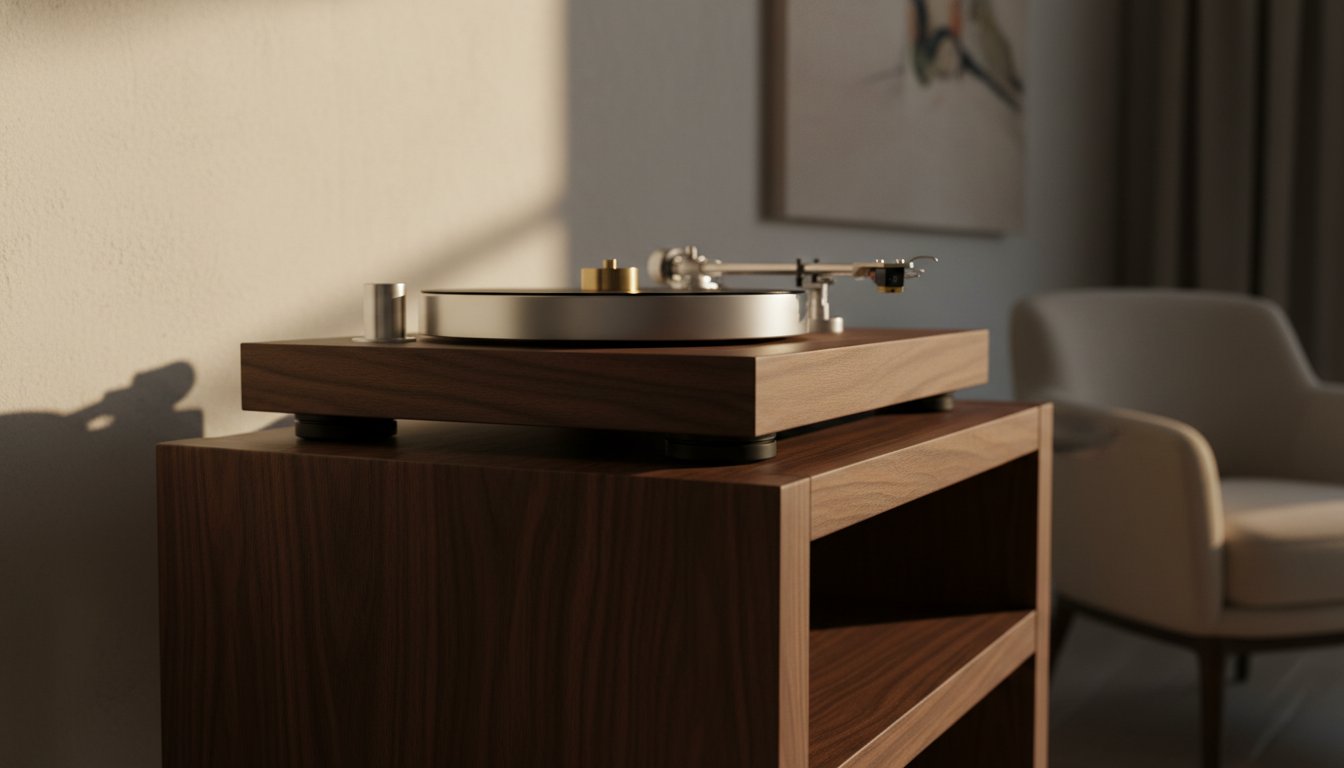
Turntable placement is the most demanding aspect of your configuration. The top shelf must be the most isolated and perfectly level. Even a 1-degree tilt can negatively affect tracking force and anti-skate settings, leading to uneven stylus wear and distorted imaging. By using adjustable spikes, you can compensate for uneven listening room floors, ensuring your platter remains perfectly horizontal. Integrating a dedicated vinyl player stand into your setup provides the specific damping required for analog playback. Explore our Reference HiFi Rack collection to find a support system that meets these exacting standards where sound and style are one.
Investing in Authenticity: The Case for Handcrafted Audio Furniture
True high-fidelity listening is a journey toward authenticity. When you invest in a rack, you're choosing a partner for your music that reflects the same care you put into selecting your speakers or amplifier. Our workshop carries the Novi Sad tradition forward, where multi-generational woodworking expertise meets modern acoustic needs. This isn't just about joinery. It's about a deep understanding of how organic materials interact with sound. Choosing custom hardwood audio furniture is a legacy purchase that transforms your listening room into a sanctuary.
We believe that where sound and style are one, the experience becomes more profound. This hifi rack buying guide has explored the technical reasons for choosing solid wood, but the emotional reason is just as powerful. You're creating a room you want to live in, not just a space for equipment. Our work is anchored by a four-pillar mantra: CUSTOM | HANDMADE | NATURAL | AUTHENTIC. These aren't just words. They're a recurring anchor for our identity and a promise to every listener who wants to help me live my passion through a soulful connection to their music.
The Artisanal Process
Quality takes time. We embrace a "slow-made" philosophy because the finer details can't be rushed in a mass-production factory. We source sustainable, premium hardwoods for every build, ensuring that the natural grain used to dissipate energy is of the highest caliber. Our commitment to responsibility and sustainability means we treat the environment with the same reverence we show your audio system. Each rack is a unique expression of the tree it came from, offering a level of character that synthetic materials simply can't replicate. It's a professional and deeply personal approach to craft.
Your Next Steps
Your pursuit of musical perfection deserves a foundation that matches your ambition. You can browse our HiFi Rack Shop to explore the Reference and Classic models that have become benchmarks for discerning listeners. If your system requires specific proportions, we welcome the opportunity to create custom dimensions for your unique component layout. Join a family of listeners who refuse to compromise on sound or style. It's time to treat your gear to the support it deserves and unlock the full potential of your high-end audio collection. Experience the harmony of a system built to last a lifetime.
Your Journey to Musical Perfection
Your audio system is an investment in your well-being and your passion for art. We have explored how the right support system acts as a mechanical ground, protecting your gear from the micro-vibrations that blur fine detail. This hifi rack buying guide has provided the framework to move away from the "dead" sound of synthetic composites and toward the organic warmth of timber. You now have the checklist needed to evaluate structural integrity and plan for the ventilation requirements of high-performance electronics.
Our workshop in Novi Sad, Serbia, continues to honor the "slow-made" philosophy. We use 100% solid hardwood to create instruments tailored for audiophile performance. It is a commitment to quality that ensures your setup remains a centerpiece of your home for decades. Discover Handcrafted Excellence at the HiFi Rack Shop and take the final step toward a sanctuary where sound and style are one. Your music has never been in better hands.
Frequently Asked Questions
Do HiFi racks actually improve sound quality?
Yes, a dedicated rack lowers the noise floor by isolating sensitive circuitry from mechanical interference. According to the April 10, 2026, Stereophile recommendations, specialized supports are essential for any component priced above $1,500. By acting as a mechanical ground, these racks prevent micro-vibrations from smearing the soundstage. You'll notice improved instrument separation and a more authentic listening experience immediately.
What is the best material for a HiFi rack?
Solid hardwood is the gold standard for acoustic performance due to its non-uniform grain structure. Synthetic materials like MDF have a uniform density that can reflect energy back into your gear, creating a "dead" sound. Natural timber, specifically Walnut or Oak, dissipates kinetic energy as heat. This process prevents standing waves and preserves the harmonic richness of your music.
How much weight can a solid wood HiFi rack hold?
A professionally crafted solid wood rack should support at least 50kg per shelf. This capacity is vital for high-end power amplifiers that often weigh over 30kg due to their massive transformers. Our designs ensure that even under extreme loads, the wood won't bow or stress. This structural integrity is a core requirement for any lifetime audio solution.
Is a modular rack better than a fixed one?
Modular racks are superior for most listeners because they allow for future system expansion. This hifi rack buying guide highlights that your needs will change as you discover new gear. A modular system lets you add or remove shelves without replacing the entire foundation. It's a sustainable choice that grows alongside your passion for music.
Do I need spikes if I have hardwood floors?
You should use spikes for isolation, but pair them with metal floor protectors on hardwood surfaces. Spikes provide a small contact area to drain vibrations, but they will pierce wood floors without protection. Using protectors ensures you get the acoustic benefits of decoupling without damaging your home. This combination keeps your system stable and your listening room pristine.
How do I prevent my turntable from skipping on a wooden floor?
High-mass racks and decoupling feet are the best defense against turntable skipping. Wooden floors often flex, sending low-frequency energy directly into your stylus. By using a heavy, handcrafted rack with precision-machined spikes, you break the physical link between the floor and the platter. This isolation ensures your turntable remains level and immune to footsteps.
What is the difference between the Reference and Classic racks?
Reference racks are designed with maximum damping for sensitive, high-gain electronics, while Classic racks offer a versatile balance of performance and artisanal style. The Reference series often includes enhanced isolation features for components like phono stages. Both models are handmade in our Novi Sad workshop using our 100% solid hardwood philosophy.
Can I use a regular bookshelf as a HiFi rack?
Using a regular bookshelf is risky because it lacks the ventilation and rigidity needed for audio gear. Bookshelves often have hollow sections that act as echo chambers, muddying the bass response. Standard furniture also sags under the weight of heavy amplifiers. A dedicated hifi rack buying guide always recommends purpose-built supports to prevent overheating and structural failure.