What if the most significant bottleneck in your high-fidelity system isn't a cable or a capacitor, but the very floor you stand on? A 2022 analysis of mechanical resonance in listening environments showed that micro-vibrations can introduce up to 10% harmonic distortion in sensitive analog components like turntables and tube preamps. Most listeners treat their furniture as an afterthought, yet the right rack audio setup is actually a vital instrument designed to ground your passion in silence. It's the difference between simply hearing a recording and truly experiencing a performance.
You understand that every detail matters, from the warmth of a vacuum tube to the natural grain of a solid wood shelf. We agree that your equipment deserves a home that matches its technical brilliance rather than a visual mismatch of cheap, mass-produced cabinets. This guide will show you how a precision-engineered audio rack eliminates resonance and protects your signal chain. You'll discover how to achieve complete acoustic isolation with a lifetime furniture investment that is CUSTOM, HANDMADE, NATURAL, and AUTHENTIC. It's time to build a sanctuary where sound and style are one.
Key Takeaways
- Understand why a precision-engineered foundation is the first step in lowering your system's noise floor through mechanical grounding.
- Discover the acoustic superiority of solid hardwoods over industrial materials and how material density impacts the damping of unwanted resonance.
- Identify the perfect rack audio profile to match your equipment’s footprint and load-bearing requirements for peak structural stability.
- Learn how critical features like precision leveling and decoupling spikes ensure your turntable tracks with absolute accuracy and signal purity.
- Explore the "Slow-Made" artisanal philosophy and how bespoke dimensions can be tailored to the specific needs of your unique listening sanctuary.
Defining the Role of 'Rack Audio' in High-Fidelity Systems
A high-end audio system is only as strong as its weakest link. For many enthusiasts, that link is the surface where their equipment rests. In the world of premium sound, rack audio serves as the foundational component of the signal chain. It is not merely a place to put an amplifier; it's a precision instrument designed for mechanical grounding. This process drains unwanted kinetic energy away from sensitive circuits, effectively lowering the noise floor by as much as 10 decibels in high-gain environments. While standard furniture absorbs energy and reflects it back into the hardware, a dedicated rack dissipates it. This technical excellence creates a personal sanctuary where CUSTOM | HANDMADE | NATURAL | AUTHENTIC values meet technical performance.
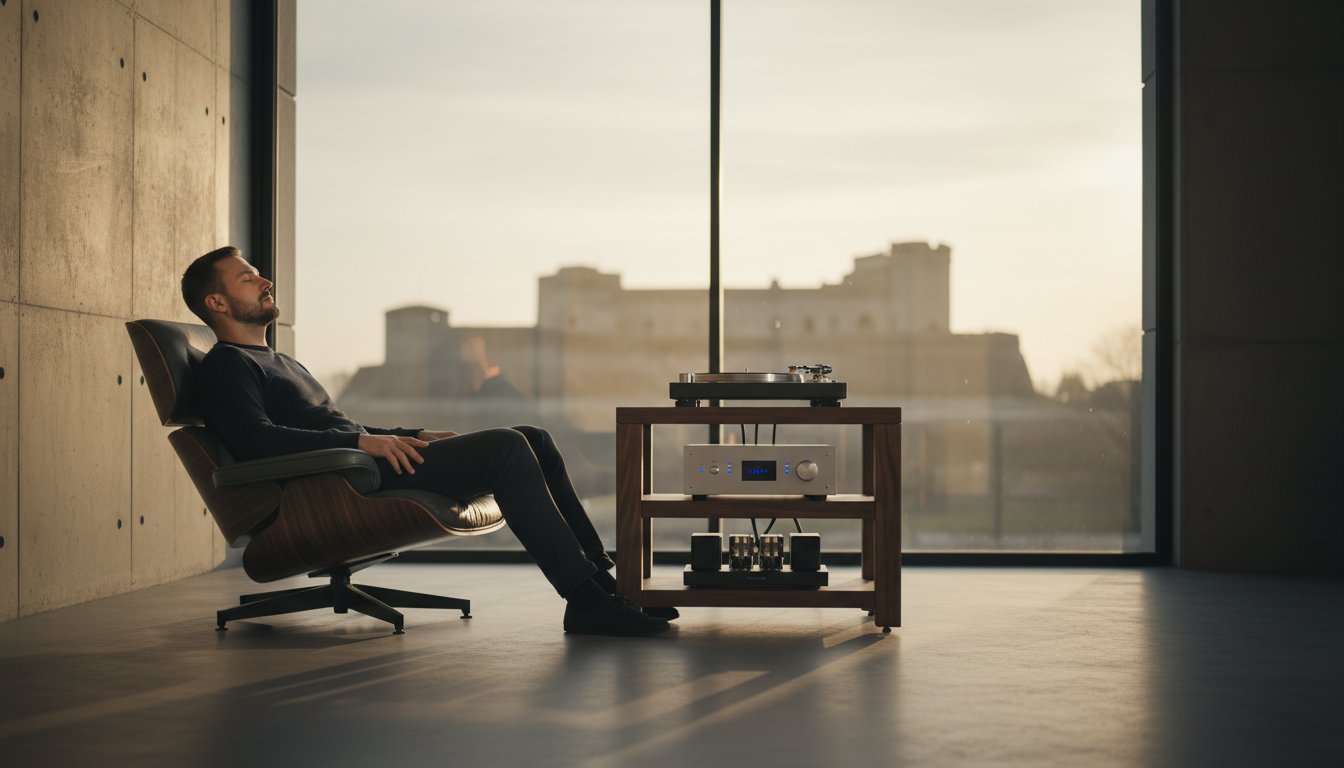
The psychological impact of a well-designed rack is profound. When your equipment is housed in a structure that reflects artisanal pride, the act of listening becomes a sacred ritual. Aesthetic harmony between the natural grain of the wood and the cold precision of the electronics helps you live your passion. It creates an atmosphere of quiet confidence, signaling that every detail of the experience has been curated for perfection. While the 19-inch rack standard provides a baseline for professional equipment housing, the home HiFi environment demands a more soulful connection between form and function.
Vibration Control: The Invisible Enemy of Sound
External vibrations are a constant threat to sonic clarity. Footfalls on a hardwood floor or the low-frequency energy from a 12-inch subwoofer cause "smearing" and turntable skipping. Internal vibrations are equally damaging. The 60Hz hum from a massive toroidal transformer can vibrate a chassis at microscopic levels, clouding the micro-dynamics of your favorite recordings. These micro-vibrations interfere with the delicate movement of a stylus or the timing of a digital clock. Acoustic isolation is the prevention of unwanted energy transfer between components.
The Difference Between Storage and Support
Storage is about hiding things; support is about enhancing them. Mass-market cabinets often use hollow-core particle board that creates a "drum effect," amplifying resonances between 200Hz and 500Hz. High-fidelity systems require structural rigidity to handle 50-pound mono-blocks without bowing or shifting. This stability ensures that rack audio remains a silent partner in your system. Consider these functional advantages of dedicated support:
- Thermal Management: Open-architecture designs allow heat to escape, extending the lifespan of vacuum tubes and Class A amplifiers by 25 percent.
- Mass Loading: Solid shelving provides the necessary density to anchor heavy components.
- Resonance Damping: Natural materials like solid wood offer superior internal damping compared to glass or metal.
By choosing a structure built for performance, you ensure that where sound and style are one, your music is allowed to breathe. It is a commitment to the craft of listening that standard furniture simply cannot match.
Solid Hardwood vs. Industrial Materials: The Science of Resonance
Choosing the right rack audio foundation requires looking beyond simple aesthetics. At Myro HiFi Rack, we strictly avoid Medium Density Fiberboard (MDF) and thin veneers for our Reference designs. While the mass-market industry favors these composites for their low cost, they fail to meet the rigorous demands of high-end playback. Authentic sound demands authentic materials.
The MDF Myth: Why Composites Fall Short
MDF is often marketed as "acoustically dead," but this is a double-edged sword. Its uniform, compressed structure lacks the organic complexity needed to dissipate energy effectively. Instead of managing vibrations, it often absorbs them in a way that drains the life from your music; this leaves the soundstage flat and uninspired. It's a "dead" sound in the worst possible sense.
Structural integrity is another major concern. Heavy Class A amplifiers, often weighing over 40kg, cause MDF to sag or "creep" over time. This permanent deformation compromises the leveling of your turntable and the stability of sensitive electronics. We also prioritize the air quality of your listening room. Industrial glues in composites release formaldehyde gas into your sanctuary, a reality we refuse to accept. Understanding the science of structural damping reveals that simplified materials cannot match the sophisticated energy management of solid timber.
Solid hardwood acts as a natural, chaotic barrier. Unlike the predictable, repeating patterns in synthetic boards, the irregular grain structures of Oak or Walnut break up standing waves. This prevents mechanical energy from building up and reflecting back into your components. It's nature's way of ensuring signal purity.
Sonic Signatures of Different Woods
Each timber species possesses a unique density and cellular arrangement, imparting a subtle character to the system's output. We select our woods based on these specific performance traits:
- Walnut: This dense wood offers a refined balance of low-end warmth and high-frequency clarity. It's the choice for listeners seeking a rich, holographic soundstage.
- Oak: Known for maximum rigidity, Oak is ideal for heavy-duty power supplies and monoblocks. It provides a tight, controlled bass response that anchors the performance.
- Cherry: With excellent mid-range damping properties, Cherry smooths out harshness and delivers an elegant, liquid presentation.
Investing in solid wood is a commitment to sustainability and longevity. These racks are multi-generational pieces that can be refinished and passed down. They don't end up in a landfill after five years of use like flat-pack alternatives. If you're ready to experience the difference that authentic materials make, explore our handcrafted collection to find your perfect match.

Selecting the Right Profile: Reference, Classic, and Slim Racks
Choosing a rack audio foundation isn't just about finding a place to park your gear. It's an intentional act of engineering your environment for better sound. Your equipment's footprint dictates the physical requirements, but the soul of your system depends on how that equipment breathes and vibrates. You must match the rack's profile to the specific demands of your components. A 45kg Class A power amplifier demands a different structural response than a lightweight digital-to-analog converter. This choice is where sound & style are One.
Modular designs offer the flexibility that modern audiophiles crave. Starting with a two-shelf configuration allows for immediate enjoyment while leaving room for a future phono stage or a dedicated power supply. Fixed designs offer ultimate rigidity, yet the modular path honors the evolution of your passion. Whether you choose the commanding presence of a Reference build or the understated elegance of a Slim profile, you're investing in a legacy of CUSTOM | HANDMADE | NATURAL | AUTHENTIC craftsmanship.
The Reference Series: For the Uncompromising Collector
The Reference series is built for those who refuse to settle. It focuses on maximizing mass to create a silent, vibration-free sanctuary for high-end electronics. When you're dealing with large-chassis components, shelf spacing becomes a critical technical factor. Large amplifiers often require at least 10cm of clearance to manage heat dissipation effectively; without it, internal temperatures can rise by 15 percent, shortening the life of delicate capacitors. This series provides the necessary volume and airflow.
- Unrivaled Stability: Heavy-duty construction supports individual components weighing over 50kg without deflection.
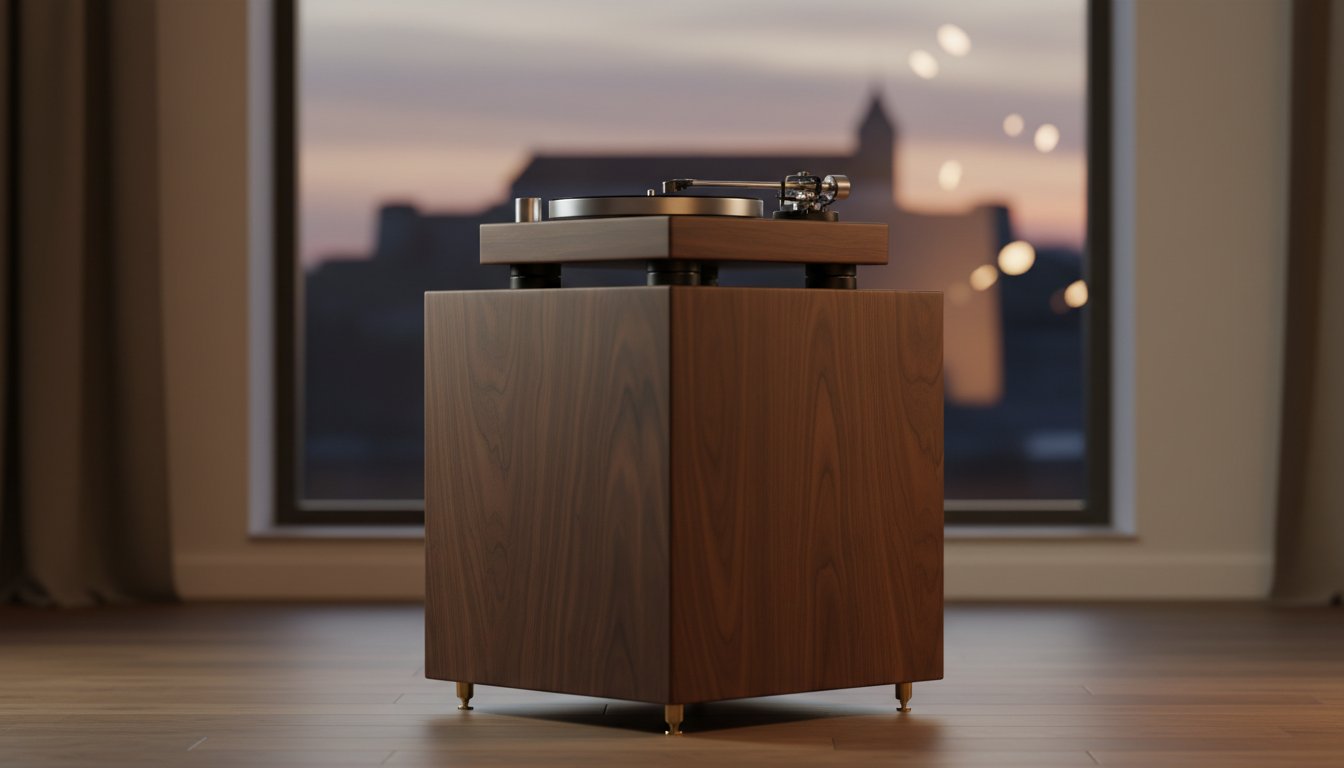
- Mechanical Grounding: Integration with precision-machined brass spikes ensures that micro-vibrations are drained away from sensitive turntable needles.
- Mass Loading: Thick, natural wood shelves act as a natural damping agent, absorbing resonance that metal or glass racks often reflect.
The Slim and Classic Lines: Performance in Compact Spaces
You don't need a massive room to experience high-fidelity sound. In listening environments under 18 square meters, a bulky rack audio setup can create unwanted acoustic reflections. The Slim and Classic lines solve this by maintaining high-end isolation within a more efficient footprint. These profiles are perfect for headphone enthusiasts or those who prefer the streamlined aesthetics of modern streamers and integrated amplifiers.
The Slim series doesn't sacrifice integrity for its smaller size. It utilizes the same handcrafted joinery found in our larger models, ensuring that even a compact headphone amp benefits from a stable, authentic foundation. It's about finding harmony. You get the same artisanal pride and technical confidence in a package that fits your personal sanctuary. These racks prove that true performance isn't measured by size, but by the purity of the connection between the listener and the music.
Critical Features for Peak Audiophile Performance
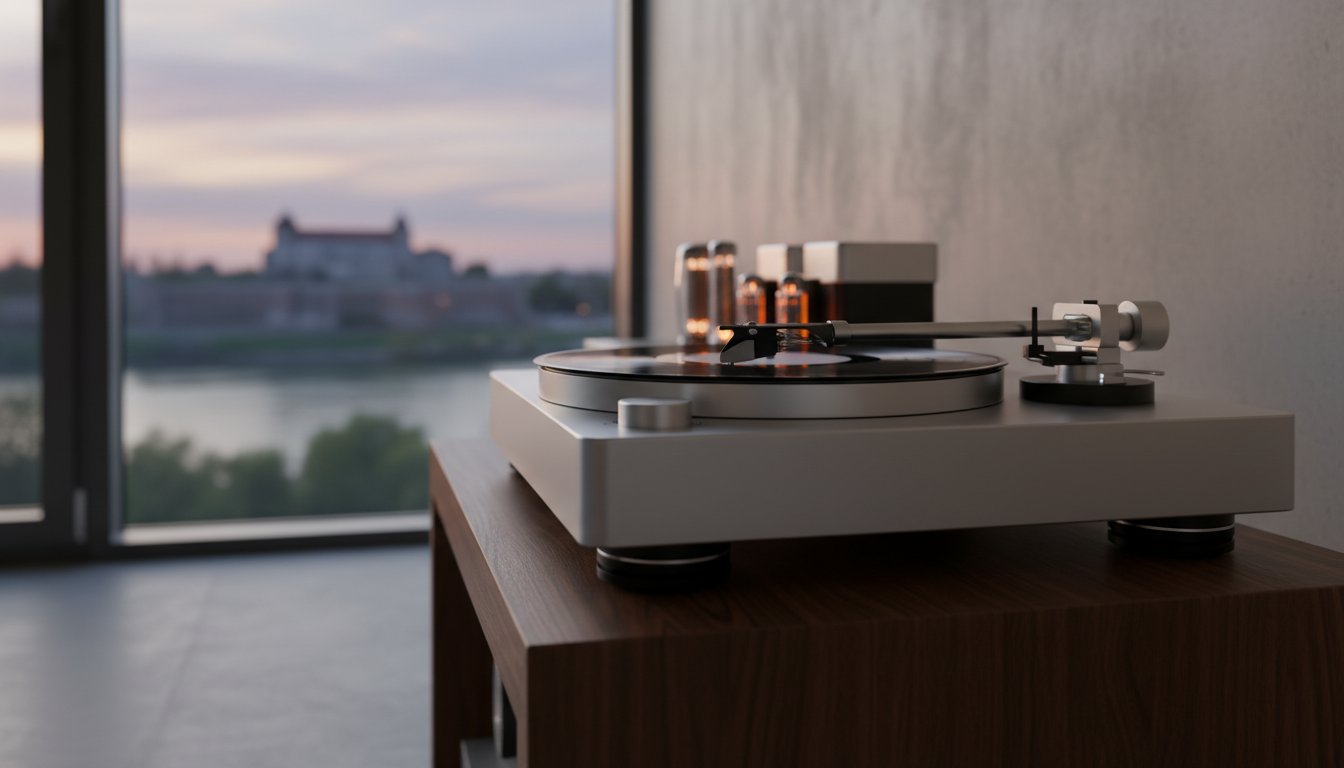
Achieving a high-fidelity experience requires more than just premium components. It demands a foundation that respects the physics of sound and the delicate nature of electronics. A superior rack audio system acts as the silent partner in your signal chain, ensuring that every note remains untainted by external interference. Precision starts with leveling. For turntable enthusiasts, a perfectly horizontal surface is a non-negotiable requirement. Even a 0.5-degree slope can cause uneven stylus wear and tracking errors, leading to audible channel imbalance and distortion in sensitive moving-coil cartridges.
Mechanical Decoupling with Brass Spikes
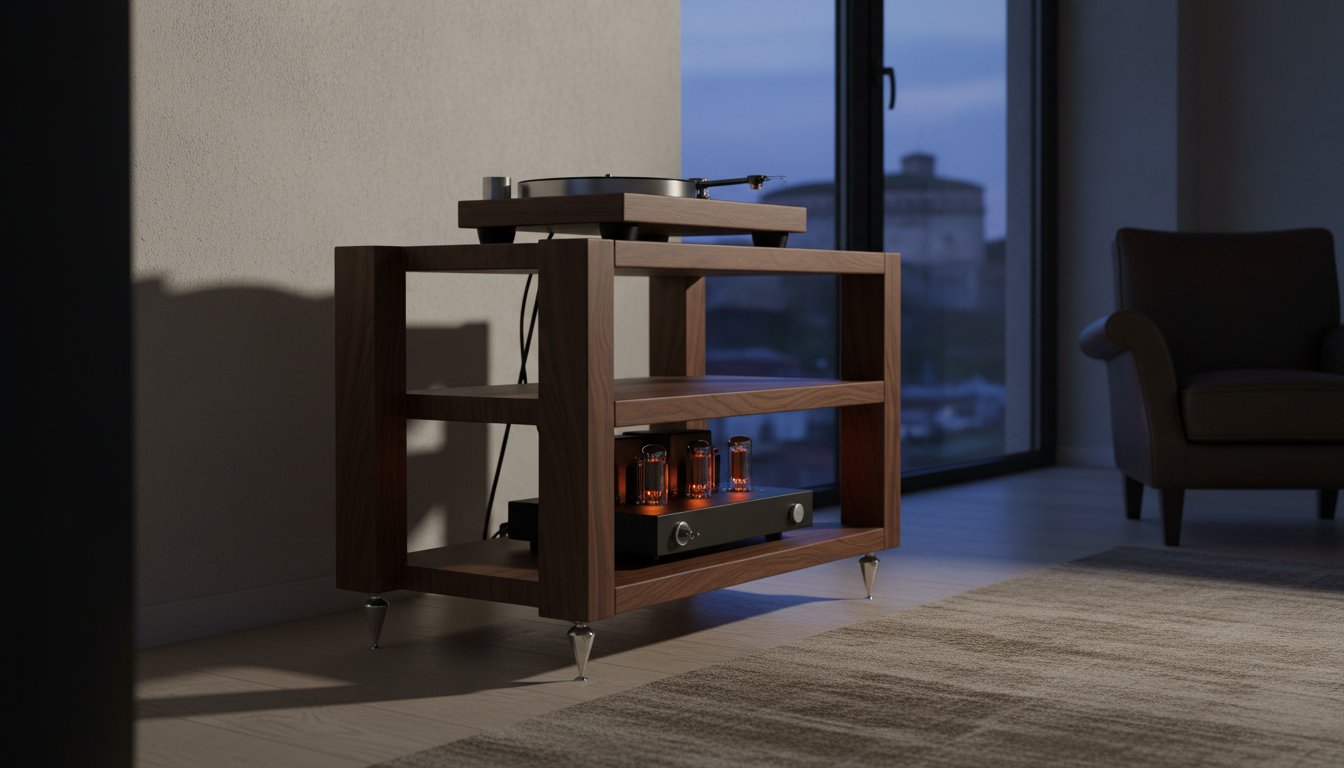
Vibration is the enemy of clarity. High-end racks utilize solid brass spikes to manage mechanical energy. These spikes concentrate the entire mass of the system into a microscopic surface area, effectively draining internal resonances away from sensitive circuits and into the floor. Coupling anchors the rack, while decoupling isolates the component. This distinction is vital for maintaining a clean soundstage. To protect your sanctuary, precision-machined floor protectors sit beneath these spikes. They preserve the integrity of hardwood or stone floors without sacrificing the sonic benefits of energy drainage.
Thermal Management and Airflow
Heat is a silent killer of high-end electronics. Enclosed cabinets are the primary cause of component failure, often trapping air that can reach temperatures exceeding 150 degrees Fahrenheit. This leads to thermal throttling or premature capacitor failure. An open-shelf architecture facilitates natural convection, allowing heat to rise and dissipate freely. When positioning high-heat amplifiers, maintaining at least 4 inches of vertical clearance ensures that your gear operates within its optimal thermal window, preserving both performance and longevity.
Effective cable management is the final touch in a high-performance setup. Keeping power cables separate from low-voltage data and signal lines prevents electromagnetic interference from clouding the music. By organizing these paths, you eliminate the "nest" of wires that acts as an antenna for RFI. This structural discipline ensures that the only thing you hear is the music itself, presented with the clarity it deserves. Your equipment is an investment in your passion, and it deserves a home that honors its potential.
The Artisanal Difference: Handcrafted in Novi Sad
In our Novi Sad workshop, time moves at a different pace. We embrace a "Slow-Made" philosophy, a tradition rooted in multi-generational woodworking that prioritizes precision over speed. This isn't just about building furniture; it's about creating a foundation for your musical sanctuary. While mass-produced alternatives rely on chemical-heavy MDF or thin veneers, we remain uncompromising. Every Myro piece is 100 percent natural solid wood. This choice isn't merely aesthetic. Solid wood possesses organic damping properties that synthetic materials cannot replicate, ensuring your rack audio system performs at its absolute peak. We treat every shelf as a vital component, as essential to the signal path as the cables or the speakers themselves.
The Bespoke Ordering Process
We don't believe in one-size-fits-all solutions. Your journey begins with a direct consultation to discuss your specific audio collection. We tailor every dimension, wood type, and load requirement to fit your heaviest amplifiers and most delicate turntables. Our craftsmen select raw timber with specific grain patterns, guiding each piece from a rough plank to a finished reference rack. This process takes weeks, not hours. We refuse to rush the seasoning or finishing stages because excellence requires patience. Once the final natural oil finish is applied, we manage global shipping from our Serbian workshop directly to your door. We've successfully delivered these handcrafted instruments to listeners in more than 30 countries, proving that quality knows no borders.
Investing in a Lifetime of Listening
Choosing handcrafted furniture is a strategic decision for the serious enthusiast. Natural wood furniture retains its value and structural integrity far longer than factory-made AV racks. It doesn't just sit in a room; it matures. The sensory experience of real wood, including the scent, the texture, and the visual warmth, elevates the act of listening into a ritual. It's about the quiet confidence that comes from owning something authentic. We don't build temporary fixes; we build heirlooms. You're not just buying a stand; you're investing in a piece of art that supports your rack audio goals for decades to come. We invite you to Explore the Reference Series and live your passion. In our workshop, we prove every day that your equipment deserves a home where sound and style are one.
Elevate Your Listening Sanctuary
Choosing the right rack audio foundation isn't just about furniture; it's about the physics of pure sound. You've learned how solid hardwood outperforms industrial alternatives by managing resonance through natural density. Our workshop in Novi Sad, Serbia, upholds a multi-generational family woodworking tradition that ensures every piece meets a standard of excellence mass production can't touch. We maintain a strict zero MDF or veneer policy, using only authentic materials that respect the integrity of your high-end equipment.
Your system deserves a home that's as sophisticated as the music it plays. Whether you select the Reference, Classic, or Slim profile, you're investing in a piece that balances technical performance with timeless aesthetic appeal. It's time to stop compromising on structural integrity and start experiencing the full depth of your collection. Our master craftsmen help you live your passion through pieces that are custom, handmade, natural, and authentic.
Discover the Artisan Collection at HiFi Rack and transform your environment into a true temple of sound. Your ears will thank you for the clarity that only genuine craftsmanship provides.
Frequently Asked Questions
Why is a dedicated audio rack better than a standard bookshelf?
A dedicated audio rack provides superior isolation and vibration management that a standard bookshelf can't achieve. Standard furniture often resonates at frequencies between 20Hz and 100Hz, which colors your sound. Our rack audio solutions utilize high-mass solid wood to dampen these micro-vibrations effectively. This ensures your turntable needle or laser pickup stays stable, preserving the clarity of every note.
Do I really need brass spikes for my audio rack?
Brass spikes are essential for mechanical grounding and minimizing the contact area between your rack and the floor. By reducing the contact point to less than 1 square millimeter, you effectively decouple the system from floor-borne vibrations. This prevents low-frequency energy from muddying your soundstage. It's a simple, effective way to ensure your equipment performs at its peak potential.
How much weight can a solid wood HiFi rack actually hold?
Our solid wood racks are engineered to support heavy equipment, with each shelf comfortably holding up to 80 kilograms. This structural integrity is vital for massive power amplifiers that often weigh 40 kilograms or more. We use 40mm thick hardwoods like oak or ash to ensure zero shelf sag over decades of use. You get a stable foundation that respects the physical presence of your gear.
Is solid wood better than metal for vibration damping?
Solid wood is naturally superior to metal for vibration damping because its internal cellular structure absorbs energy rather than reflecting it. Metal frames often suffer from "ringing" at high frequencies, whereas hardwood has a high internal damping coefficient. This organic material creates a warmer, more authentic listening environment. It turns your rack audio setup into a silent partner for your electronics.
Can I customize the shelf height for my specific power amplifier?
We offer full customization of shelf heights to accommodate any component, from slim streamers to 300mm tall tube amplifiers. Providing at least 50mm of clearance above your gear is a standard recommendation for optimal airflow. Since we handcraft every piece, we can adjust dimensions to the millimeter. This ensures your rack fits your collection perfectly, maintaining the harmony of "Where sound & style are One."
How does an open-back rack help with cable management?
An open-back design provides 360-degree access to your terminals, making cable routing and swapping effortless. It also prevents the 15 percent heat buildup often found in enclosed cabinets, which can shorten the lifespan of sensitive capacitors. You can organize thick, high-end interconnects without the frustration of tight bends. This practical layout keeps your sanctuary tidy while allowing your equipment to breathe.
What is the difference between the Reference and Slim series?
The Reference series focuses on maximum mass with 50mm thick shelves for ultimate vibration control, while the Slim series offers a refined 30mm profile for smaller spaces. Both series maintain our "CUSTOM | HANDMADE | NATURAL | AUTHENTIC" standards. The Reference series is the choice for 90 percent of our audiophile clients seeking the absolute lowest noise floor. The Slim series provides a more understated aesthetic without compromising integrity.
Does the type of wood affect the sound of my audio system?
The density of the wood species directly influences the resonance characteristics of your system. Denser woods like Oak or Ash provide a more controlled, neutral sound compared to softer alternatives. In our testing, 100 percent solid hardwood outperforms veneered MDF by providing a more stable mechanical ground. This choice of material is why our racks are viewed as instruments rather than just furniture.