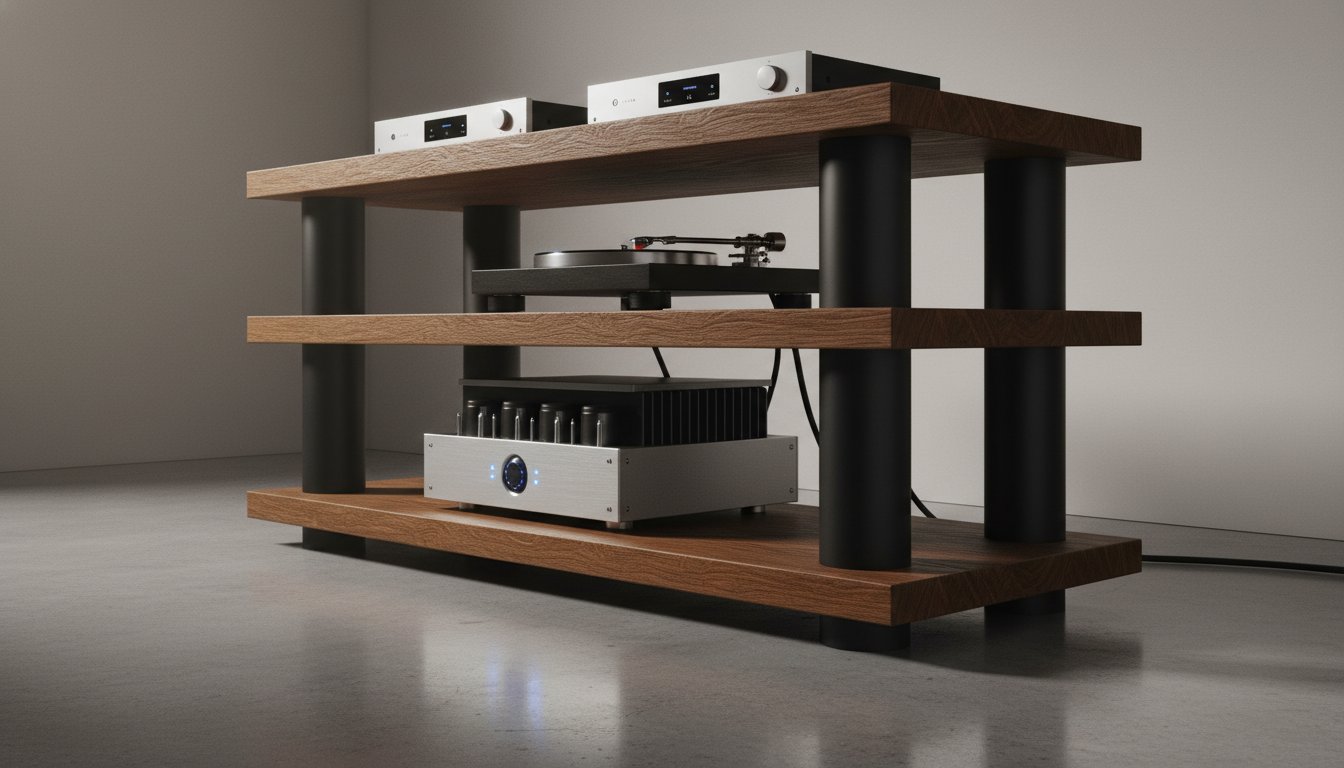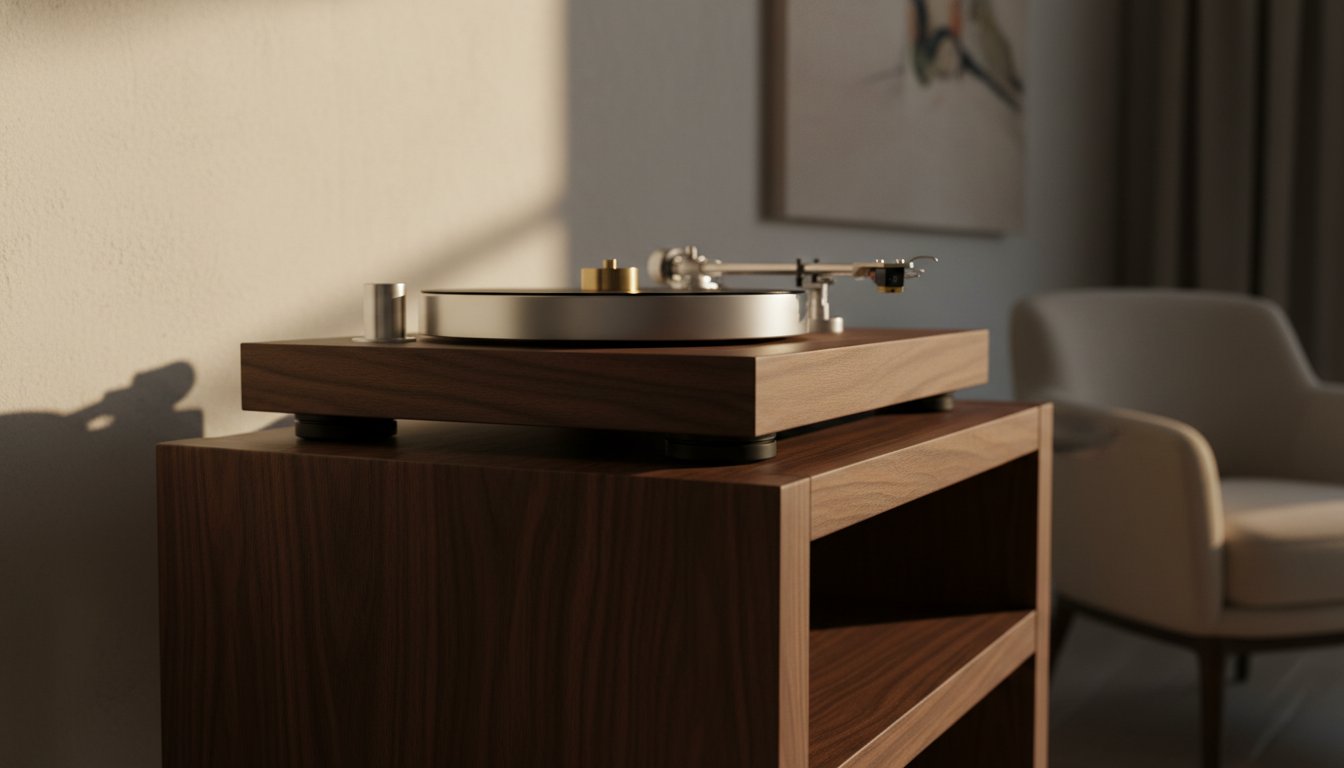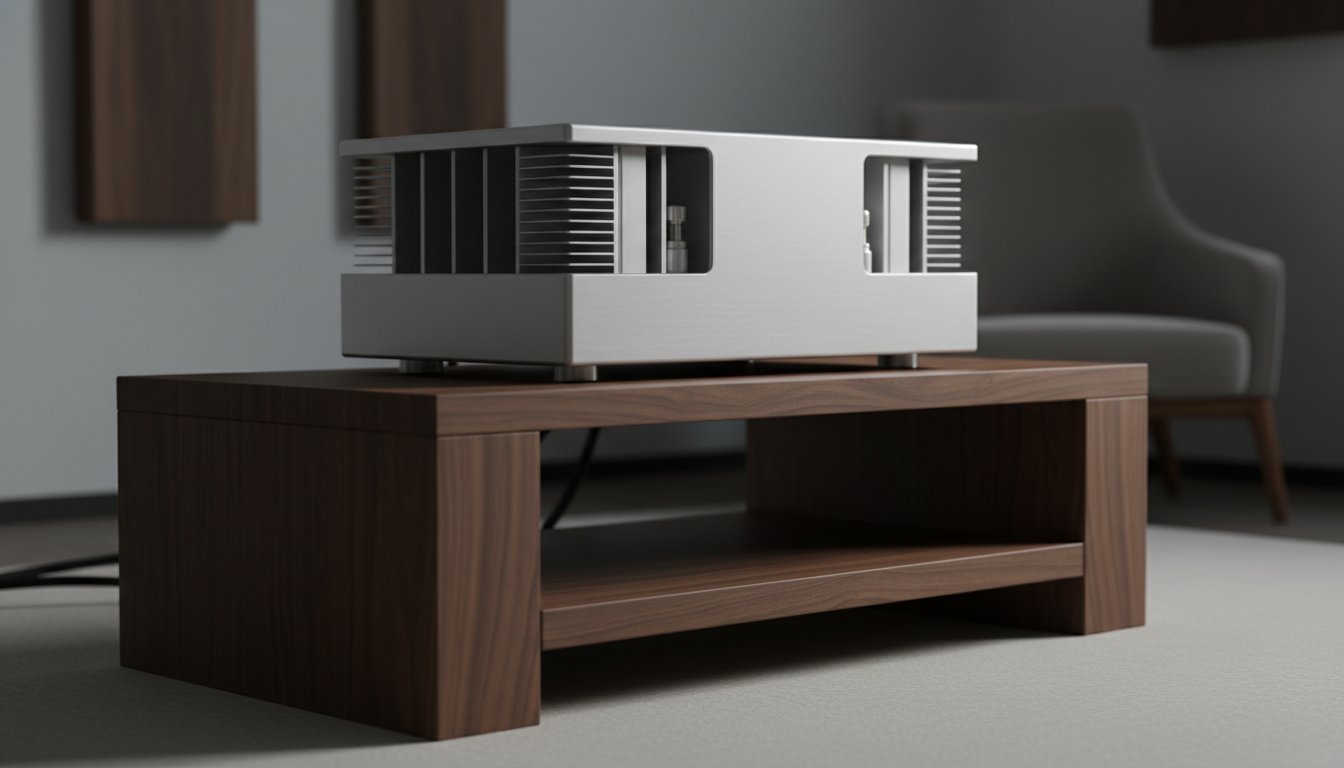
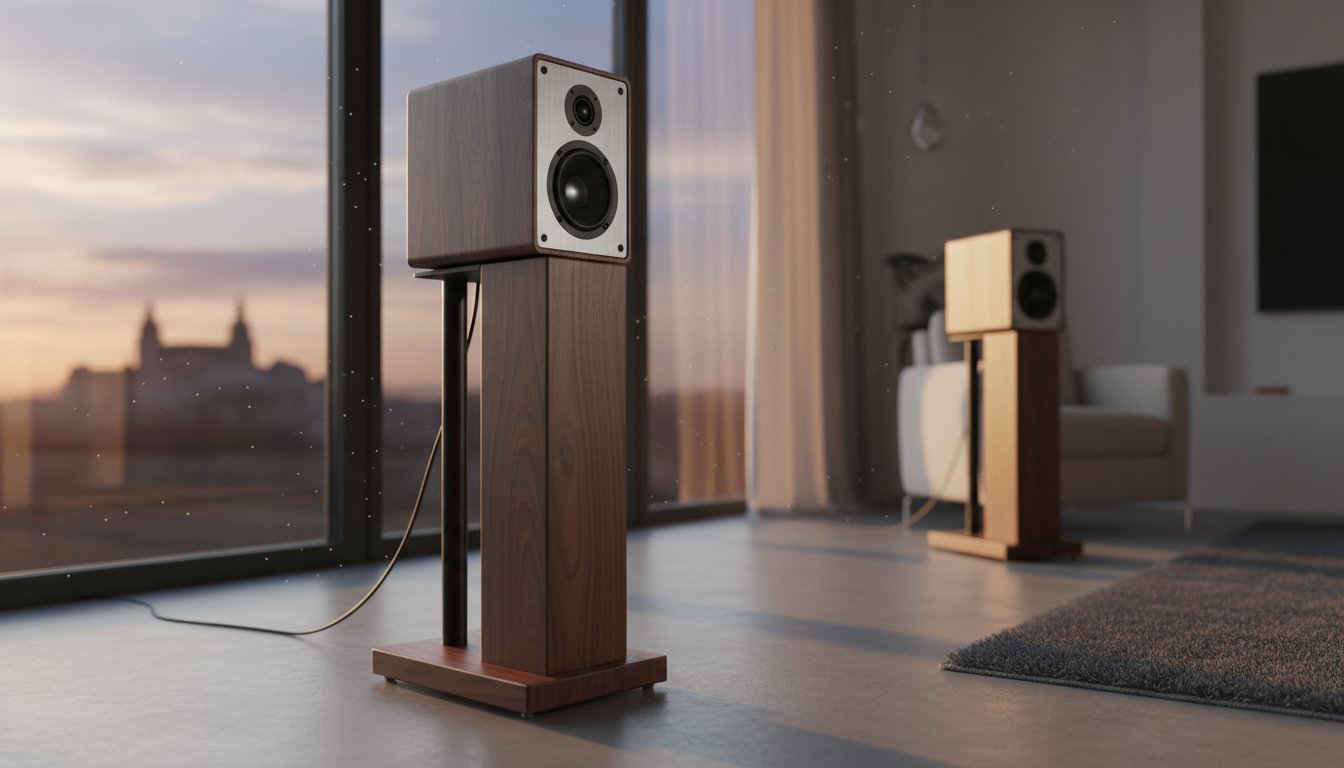
Your speakers are only as honest as the foundation beneath them. You’ve likely spent years refining your system, yet that elusive, crystalline clarity still feels just out of reach. It’s a common struggle; even with the global loudspeaker market projected to reach $10.12 billion in 2026, many enthusiasts still treat their equipment as mere furniture. If you’re tired of muddy bass response and vibrations bleeding into your floorboards, it’s time to realize that loudspeaker stands aren't just accessories. They’re the final, critical component of your signal chain.
We understand the frustration of conflicting advice and the deep desire for a listening room where sound and style are one. This guide will help you discover the acoustic science behind loudspeaker stands so you can separate expensive myths from high-fidelity reality. We’ll dismantle five common misconceptions currently circulating in the audiophile community, giving you the technical confidence to achieve a tighter bass and a truly authentic, immersive soundstage.
Key Takeaways
- Identify how mechanical isolation prevents cabinet smear to reveal the true character of your speakers.
- Compare the resonant signatures of solid walnut and oak against traditional hollow metal loudspeaker stands.
- Look past basic height rules to manage floor reflections and create a more expansive, three-dimensional soundstage.
- Learn the proper application of spikes and pads to ensure stability while protecting your personal sanctuary’s floors.
- Discover why authentic, handmade solid wood construction beats mass-produced MDF for both acoustic performance and lifetime durability.
The Role of Loudspeaker Stands in High-Fidelity Audio
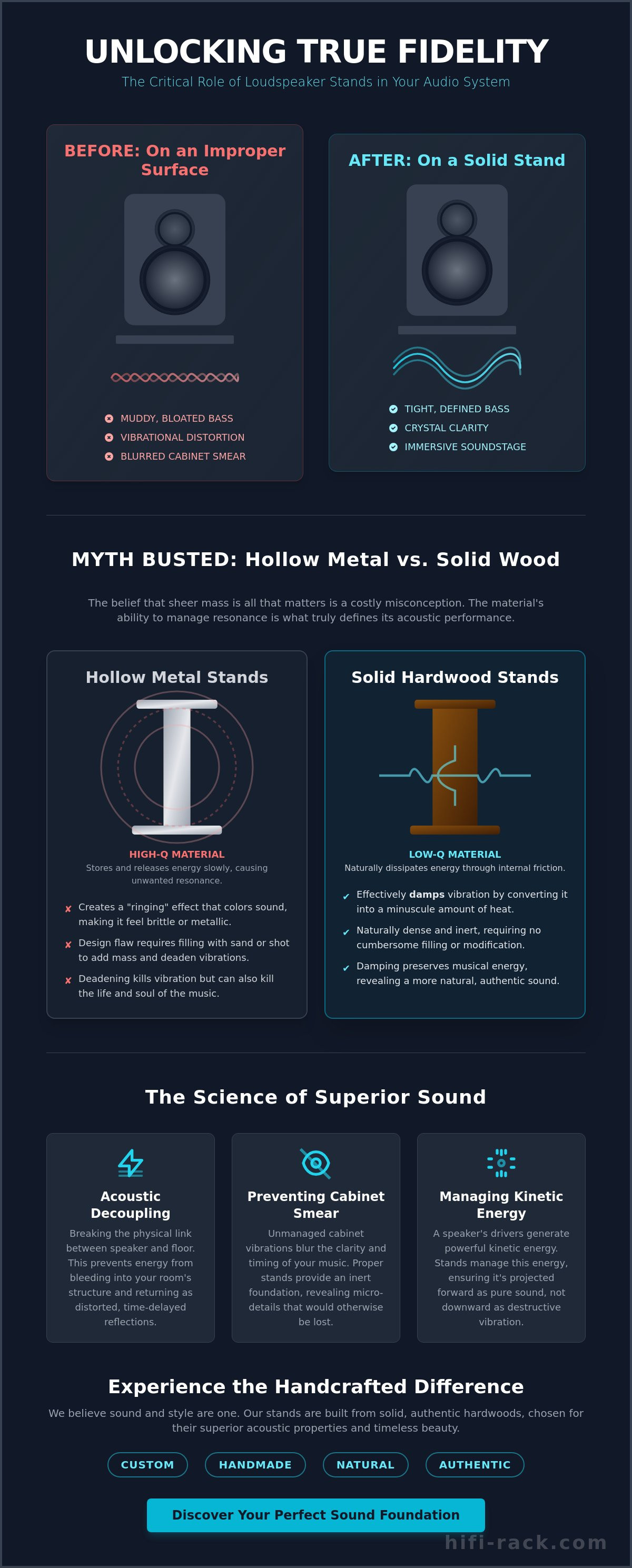
A loudspeaker stand isn't just a piece of furniture. It is a vital mechanical isolation tool designed to preserve the integrity of your audio signal. While mass-market brands might treat them as simple shelves, true audiophiles recognize them as the final component in the signal chain. The Role of Loudspeaker Stands is to manage the kinetic energy generated by your speaker's drivers. Without this management, your system suffers from cabinet smear, a phenomenon where vibrations blur the clarity and timing of your music. Precision matters in the pursuit of sonic perfection.
To better understand how these physical forces impact your listening experience, watch this helpful video:
Myth #1: Stands are purely aesthetic
The idea that stands only exist to look good is a common misconception. When you place a speaker on a desk or a generic shelf, that surface becomes a resonance chamber you didn't ask for. The vibrations from the woofer transfer into the furniture, creating secondary resonance. This unmanaged energy muddies the low-frequency response, making your bass sound bloated and undefined. High-quality loudspeaker stands provide a dedicated, inert foundation. They ensure that the energy stays where it belongs: in the air as sound waves, not in your desk as mechanical noise. It's the difference between hearing a recording and feeling the performance.
The acoustic necessity of decoupling
Acoustic decoupling is the science of breaking the physical link between your speaker and the environment. This separation is essential for high-fidelity performance. By isolating the cabinet, you prevent energy from bleeding into the floor and returning as a distorted echo. This is where the precision of speaker feet becomes critical. These small components work in tandem with the stand to dissipate vibration before it can color the sound. This process protects the micro-details in the high-frequency range, allowing you to hear the subtle textures of a recording that would otherwise be lost to interference.
Our approach at the Novi Sad workshop is rooted in the belief that sound and style are one. We don't rely on mass-produced MDF or thin veneers. Instead, we embrace a philosophy that is CUSTOM | HANDMADE | NATURAL | AUTHENTIC. By using solid hardwoods, we provide a foundation that is both sonically superior and aesthetically timeless. It's about creating a personal sanctuary where your passion for music can truly flourish without compromise.
Solid Wood vs. Hollow Metal: The Resonance Myth
For decades, the audiophile community has been told that mass is the only metric that matters. This belief has led to the dominance of heavy, hollow steel tubes in the market. While weight is important for stability, the material's resonant frequency is what truly defines the sonic signature of your system. Steel is a high-Q material; it stores energy and releases it slowly at specific frequencies, often creating a "ringing" effect. If you’ve ever felt your music sounds brittle or metallic, your loudspeaker stands might be the culprit. Solid walnut or oak, by comparison, are low-Q materials. They possess an internal friction that converts vibration into a trace amount of heat rather than reflecting it back into the speaker cabinet. Selecting solid wood for its acoustic damping properties offers a more natural, sophisticated solution. Each piece of timber is hand-selected in our Novi Sad workshop, ensuring the grain density meets our uncompromising standards for acoustic performance.
Myth #2: Heavy metal stands are always superior
Heavy metal stands aren't inherently better; they're simply easier to mass-produce. The industry standard of filling these tubes with sand or lead shot is essentially an admission of a design flaw. You're adding mass to stop the ringing, but you're also creating a storage bank for energy that can smear the time-alignment of your drivers. It’s a messy, cumbersome process that lacks the elegance of a well-engineered solution. Our handcrafted stands use solid, authentic timber that requires no such intervention. By using a dense, non-hollow medium, we move from deadening a vibration to damping it. Deadening often kills the music's soul; damping preserves its heartbeat. You can explore our collection of handcrafted speaker stands to see how we balance this technical necessity with artisanal style.
Natural damping properties of solid hardwood
The cellular architecture of hardwood is a masterpiece of natural engineering. Each fiber serves as a tiny dampening chamber. When micro-vibrations from the speaker cabinet enter the wood, they encounter a complex, non-uniform grain that prevents the vibration from traveling freely. This organic complexity is why music sounds more lifelike and "warm" when supported by natural materials. It isn't adding artificial bass; it's removing the high-frequency noise that makes music feel sterile. This preservation of micro-dynamics allows a high-end system to breathe, providing an authentic representation of the original recording. For a deeper dive into the science of materials, see the audiophiles guide to custom hardwood audio furniture. It’s about creating a soulful connection to your personal sanctuary through the pursuit of harmony between form and function.
Height and Positioning: Beyond the Ear-Level Rule
Standard audiophile advice almost always begins with a single command: place your tweeters at ear level. While this is a reliable starting point for most two-way monitors, it's often treated as an immutable law rather than a guideline. In reality, the ideal height for your loudspeaker stands depends on a complex interaction between driver dispersion, seating geometry, and room acoustics. Optimizing stand height balances direct high-frequency energy with low-frequency room modes. If you ignore the vertical axis, you risk losing the cohesive soundstage you’ve worked so hard to build.
Height also dictates the "first reflection" point on your floor. When a speaker is positioned too low, the sound waves bouncing off the floor reach your ears almost simultaneously with the direct sound, causing phase cancellation and a blurred image. By raising or lowering the stand by even 5cm, you can shift this reflection point. This adjustment also impacts boundary gain. A speaker closer to the floor typically receives a boost in bass reinforcement, which can be a blessing for thin-sounding monitors or a curse in a room already prone to low-end bloat.
Myth #3: There is a universal best height
The belief in a "standard" 60cm or 70cm stand height ignores the diversity of speaker engineering. For example, MTM (Mid-Tweeter-Mid) configurations often have a narrower vertical "window" than traditional designs, requiring much more precise alignment with the listener's head. Your physical posture matters too. If you prefer a relaxed, reclined listening style, your ears might be 15cm lower than if you sit upright. If you use generic loudspeaker stands, you might be missing the acoustic center of your specific monitor. We always encourage enthusiasts to experiment with temporary raisers, such as sturdy blocks, before committing to a custom-made solution. This hands-on approach ensures the final product is tailored to your specific sanctuary.
Calculating the sweet spot for your room
To find your ideal height, start by measuring the distance from the floor to your ears while seated in your primary listening position. Most listeners find this falls between 90cm and 105cm. Once you have this number, subtract the distance from the bottom of your speaker to the center of its tweeter. This result is your target stand height. However, don't forget the impact of "toe-in" and distance from the rear wall, as these will alter how the high frequencies reach you. Achieving this level of precision requires a foundation that is perfectly stable. At HiFi-Rack.com, we emphasize the necessity of precision leveling solutions to ensure that once you find that sweet spot, your equipment remains perfectly aligned for a lifetime of musical enjoyment.
Stability and Isolation: Spikes, Pads, and Floor Protection
The connection between your equipment and the earth is just as critical as the signal path itself. Many enthusiasts view spikes as mere carpet-piercing tools, yet their acoustic function is far more profound. Precision-machined brass spikes serve as mechanical diodes. They concentrate the entire weight of the system into a microscopic surface area, creating a high-pressure interface that allows kinetic energy to exit the cabinet. This process ensures your loudspeaker stands remain anchored, providing a rock-solid foundation that prevents the minute cabinet movements known to blur transient response.
Myth #4: Spikes are only for carpeted floors
It's a common misconception that hard floors require soft rubber pads. While rubber provides isolation, it often lacks the stability needed for high-fidelity performance. Spikes are equally vital on hardwood or stone, provided you use floor protectors. These small metal discs allow the spike to concentrate energy without marring your personal sanctuary’s flooring. Soft pads can sometimes act as a spring, storing energy and releasing it back into the system at a delayed interval. This creates a "smearing" effect in the mid-bass. By using spikes with floor protectors, you enjoy the benefits of mechanical grounding while maintaining aesthetic harmony in your room.
Mechanical grounding vs. isolation
To achieve peak performance, you must understand the difference between grounding and isolation. Grounding provides a clear path for internal vibrations to leave the speaker cabinet and dissipate into the floor. Isolation, on the other hand, prevents external vibrations from the room or floor from entering the speaker. High-end loudspeaker stands utilize a combination of both. The solid wood structure naturally damps micro-vibrations, while the brass spikes provide the exit path. This dual-action approach is essential for floor-standing speaker decoupling, a detail often overlooked by mass-market manufacturers. It’s a sophisticated balance that ensures the only thing moving in your room is the air.
If you're ready to elevate your listening experience with a foundation built for musical perfection, explore our handcrafted speaker stands and discover the difference of authentic, solid wood construction.
Handcrafted Excellence: The HiFi Rack Approach
At our workshop in Novi Sad, the philosophy is simple: we believe that where sound and style are one, the listener finds true peace. We don't build accessories; we craft instruments. While mass-market retailers treat loudspeaker stands as an afterthought; we recognize them as the foundation of your personal sanctuary. This commitment is defined by our core mantra: CUSTOM | HANDMADE | NATURAL | AUTHENTIC. Every piece of timber is treated with the reverence it deserves, ensuring your passion for music is supported by materials that honor the art of listening. We don't just sell furniture; we help you live your passion through the pursuit of sonic perfection.
Our "no MDF, no veneer" rule is a cornerstone of this approach. These synthetic materials are common in the industry because they're inexpensive and easy to mass-produce, yet they lack the acoustic damping and structural integrity of solid wood. Our Myro HiFi Rack responsibility is to provide you with a product that lasts a lifetime, not a season. Solid wood matures, developing a richer character over years of use, much like the music you love. By avoiding composite materials, we ensure that your system remains free from the muddying resonances associated with glue-heavy boards.
Why bespoke stands outperform mass-market models
Mass-market models often force you into a one-size-fits-all compromise that ignores the unique physics of your room. Bespoke loudspeaker stands offer a level of precision that off-the-shelf products can't match. Consider the following advantages of our artisanal process:
- Tailored top-plate dimensions: We ensure that the speaker cabinet is perfectly coupled to the stand, maximizing the efficiency of energy transfer and stability.
- Custom heights: We match the stands to your specific seating, room geometry, and even the thickness of your rugs to ensure perfect tweeter alignment.
- The slow-made philosophy: We take the time to get every joint and finish perfect, resulting in a piece of audio equipment that is as durable as it is beautiful.
Customization: Matching sound to style
True high-fidelity is as much about the environment as it is about the equipment. Choosing between the deep hues of walnut, the warmth of cherry, or the timeless strength of oak allows you to create a visual harmony with your Myro Classic rack. This aesthetic cohesion transforms a collection of gear into a unified sanctuary. It’s about the emotional payoff of entering a room that reflects your taste and calms your mind. When your equipment looks as authentic as it sounds, the listening experience becomes truly transformative. It is no longer just a hobby; it is a soulful connection to the music.
If you're ready to move beyond mass-produced compromises and experience the clarity of solid wood, explore our handcrafted loudspeaker stands and begin your journey toward musical perfection.
The Final Step Toward Sonic Perfection
Your journey toward a truly authentic listening experience doesn't end with the purchase of high-end monitors. It continues with the foundation you place beneath them. You now understand that loudspeaker stands are vital mechanical tools designed to preserve the micro-details of your music. By choosing solid hardwood over mass-produced MDF, you eliminate artificial resonance and embrace a more organic soundstage. Whether you’re optimizing for first reflections or seeking perfect tweeter alignment, the right support transforms your system into a cohesive instrument. This is the difference between simply hearing a recording and feeling the performance.
Our workshop in Novi Sad remains committed to the pursuit of harmony between form and function. We provide custom sizes tailored to your specific room geometry; ensuring that every note reaches you with absolute clarity. We invite you to Elevate your listening experience with handcrafted speaker stands made from 100% solid hardwood. It’s time to treat your passion with the reverence it deserves. Let your listening room become the sanctuary you’ve always envisioned, where sound and style are finally one. Your music has never been in better hands.
Frequently Asked Questions
Do bookshelf speakers really need stands?
Yes, bookshelf speakers require dedicated stands to perform at their full acoustic potential. Without them, vibrations transfer directly into the surface they sit on, causing resonance that muddies the sound. Stands also ensure the tweeter is aligned with your ears, which is essential for a precise soundstage. A 2025 industry report suggests that online sales now account for 64.74% of high-end audio distribution, as enthusiasts increasingly seek these specialized isolation tools.
Can I use a bookshelf instead of a dedicated speaker stand?
You can, but it is not recommended for high-fidelity listening. Bookshelves are typically made of resonant materials like MDF that vibrate along with the speaker, adding unwanted coloration to your music. A dedicated stand provides a much smaller footprint and superior decoupling. This separation ensures that cabinet energy dissipates safely rather than turning your entire bookshelf into a secondary, distorted sound source that blurs the stereo image.
What is the best material for loudspeaker stands?
Solid hardwood is the premier choice for audiophiles who value a natural, authentic sound. Unlike hollow metal tubes that ring at high frequencies, solid walnut or oak possesses a cellular structure that naturally damps micro-vibrations. This material choice eliminates the need for messy mass-loading with sand. It provides a warm, organic character to the music that synthetic materials simply cannot replicate in a high-end listening sanctuary.
How high should my speaker stands be?
Your stands should position the speaker's tweeter at the same height as your ears while seated. For most listeners, this target falls between 90cm and 105cm from the floor. Precision is key; even a 5cm deviation can shift the first reflection point on your floor and blur the stereo image. We offer custom heights to ensure your loudspeaker stands are perfectly tailored to your specific furniture and room geometry.
Should I fill my speaker stands with sand or lead shot?
You only need to fill stands if they are made of hollow metal tubes. This mass-loading is a temporary fix for the ringing inherent in steel and aluminum. Solid hardwood stands don't require any filling because they are already dense and inert. By choosing a solid material from the start, you avoid the mess of lead shot and the potential for stored energy to smear the timing of your audio signal.
Do speaker stands improve bass response?
Yes, high-quality stands significantly improve bass response by making it tighter and more defined. By decoupling the speaker from the floor, you prevent low-frequency energy from bleeding into the structure of your home. This isolation stops bass bloat and allows you to hear the actual texture of the low notes. Proper positioning also manages boundary gain, ensuring your room doesn't overwhelm the delicate balance of the original recording.
Are spikes better than rubber feet for speaker stands?
Spikes are generally superior because they provide mechanical grounding, concentrating weight to drain energy away from the cabinet. While rubber feet offer isolation, they can sometimes act as a spring that stores vibration. On hard floors, we recommend using spikes with metal floor protectors to maintain stability without damaging your hardwood. This setup ensures your system remains rock-solid, which is vital for preserving sharp transient response in your music.
Can I use floor-standing speakers on stands?
Most floor-standing speakers are designed to sit directly on the floor, but they still benefit from specialized decoupling platforms. While they don't need a tall stand, raising them 5cm to 10cm on a solid wood base can help manage floor reflections. This slight elevation often tightens the bass and improves the clarity of the midrange. It’s about finding the harmony between the speaker’s design and your room’s unique acoustic challenges.