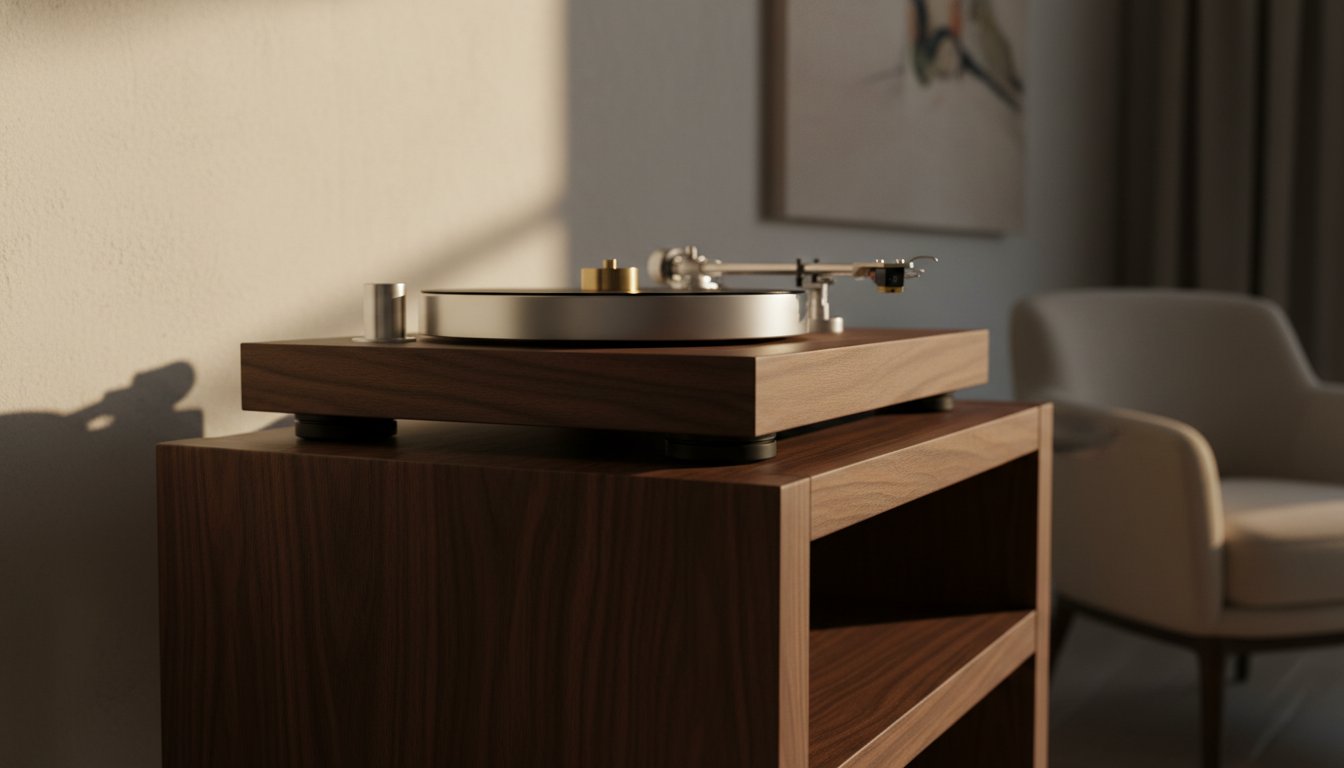
Your furniture is not just a container for your gear; it's an active acoustic component that either anchors or blurs your soundstage through resonance and diffraction. Many enthusiasts spend years chasing the perfect amplifier. However, they often overlook the physical objects standing between them and sensory perfection. If you've ever felt your music is trapped inside the speakers or struggled with a vague center image, learning how to improve stereo imaging with furniture is the vital next step in your pursuit of high-fidelity sound.
I've felt that same frustration when a soundstage feels flat or congested due to harsh reflections from nearby surfaces. You deserve a listening sanctuary where every instrument occupies a precise, holographic space. This guide reveals how to transform your room by strategically selecting and positioning furniture to unlock a breathtakingly clear soundstage. We will explore the balance of reflection and diffusion, the importance of raw, high-quality materials, and how to integrate items like a reference HiFi rack or dedicated speaker stands to achieve a perfect harmony between form and function.
Key Takeaways
- Identify how common furniture acts as a secondary sound source through reflections, causing your center image to lose its precision and focus.
- Master how to improve stereo imaging with furniture by strategically managing the "acoustic shadow" and reducing the physical height of objects between your speakers.
- Uncover the relationship between mechanical vibration and sonic blur, learning why material choice is as vital to your system as the electronics themselves.
- Implement a practical five-step plan to clear your signal path and address the side tables or surfaces that cause harsh, distracting reflections.
- Discover the transformative power of purpose-built solutions like the Reference HiFi Rack, designed to anchor your soundstage with artisanal integrity and solid wood construction.
The Silent Image-Killer: How Furniture Affects Stereo Imaging
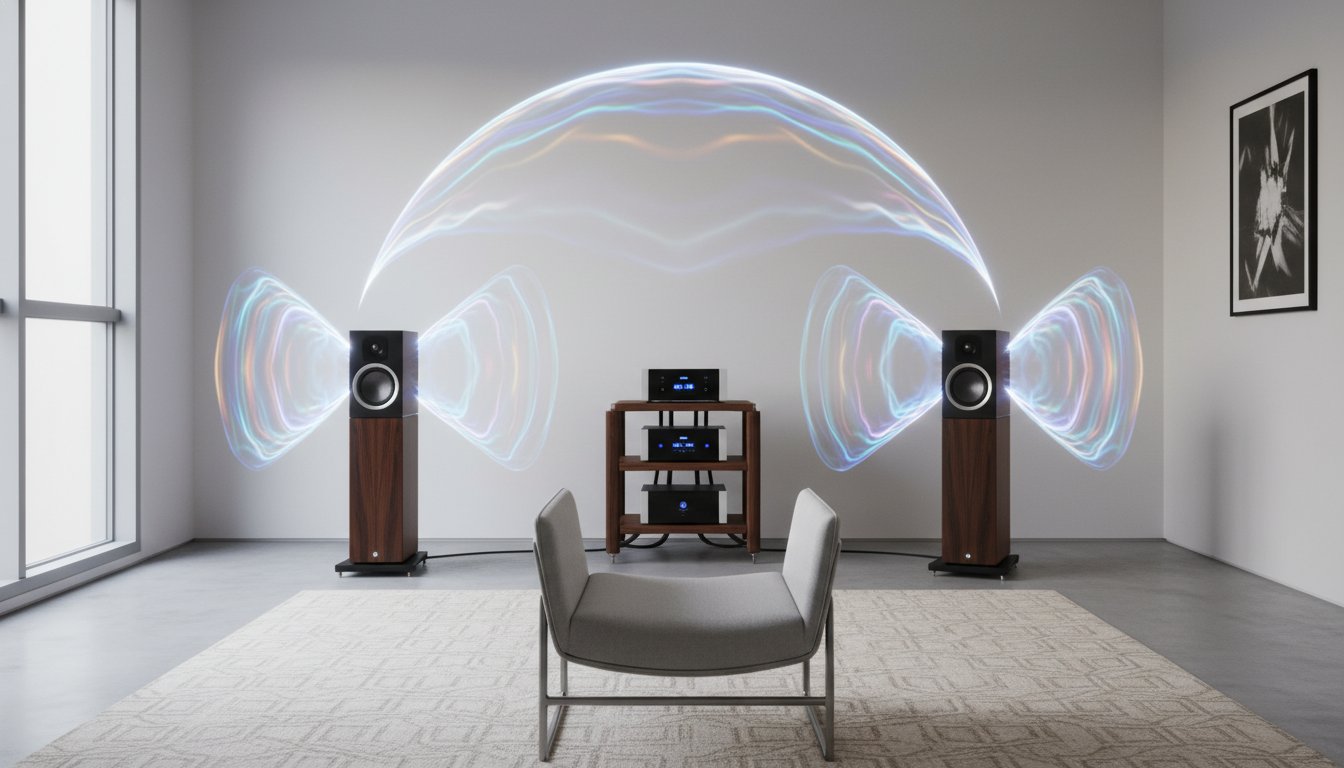
Stereo imaging is the ability of your high-fidelity system to project a three-dimensional soundstage where instruments and voices have specific, locatable coordinates. It is the magic inherent in stereophonic sound, turning two static speakers into a vivid, lifelike performance that breathes within your room. However, when you introduce bulky furniture into this delicate environment, those objects become secondary sound sources. They catch the energy from your drivers and bounce it back toward your ears with a slight delay, interfering with the pure signal.
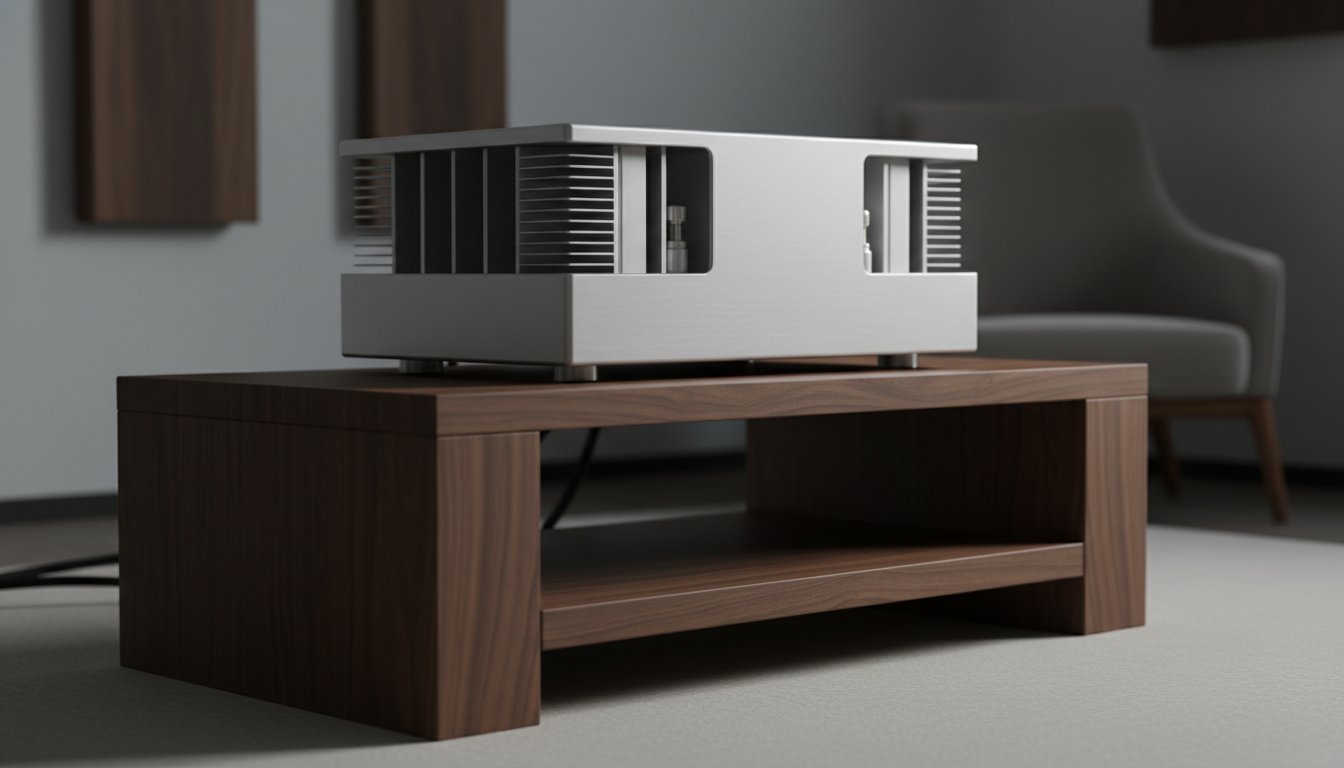
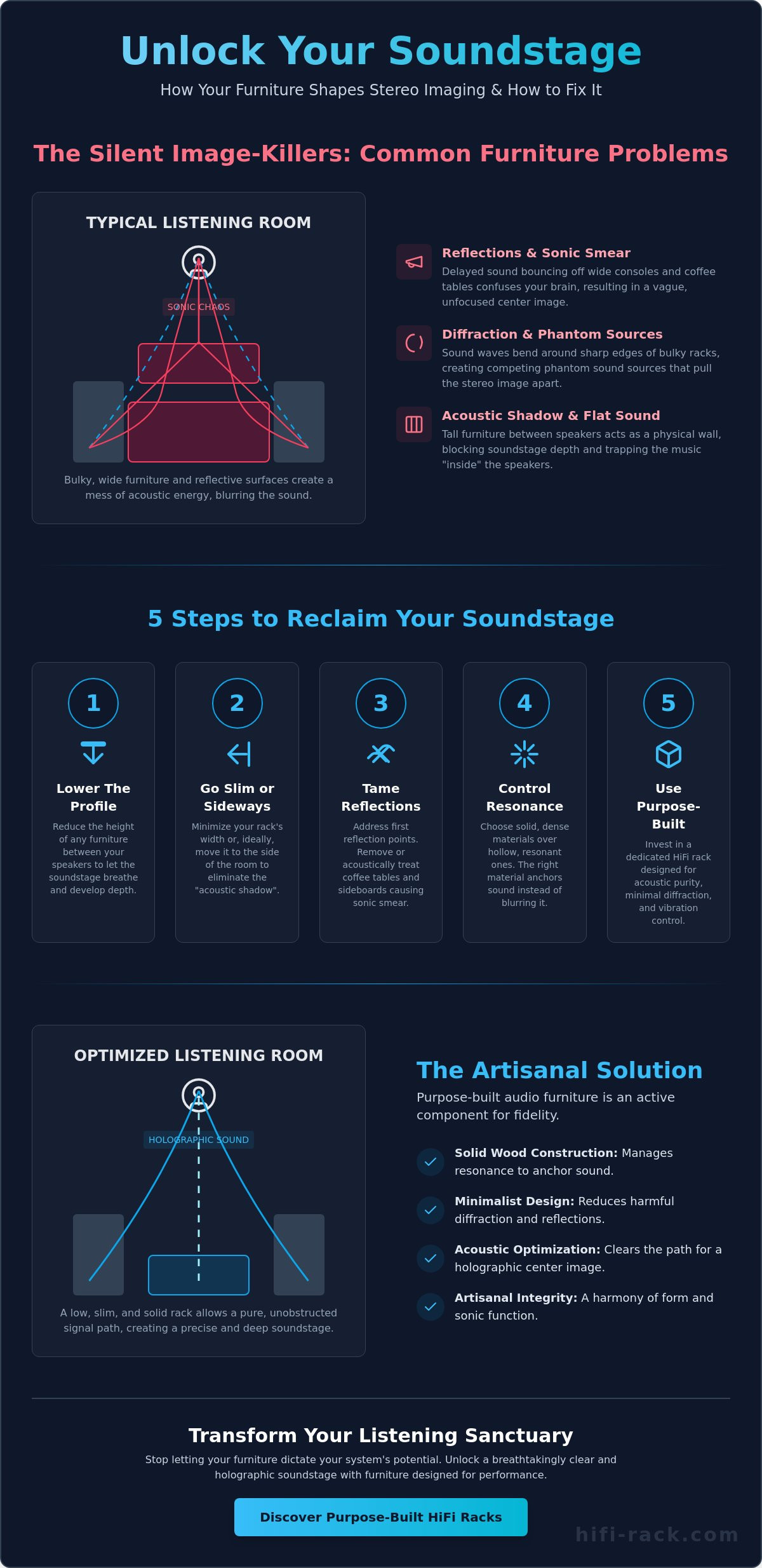
This delay is the root of "sonic smearing." Your brain relies on microscopic timing differences to place a sound in space. When a reflection from a broad surface hits your ears just milliseconds after the direct sound, your auditory system gets confused. The result is a center image that feels vague and a soundstage that loses its holographic depth. Standard media consoles are often the primary culprits. Their wide, flat surfaces and hollow cavities create a mess of unwanted acoustic energy that masks the fine details of your favorite recordings.
To better understand how spatial elements and timing affect your listening experience, watch this helpful video:
Early Reflections and the Haas Effect
Furniture placed within one meter of your speakers causes the most significant damage to your audio fidelity. This proximity triggers the Haas Effect, where your brain blends the direct sound and the furniture's reflection into a single, distorted event. You will notice this blurring most clearly with coffee tables or sideboards positioned at first reflection points. These are the specific spots on a surface where sound bounces directly from the speaker to your listening position. It acts like an acoustic mirror that shatters your focus, making it much harder to learn how to improve stereo imaging with furniture without first addressing these nearby obstacles.
Diffraction: Why Sharp Edges Matter
Sound waves don't simply stop when they hit an object. They behave like water, wrapping around corners and edges. When you place a bulky, wide rack between your speakers, the waves intended for the phantom center channel bend around the furniture's sharp corners. Diffraction is the bending of waves around furniture corners that creates phantom sound sources. These phantom sources compete with your speakers, pulling the image apart and making it impossible to achieve pinpoint instrument placement. By choosing minimalist, purpose-built designs like a Slim HiFi Rack, you reduce the surface area available for these harmful interactions, allowing the music to remain pure and unobstructed.
Strategic Placement: Managing the Acoustic Shadow
I often see listening rooms where the speakers are perfectly positioned according to a calculator, yet the soundstage remains stubbornly flat. The culprit is almost always the "between-the-speakers" equipment rack. When you place a tall, bulky piece of furniture directly in the center of your system, you create a physical wall that blocks the depth of your soundstage. This setup creates an acoustic shadow, preventing the phantom center image from projecting behind the speakers. Understanding how to improve stereo imaging with furniture requires a shift in how we view the space between our speakers.
The solution lies in a "low and lean" philosophy. By minimizing the height and width of your furniture, you allow the soundstage to breathe. I've found that moving the equipment rack to the side of the room is the most effective way to reclaim depth. If that isn't an option, choosing a Slim HiFi Rack with a smaller footprint can make a world of difference. You should also manage the distance between your rack and the front wall. Pulling your gear forward or pushing it back just a few inches can often snap a blurred center image into sharp focus. If you are struggling with a cluttered center stage, a minimalist footprint helps the music breathe.
The Media Console Problem
Wide, flat surfaces are the natural enemies of a holographic listening experience. Standard media consoles act as massive reflectors, bouncing sound waves back at you before the primary signal has a chance to fully resolve. If you suspect your console is the problem, try a simple test. Drape a thick, heavy blanket over the top of the unit. If the voices in your music suddenly feel more centered and lifelike, the hard surface of your furniture is the issue. Instead of a wide TV stand, consider a modular approach using dedicated racks that offer less surface area for reflections to occur.
Speaker Stands and Furniture Height
Height is just as critical as lateral placement. To avoid unwanted floor and furniture reflections, your tweeters should sit at ear level. This is where high-quality speaker stands become indispensable. Unlike hollow metal stands that can ring and add their own coloration, solid wood stands provide a stable, inert foundation. This mass is vital for image focus. When your speakers are decoupled from the floor and held rigidly in place, the micro-details of the recording are no longer lost to mechanical vibration. It's a simple change that transforms a casual listening session into a deeply personal, immersive event.
Resonance Control: Why Material Choice Blurs the Sound
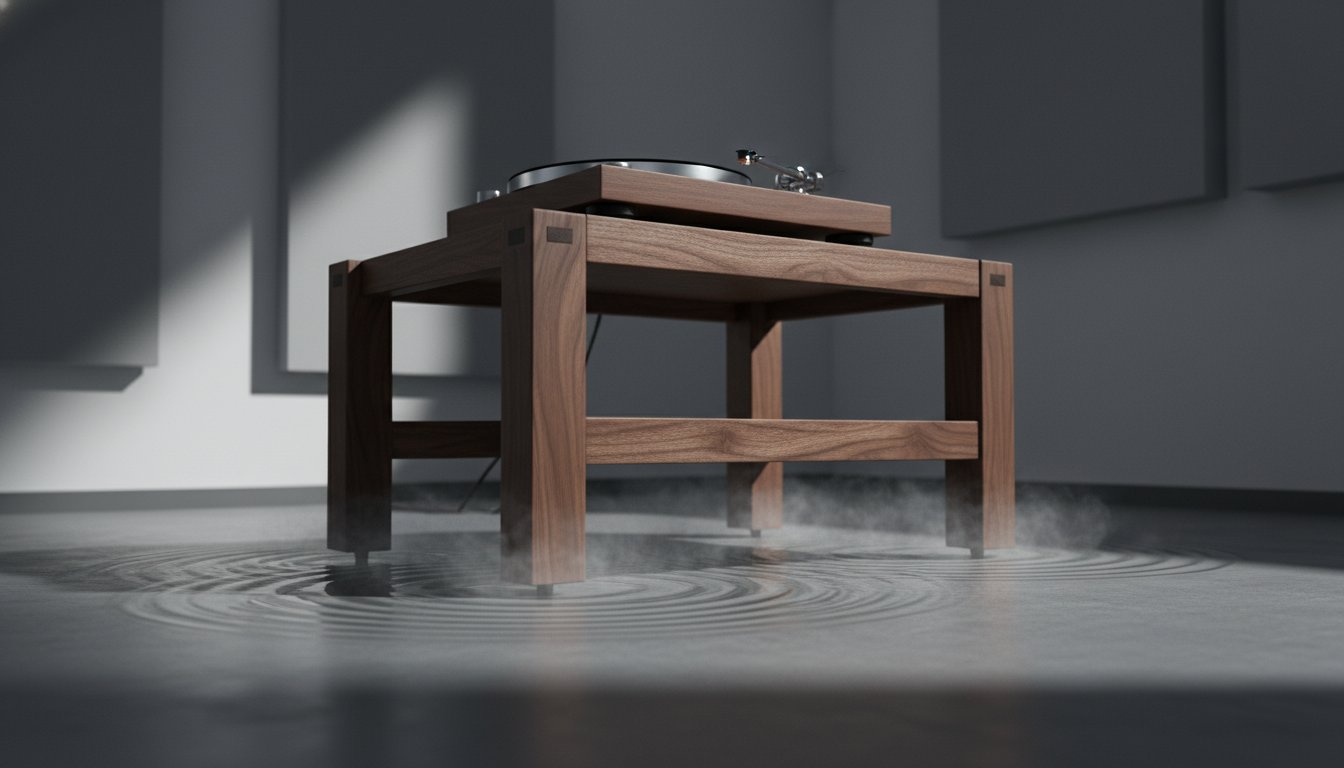
While the physical placement of objects is vital, the internal composition of your furniture is a silent factor that often dictates the clarity of your soundstage. Mechanical vibration is a subtle thief of precision. When your speakers energize the room, that kinetic energy travels through the floor and into your equipment rack. This creates a feedback loop where microscopic vibrations interfere with the delicate timing of your components. If you are investigating how to improve stereo imaging with furniture, you must look beyond the silhouette of the piece and consider the materials themselves.
Most mass-market furniture is constructed from MDF or thin veneers. These materials act as energy storage devices. They absorb vibrations and release them slowly, creating a persistent "ringing" that smears the transients of your music. I've found that this energy storage is what causes a "veiled" sound, where instruments seem to overlap rather than occupy their own distinct space. For the discerning listener, the goal is energy dissipation. You want a material that grounds the system, allowing the electronics to perform with absolute signal integrity.
MDF vs. Solid Wood: The Imaging Debate
The debate between synthetic and organic materials is central to high-fidelity design. MDF is a dense, uniform composite held together by glue. Because of its consistent density, it lacks the ability to break up resonant frequencies. In contrast, the organic grain of solid oak or walnut is inherently non-uniform. This natural variation helps to scatter and dissipate standing waves within the furniture itself. When we use solid hardwood, we are utilizing nature's own damping system to ensure the rack remains inert. You can explore this further in our detailed comparison of Solid Hardwood vs. MDF: The Truth About Audio Furniture.
Coupling and Decoupling the Rack
Once you have selected the right materials, you must manage how the furniture interacts with the room. Coupling the rack to the floor using stainless steel spikes can anchor the entire system, providing a sharper, more focused image. However, in rooms with highly resonant floors, decoupling becomes necessary. Utilizing specialized speaker feet or isolation pads prevents floor-borne energy from reaching your sensitive gear. Learning how to improve stereo imaging with furniture is a journey of refinement. By isolating each component on modular shelving, you prevent the vibration of one device from polluting the performance of another, resulting in a blacker background and a more vivid phantom center.
5 Steps to Reclaim Your Soundstage with Furniture
Restoring a holographic soundstage requires more than just moving speakers; it demands a disciplined audit of the physical objects in your room. If you want to master how to improve stereo imaging with furniture, you need a repeatable methodology. Follow these five steps to strip away the acoustic layers that blur your music and reclaim the clarity of your recordings.
- Step 1: Clear the path. Remove every non-essential item sitting between your speakers. A cluttered space creates a cluttered sound.
- Step 2: Address first reflections. Identify side tables or coffee tables that sit in the direct line of fire. These surfaces reflect sound waves that arrive at your ears out of phase, destroying focus.
- Step 3: Level the rack. Use a precision level on every shelf. Sensitive components, especially analog sources, require a perfectly horizontal foundation to maintain signal integrity and mechanical balance.
- Step 4: Decouple the speakers. Elevate your monitors on dedicated Speaker Stands. Separating the cabinet from the floor prevents energy from muddying the lower frequencies and smearing the image.
- Step 5: Replace resonant surfaces. Swap out glass or MDF units for solid, high-mass materials. Solid hardwood naturally damps energy rather than storing it, providing a blacker background for your music.
The Mirror Trick for Furniture
To identify exactly which piece of furniture is sabotaging your focus, use the mirror trick. Sit in your primary listening position while a friend moves a small mirror along the surface of your sideboards or coffee tables. If you can see the speaker's tweeter in the reflection, you have found a first reflection point. Often, moving that piece of furniture just 10 to 20 cm is enough to clear the reflection path. Once you have cleared these obstacles, you can refine your "toe-in" adjustments to snap the phantom center into place without fighting the room.
Managing Cable Chaos
A tangle of wires behind your gear is more than an eyesore; it is a source of electromagnetic interference that can subtly degrade your imaging. Open-architecture racks, such as the Myro Minimal, provide the necessary space for clean cable routing and superior airflow. There is also a significant psychological reward in a minimalist setup. When your visual environment is orderly, your brain can focus more deeply on the auditory details. A clean sanctuary leads to a more immersive listening experience. If you are ready to refine your space, explore our Reference HiFi Racks to find the perfect foundation for your pursuit of perfection.
The Artisanal Solution: Purpose-Built Audio Furniture
The journey toward a holographic soundstage culminates in the choice of the foundation itself. I've found that even the most well-placed speakers can be held back by the resonant signature of mass-market furniture. This is where the Reference HiFi Rack becomes an essential partner in your system. Handcrafted with pride in Novi Sad, it serves as a tool for image precision by ensuring that your electronics remain perfectly still and isolated from the room's energy.
Understanding how to improve stereo imaging with furniture requires a shift from viewing a rack as a shelf to seeing it as an acoustic filter. Our designs utilize bespoke dimensions to minimize the physical footprint between your speakers, effectively reducing the "acoustic shadow" that blurs the phantom center. By using solid hardwood, we create a structure that naturally dissipates energy. This results in a blacker background and a more vivid, lifelike presentation of the music you love. It is a marriage of performance and aesthetics designed for those who view listening as a life-altering passion.
The Reference vs. The Classic
The choice between our designs often comes down to the scale of your sanctuary. The Reference HiFi Rack is a high-mass solution built for absolute stability in larger systems or dedicated listening halls. For those with space constraints, the Myro Classic offers the same artisanal quality in a more elegant, refined profile. Both designs uphold our core philosophy: no MDF and no veneer. We believe that the organic beauty of solid wood is the only material worthy of supporting high-end audio, providing a structural integrity that synthetic composites simply cannot match.
Investing in Longevity
A solid wood rack is a permanent addition to your audio lifestyle. While electronics may come and go, the integrity of a handcrafted piece only grows over time. We take our handcrafted responsibility seriously, utilizing sustainable sourcing to ensure that your pursuit of perfection doesn't come at the cost of the environment. Each rack is built to last a lifetime, evolving alongside your passion for sound. It is an investment in both your environment and your relationship with music. To ground your soundstage and unlock the full potential of your system, explore our handcrafted collection today.
Elevate Your Listening Sanctuary
Achieving a holographic soundstage is a journey of refinement where every physical object in your room plays a role. By managing the acoustic shadow and choosing materials that dissipate rather than store energy, you transform your environment into a true sanctuary. We've explored the technical necessity of clearing reflection paths and the profound impact of solid hardwood on signal integrity. Mastering how to improve stereo imaging with furniture is about more than just aesthetics; it's about honoring the craft of the original recording.
Our commitment to excellence is reflected in every piece we create. Handcrafted in Novi Sad, our racks follow a strict zero MDF or veneer policy. We use only solid hardwood for its natural damping properties and timeless beauty. This ensures your components have the inert foundation they need to perform at their absolute peak. Your pursuit of sensory perfection deserves a foundation built with integrity and artisanal pride. It's a promise of longevity for your audio lifestyle.
Discover the Reference HiFi Rack for Uncompromising Imaging and begin the next chapter of your high-fidelity journey. Your music is finally ready to be heard in three dimensions.
Frequently Asked Questions
Can a coffee table really ruin my stereo imaging?
A coffee table acts as an acoustic mirror that shatters the precision of your phantom center. When sound waves bounce off the hard surface of a table before reaching your ears, they arrive with a slight delay. This timing error confuses the brain and blurs the placement of instruments. To fix this, you can move the table out of the first reflection point or cover it with a heavy, absorbent material during serious listening sessions.
Should I put my HiFi rack between my speakers or to the side?
Placing your rack to the side of the room is the superior choice for soundstage depth. A large object between the speakers creates a physical barrier that prevents the music from projecting a sense of space behind the drivers. If space constraints require a central placement, utilize a Slim HiFi Rack. Its minimalist footprint reduces the acoustic shadow and allows the soundstage to breathe more naturally than a bulky console.
Does the material of my HiFi rack actually affect the sound quality?
The material of your rack dictates how effectively mechanical vibrations are dissipated before they reach your components. Mass-market units made of MDF or veneer tend to store and release energy, which adds a subtle "blur" to the music. Using solid hardwood is a primary method for how to improve stereo imaging with furniture. The organic grain of solid wood naturally damps resonance, providing the blacker background and sharper focus that audiophiles crave.
How high should my bookshelf speakers be to improve imaging?
Your speakers should be positioned so that the tweeters are at the exact height of your ears when seated. If the speakers are too low, the soundstage will feel compressed and the high-frequency detail will be lost to floor reflections. Utilizing dedicated Speaker Stands is the most reliable way to achieve this alignment. Proper height ensures that the most directional frequencies travel on a clear, unobstructed path to your listening position.
Is a glass HiFi rack bad for soundstage depth?
Glass is one of the most detrimental materials you can introduce into a high-end listening room. It is highly reflective and prone to ringing at specific frequencies, which creates a harsh, bright sonic character. These reflections interfere with the delicate cues your brain uses to perceive depth. Replacing glass with solid, high-mass wood will immediately result in a more relaxed and three-dimensional presentation of the music.
What is the best way to decouple my furniture from a wooden floor?
The most effective way to decouple furniture is to use stainless steel spikes or specialized isolation feet. Wooden floors often act like a drum skin, carrying vibrations from the speakers back into your equipment rack. By decoupling the rack, you break this feedback loop. This simple adjustment is a vital part of how to improve stereo imaging with furniture, as it prevents floor-borne energy from polluting the signal integrity of your sensitive electronics.
Can I use a normal bookshelf as a HiFi rack?
A standard bookshelf is rarely suitable for high-fidelity audio because it lacks the necessary ventilation and resonance control. Most bookshelves are constructed from resonant MDF or thin veneers that vibrate in sympathy with the music. They also trap heat, which can shorten the lifespan of your components. A purpose-built Reference HiFi Rack offers the open architecture and structural integrity required to ground your system and protect your investment.
How do I know if my furniture is causing diffraction?
You can identify diffraction by looking for any bulky, sharp-edged objects that sit forward of your speakers' front baffles. If sound waves hit a sharp corner of a cabinet or rack, they wrap around the edge and create a phantom sound source. This pulls the stereo image away from the center. If you see the edge of a piece of furniture while sitting in your listening chair, it is likely causing diffraction and smearing your soundstage.