Your high-fidelity amplifier is only as capable as the foundation it rests upon. You've likely spent years meticulously selecting every cable and component to achieve sonic perfection, yet that persistent muddy bass or a frustrating turntable skip suggests a missing link in your signal chain. It's a common crossroads for many enthusiasts who wonder, does a dedicated audio rack make a difference, or is it simply an expensive place to stack equipment?
We believe your system is more than a collection of electronics; it's a deeply personal gateway to the music you love. In this reality check, you'll discover why a dedicated rack is a vital instrument that preserves the mechanical integrity of your gear. We'll explore how authentic materials and purposeful design eliminate micro-vibrations to reveal a clearer soundstage and tighter low-end response. From the science of isolation to the aesthetic harmony of a handcrafted setup, we're peeling back the layers to show how the right support helps you live your passion with total clarity. It's time to treat your components to the stability they deserve and experience your collection with renewed intimacy.
Key Takeaways
- Understand how a dedicated rack serves as a specialized mechanical filter, shielding your components from the subtle vibrations that compromise audio fidelity.
- Explore the phenomenon of microphony and how choosing the right support structure can significantly lower the noise floor of your high-end equipment.
- Learn why solid wood's internal cellular structure provides superior damping, proving that does a dedicated audio rack make a difference when compared to common MDF or metal alternatives.
- Use our targeted listening guide to diagnose red flags in your current setup, such as a compressed soundstage or a lack of musical clarity.
- Discover the transformative power of the "slow-made" philosophy, where handmade craftsmanship from master woodworkers elevates your listening environment into a personal sanctuary.
The Fundamental Role of Vibration Control in Audio Systems
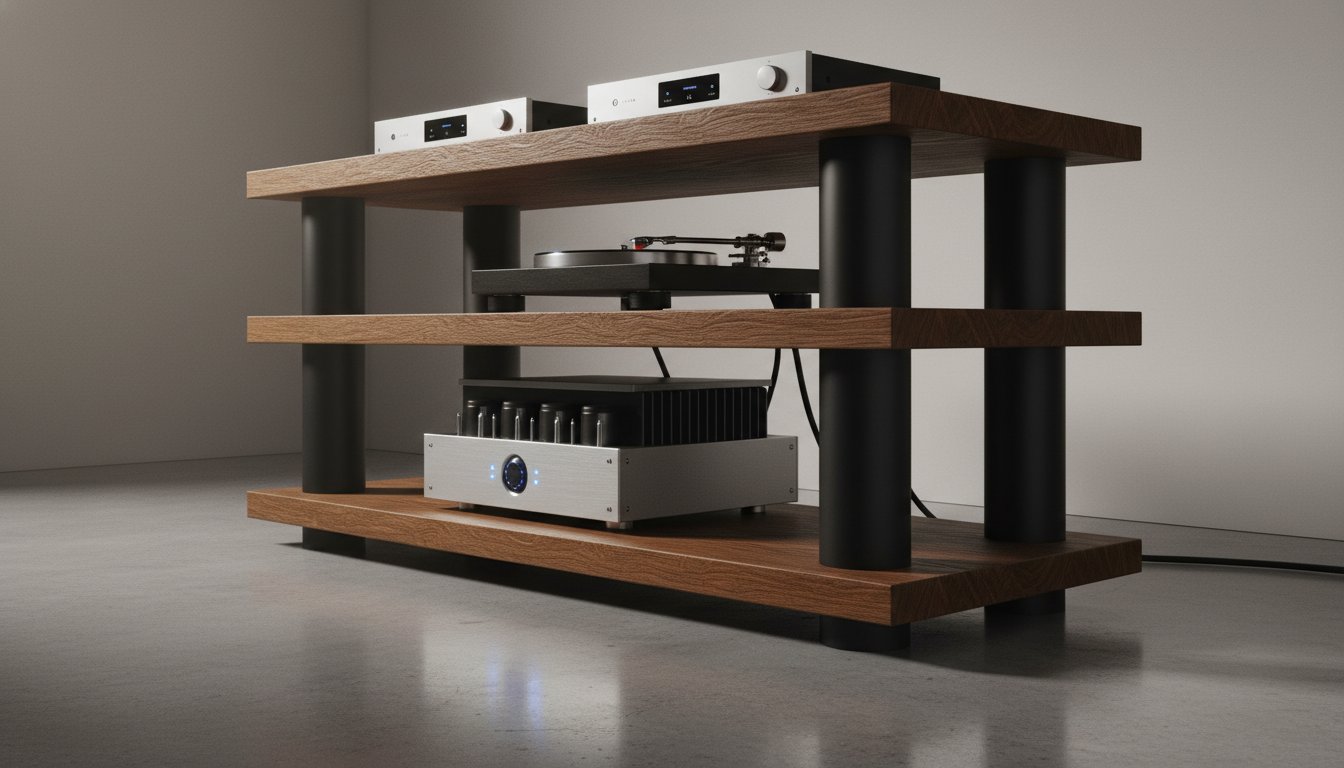
Think of your audio rack not as a shelf, but as a specialized mechanical filter. Every component in your system is a sensitive instrument. Understanding why does a dedicated audio rack make a difference starts with recognizing that your equipment reacts to every floorboard creak and speaker vibration. External energy travels through your home's structure and into your equipment chassis. This unwanted energy creates a physical disturbance that blurs the fine details of your music, masking the textures you've worked so hard to uncover.
By implementing The Fundamental Role of Vibration Control, you effectively lower the noise floor of your entire system. This isn't about blocking sound; it's about providing a stable foundation where resonance is managed rather than ignored. Standard furniture often has unpredictable damping properties that trap energy inside your electronics. A dedicated rack provides a controlled path for this energy to dissipate. This allows the silence between notes to become truly black, giving your music the space it needs to breathe.
To better understand how these mechanical principles affect your listening experience, watch this helpful video:
Mechanical Stability and the Signal Path
Micro-vibrations are the silent enemies of high-fidelity sound. When these tiny tremors reach your internal circuitry, they interfere with the delicate flow of electricity. Capacitors and vacuum tubes are particularly vulnerable. Even power supplies can suffer from mechanical hum that bleeds into the audible signal. A stable foundation is your first step in room treatment. It ensures that the signal path remains pure, preventing physical movement from being translated into electrical noise. This mechanical integrity is what allows a high-end amplifier to reach its engineered potential.
Why Standard Living Room Furniture Fails
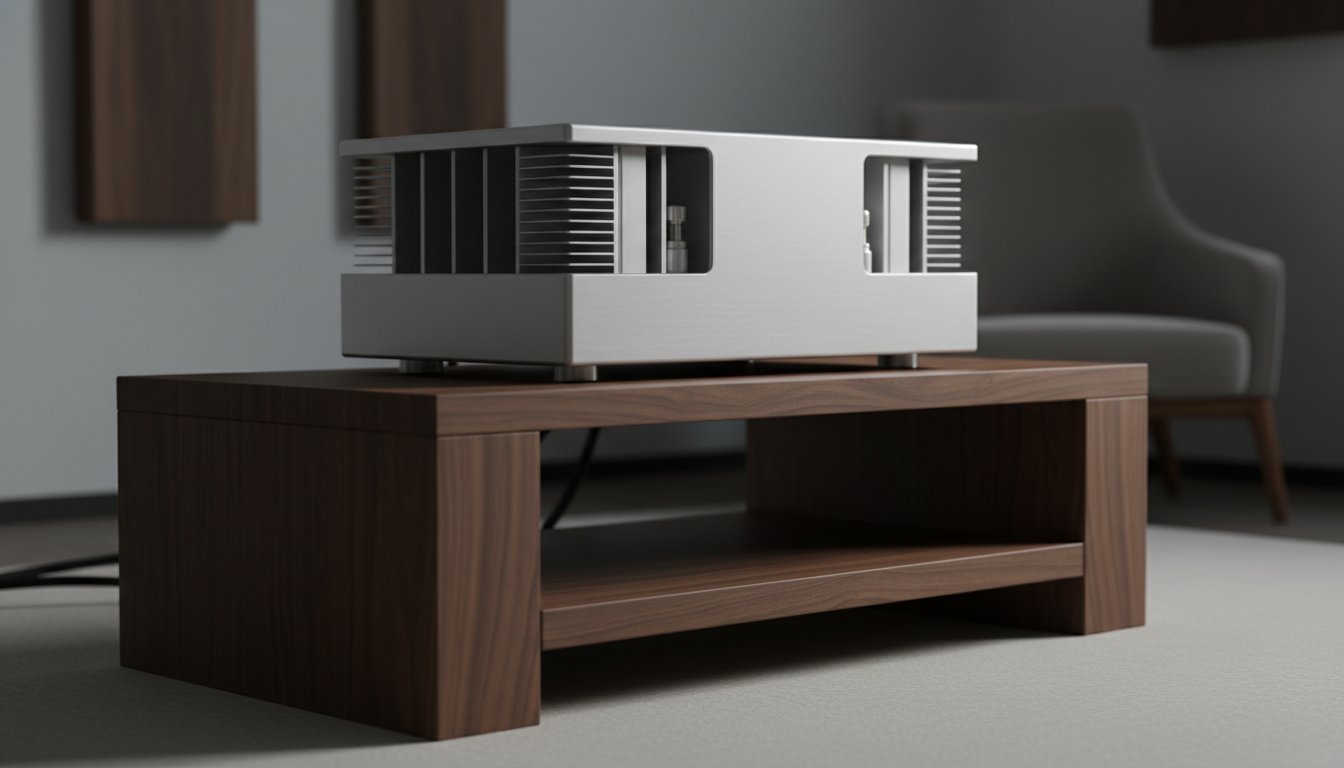
Mass-market shelving often relies on hollow cores or thin veneers that act like a drum. These materials have a high ringing factor, adding their own sonic signature to your music. Metal and glass racks are notorious for this, frequently introducing a cold or harsh quality to the upper frequencies. Heavy high-end amplifiers also pose a structural risk. Over time, standard furniture can sag under the weight. This compromises both the safety of your gear and its mechanical alignment. Authenticity in materials is the only way to avoid these pitfalls and protect your investment.
Micro-Distortions: How Your Furniture Colors the Sound
Your furniture is a silent participant in every track you play. If it isn't specifically designed for high-fidelity audio, it's likely "coloring" the music with micro-distortions. This occurs through a process called microphony, where physical vibrations are converted into electrical noise within your components. When enthusiasts ask, does a dedicated audio rack make a difference, they're often surprised to learn that mechanical stability directly impacts the "blackness" between notes. A rigid, well-damped rack allows for superior instrument separation, ensuring that a delicate flute isn't masked by the resonance of a nearby cello.
Structural rigidity is also the secret behind a visceral, tight bass punch. If your equipment support flexes even slightly when your speakers move air, that energy is absorbed by the furniture rather than being translated into sound. This results in a soft, bloated low end that lacks definition. By contrast, a handcrafted rack provides the grounding needed for your equipment to deliver fast, impactful transients. The Material Debate often centers on how different structures resonate, and an unoptimized shelf acts like a mechanical filter that smears the timing of your music.
The Analog Challenge: Turntables and Tubes
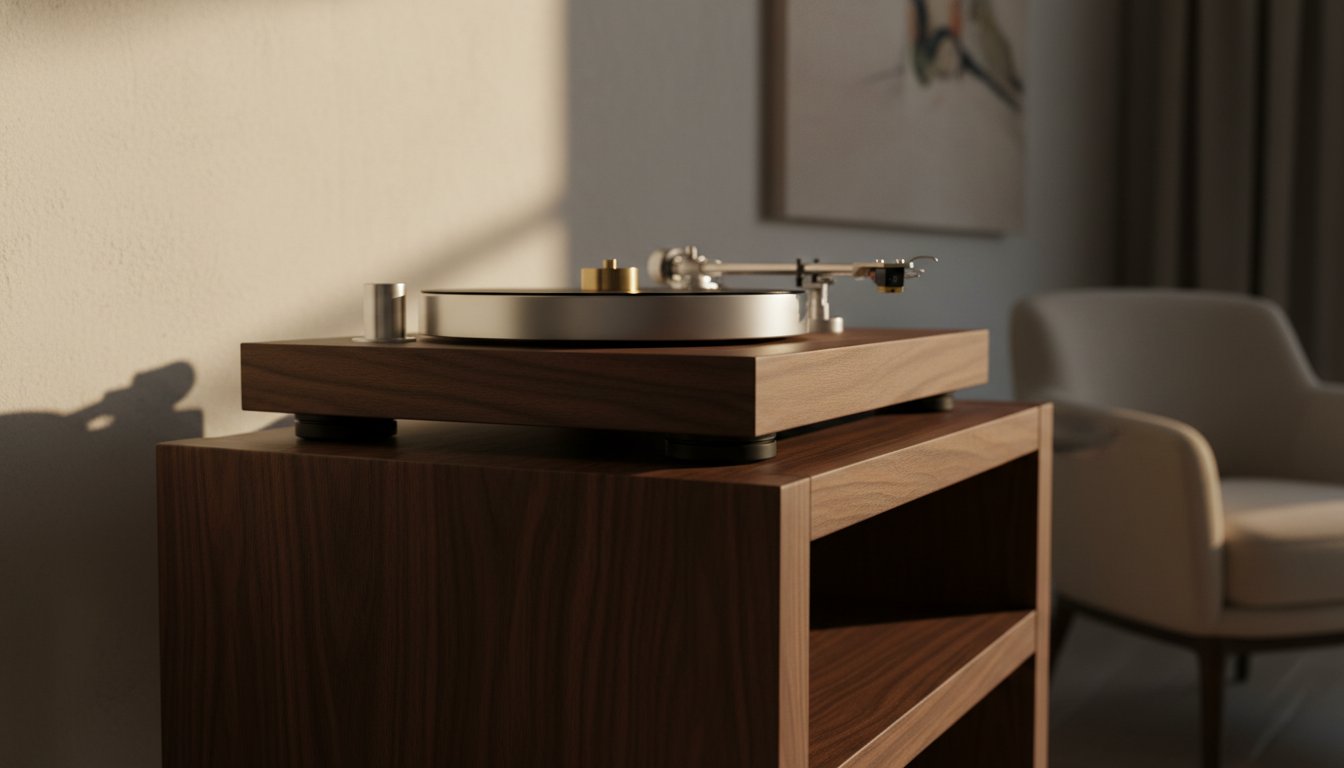
Your turntable's stylus is a vibration sensor of incredible precision. It's designed to pick up microscopic grooves, but it can't distinguish between a vinyl record's detail and the vibration of a passing truck or a heavy footfall. This is why managing the "bouncy floor" syndrome is critical, especially in older homes with suspended timber floors. For a deeper dive into protecting your vinyl setup, explore The Ultimate Guide to Turntable Isolation Platforms and Shelves (2026). Vacuum tubes are equally sensitive; their internal grids can vibrate and introduce a metallic "ringing" into your signal that ruins the intimacy of a vocal performance.
Digital Precision and Jitter
Digital gear isn't immune to its environment. Mechanical resonance can impact the precision of the internal clocks in digital-to-analog converters, leading to a phenomenon called jitter. This timing error degrades the natural timbre of instruments and makes digital audio sound fatiguing or sterile. Even solid-state streamers benefit from a vibration-free environment because high-frequency noise can travel through the chassis and affect sensitive processing. Providing a stable home for your digital transport ensures that the data stream remains as pure as the original recording. If you're ready to treat your system to a foundation that honors the music, consider exploring our Reference HiFi Rack.
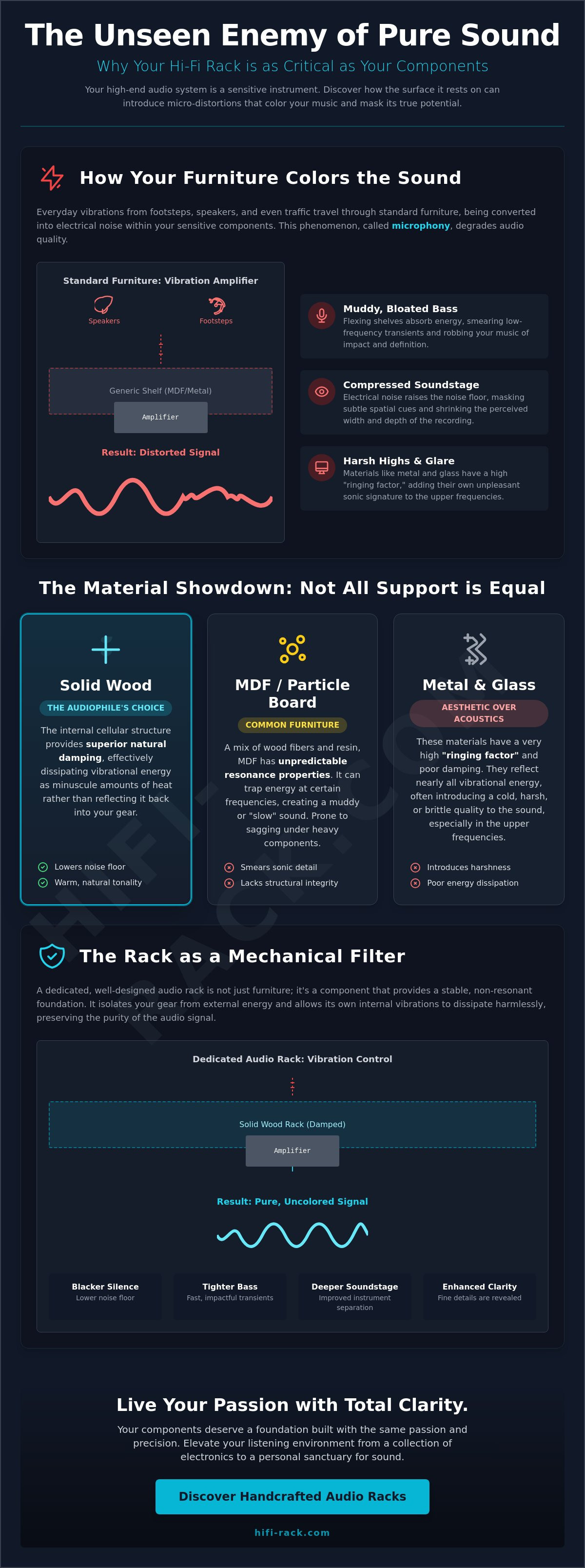
The Material Debate: Why Solid Wood Outperforms MDF and Metal
The choice of material isn't just an aesthetic decision; it's a sonic one. At HiFi Rack, our philosophy is rooted in the purity of materials. We don't use MDF. We don't use veneers. We believe that only solid, natural materials can provide the mechanical integrity your system requires. When you ask, does a dedicated audio rack make a difference, the answer lies within the grain of the wood. Hardwood possesses a unique internal cellular structure that acts as a built-in damping system. This network of natural fibers absorbs and dissipates energy before it can reach your components. Unlike metal or glass, which often introduce a cold, ringing resonance, solid wood offers an organic signature that preserves the warmth and soul of your recordings.
Understanding the fundamentals of vibration control in audio is essential for any serious listener. It's about more than just isolation; it's about how energy moves through the materials themselves. For a deeper look at the misconceptions surrounding this topic, see The Audiophile’s Guide to Custom Hardwood Audio Furniture: Myths vs. Reality. Choosing a foundation made from authentic materials ensures that your equipment isn't fighting against its own support system.
The Problem with MDF and Composites
MDF is essentially a mix of glue and compressed sawdust. While it's heavy, it lacks the structural integrity needed for high-mass audiophile gear. These composite boards tend to store vibrational energy and release it slowly back into your equipment. This creates a smearing effect that blurs the edges of notes and collapses the soundstage. Solid wood provides a more authentic and natural experience because it doesn't trap energy in this way. It allows your system to breathe, revealing a level of detail that composites simply cannot match. It's the difference between a muffled performance and a front-row experience.
Reference-Grade Construction Techniques
True reference-grade construction requires a deep understanding of mass distribution. Our Reference HiFi Rack serves as a benchmark for this approach. By utilizing solid hardwood, we manage energy dissipation more effectively than industrial alloys or glass. The natural density of the wood provides the necessary mass to anchor your system, while its organic fibers ensure that vibrations are neutralized. This careful balance of weight and damping is what makes our racks vital instruments rather than mere furniture. It's a harmony of form and function that ensures your electronics are supported by a foundation as refined as the music they play.
Signs Your System is Suffering from Poor Support
You don't need a laboratory to determine if your equipment foundation is failing. Many enthusiasts spend years chasing a phantom "harshness" in their speakers, only to realize their electronics are resting on a surface that acts like a sounding board. To understand if your setup is reaching its full potential, you must learn to recognize the symptoms of mechanical distress. Identifying these red flags is the first step toward reclaiming the clarity you've already paid for in your components. It's often the missing link that explains why does a dedicated audio rack make a difference in a high-fidelity environment.
The most immediate way to diagnose a "choking" system is through the "Knock Test." While your music is off, simply tap the surface of your rack with your knuckles. If it rings like a bell or sounds hollow, it's lacking the internal damping necessary to protect your signal. In a high-performance setup, your furniture should be a silent partner, not a noisy participant. A proper foundation should feel inert and solid, rather than a resonant chamber that stores and releases energy back into your gear.
Audible Red Flags
- Bloated Bass: Listen for "one-note" bass that lacks texture or definition. If the low end feels muddy or slow, your rack's own resonance is likely overlapping with the musical frequencies.
- Collapsed Soundstage: Pay attention to the space between instruments. If the performance feels crowded in the center and lacks a three-dimensional depth, your furniture may be smearing the delicate timing information.
- Glassy Highs: If your high frequencies sound shrill or fatiguing, micro-vibrations are likely adding a metallic harshness to the signal that wasn't in the original recording.
Physical Red Flags
Look for physical signs of distress in your listening room. If you see visible sagging under the weight of a heavy power amplifier, the mechanical integrity of your setup is already compromised. Shelves that vibrate noticeably to the touch during playback are failing to drain energy away from sensitive circuits. For vinyl lovers, the ultimate red flag is a skipping needle or audible feedback when someone walks across the floor. These aren't just inconveniences; they're symptoms of a foundation that cannot handle the demands of your passion. If your diagnostic tests reveal a foundation in distress, it's time to treat your system to a handcrafted upgrade that honors the music.
It's easy to mistake rack resonance for room acoustic problems. To tell the difference, pay attention to the "smearing" of detail. Room issues usually manifest as specific frequency peaks or echoes. Rack resonance, however, creates a consistent lack of clarity across the entire musical spectrum. It feels like a thin veil has been draped over your speakers, muffling the authentic soul of the performance.
The Artisanal Difference: Where Sound and Style Are One
Technical specifications and resonance frequencies tell only half the story. While the science of vibration control is undeniable, the true value of a dedicated foundation lies in the emotional payoff it provides. When your equipment is properly supported, the music ceases to be a mere reproduction and becomes a living presence in your room. Ultimately, when you ask does a dedicated audio rack make a difference, you're asking if your listening sanctuary deserves a foundation that matches the artistry of the music you love. A bespoke rack transforms a cluttered equipment stack into a curated centerpiece, creating a space where you can finally slow down and live your passion.
Choosing a handcrafted solution is a rejection of the disposable, mass-produced culture that dominates modern electronics. Solid wood isn't just a damping material; it's a living medium that ages gracefully. It represents an investment designed to last a lifetime, gaining character while providing the same mechanical integrity on day one thousand as it did on day one. This longevity ensures that as your components evolve, your foundation remains a constant, unwavering reference point for your system's performance.
Handmade Excellence in Novi Sad
The story of HiFi Rack is rooted in the multi-generational woodworking traditions of Novi Sad, Serbia. Our master woodworkers don't just build furniture; they craft vital instruments for sound. We operate under a "Slow-Made" philosophy, where quality is never sacrificed for speed. Every joint is cut with precision, and every surface is finished by hand to ensure a level of detail that industrial machines simply cannot replicate. This commitment to excellence is anchored by our four-pillar mantra: CUSTOM | HANDMADE | NATURAL | AUTHENTIC.
We believe that high-fidelity sound should not come at the cost of the environment. Our dedication to social responsibility and sustainable craft means we source our materials ethically, honoring the natural beauty of the wood we use. By choosing a rack that is handmade rather than factory-assembled, you're supporting a boutique tradition that values integrity over volume. It's a deeply personal approach to audio that bridges the gap between high-end engineering and soulful craftsmanship.
Choosing Your Reference Point
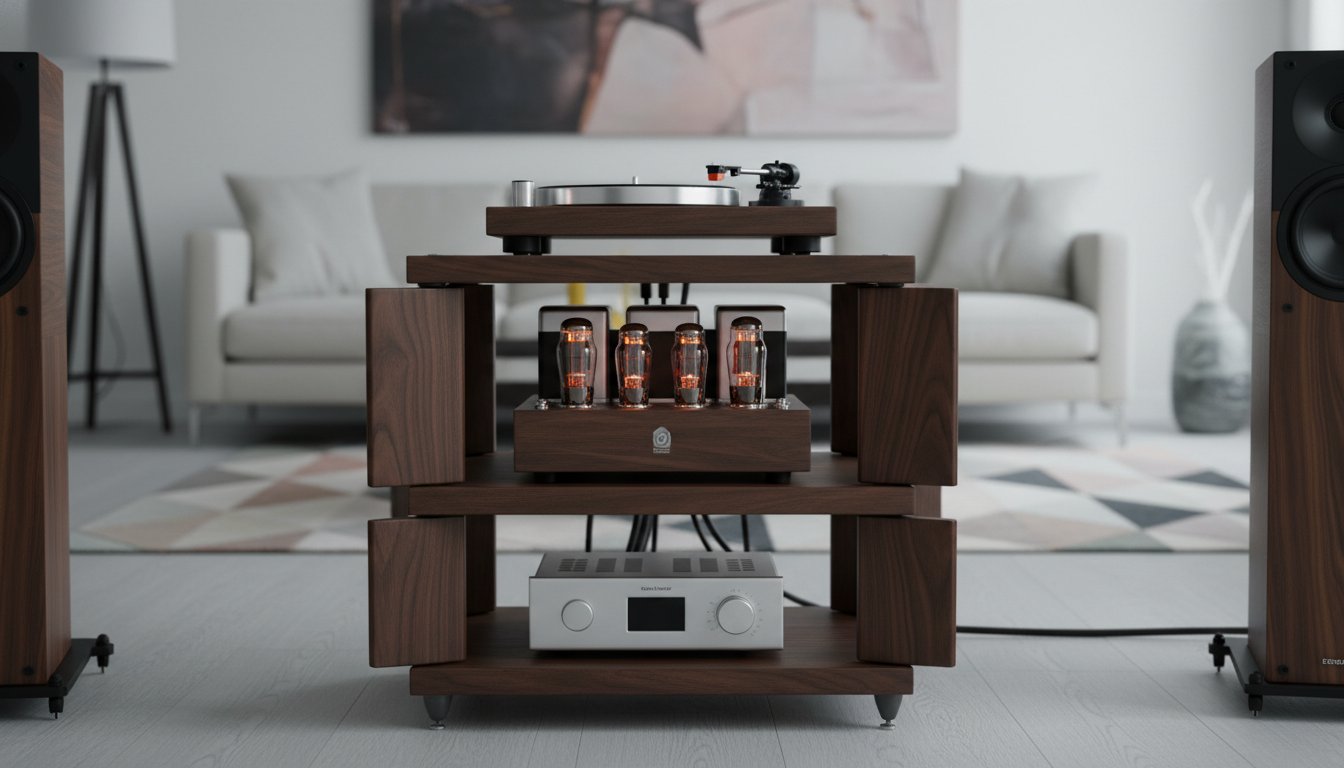
Finding the right support for your system depends on your personal style and equipment needs. For those with timeless, high-mass systems, the Classic HiFi Rack offers a robust and elegant foundation that anchors the room. If you prefer a more modern, minimalist aesthetic for a space-conscious setup, the Slim HiFi Rack provides the same mechanical benefits in a more compact profile. Regardless of the model you choose, remember that a rack is not just a stand. It is the heartbeat of your listening experience. It is the place where sound & style are One, allowing your system to finally reach its full, engineered potential.
Elevate Your Listening Sanctuary
You've discovered how a foundation of solid wood acts as a vital mechanical filter for your high-end equipment. By neutralizing micro-vibrations and lowering the noise floor, you finally allow your components to breathe. We've explored the diagnostic signs of a "choking" system and why authentic materials outperform industrial composites every time. When you ask, does a dedicated audio rack make a difference, the answer is found in the deeper clarity and tighter bass of your favorite recordings. It's the missing link that transforms a collection of electronics into a true musical experience.
It's time to move beyond mass-market furniture and treat your passion with the respect it deserves. Our racks are handcrafted in Serbia using a strict zero MDF or veneer policy. We use only solid hardwood construction to ensure lifetime durability and a natural sonic signature that honors the music. Explore our handcrafted Reference, Classic, and Slim Racks to find the perfect anchor for your system. Your journey toward sonic perfection deserves a foundation as authentic as the music itself.
Frequently Asked Questions
Can I just put my audio equipment on the floor?
No, placing your gear on the floor exposes it to maximum vibration and dust. Floors act as large acoustic diaphragms that transmit footfalls and speaker energy directly into your equipment. A dedicated rack elevates your electronics to a stable environment where resonance is controlled. This protects sensitive internal circuits from the mechanical disturbances that occur at floor level.
Is solid wood better than metal for a HiFi rack?
Solid wood is superior because its internal cellular structure naturally damps vibrations rather than ringing like metal. While metal racks often require sand-filling or complex damping to stay quiet, authentic hardwood is inherently inert. This organic material provides a warmer, more natural sonic signature. It avoids the harsh, cold resonances often associated with industrial steel or glass shelving.
How much should I spend on an audio rack relative to my system?
A common guideline is to allocate 10% to 15% of your total system value to your foundation. This ensures your high-end electronics aren't being held back by a sub-par support structure. Investing in a quality rack is as vital as choosing the right cables. It allows your existing gear to perform at its engineered potential without being "choked" by mechanical noise.
Does a HiFi rack actually improve the sound of a digital streamer?
Yes, a dedicated rack improves digital sound by reducing mechanical resonance that can affect internal clock precision. Even though streamers don't have moving parts like turntables, they're sensitive to high-frequency vibrations that introduce jitter. Providing a stable foundation helps maintain the integrity of the digital-to-analog conversion process. When considering does a dedicated audio rack make a difference for digital gear, the answer lies in this timing accuracy.
What is the difference between coupling and decoupling in audio furniture?
Coupling uses hard points like spikes to drain energy away from a component into the rack or floor. Decoupling uses soft materials like rubber or springs to isolate the component from external vibrations. Most effective setups use a combination of both strategies. This ensures that internal energy is drained while external disturbances are blocked from entering the equipment chassis.
How do I know if my current furniture is causing feedback in my turntable?
You'll notice a "howling" sound or a muddy low end when you increase the volume. This happens when your speakers vibrate the furniture, which then vibrates the stylus in a continuous loop. If your turntable skips when you walk nearby, your current support lacks the mass and damping needed for analog playback. This is one of the clearest signs that does a dedicated audio rack make a difference in your home.
Are spikes necessary for an audio rack on a wooden floor?
Spikes are useful for piercing through carpet to reach a solid subfloor, but they can be problematic on bare wood. On a wooden floor, you should use spike shoes or protector discs to prevent damage and manage resonance. The goal is to create a stable, level foundation that doesn't "rock" or transmit floor vibrations into the rack's frame.
Can a dedicated rack help with amplifier heat dissipation?
Yes, the open-architecture design of a dedicated rack provides significantly better airflow than enclosed cabinets. Heat is the enemy of electronic longevity. By allowing air to circulate freely around your power amplifier, you prevent thermal throttling and protect internal capacitors from premature wear. This ensures your high-fidelity gear operates safely and efficiently for a lifetime.