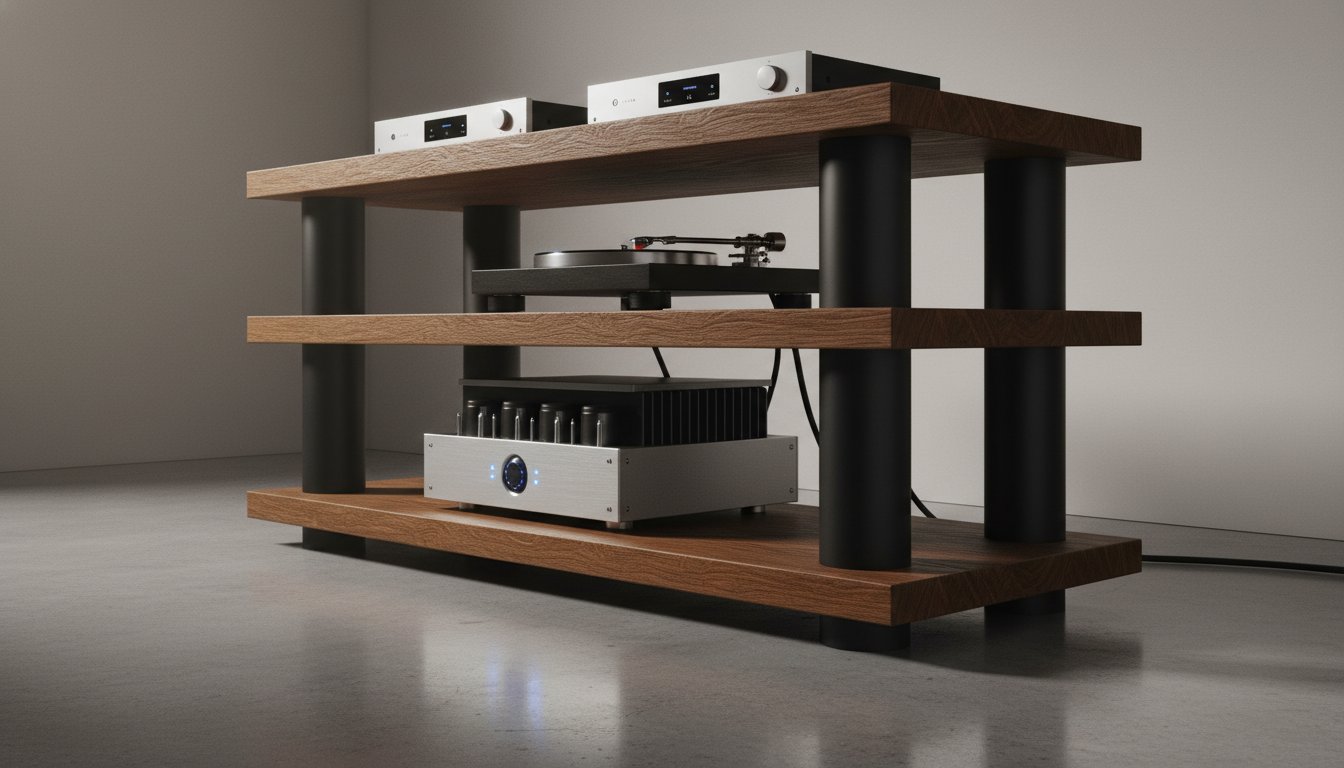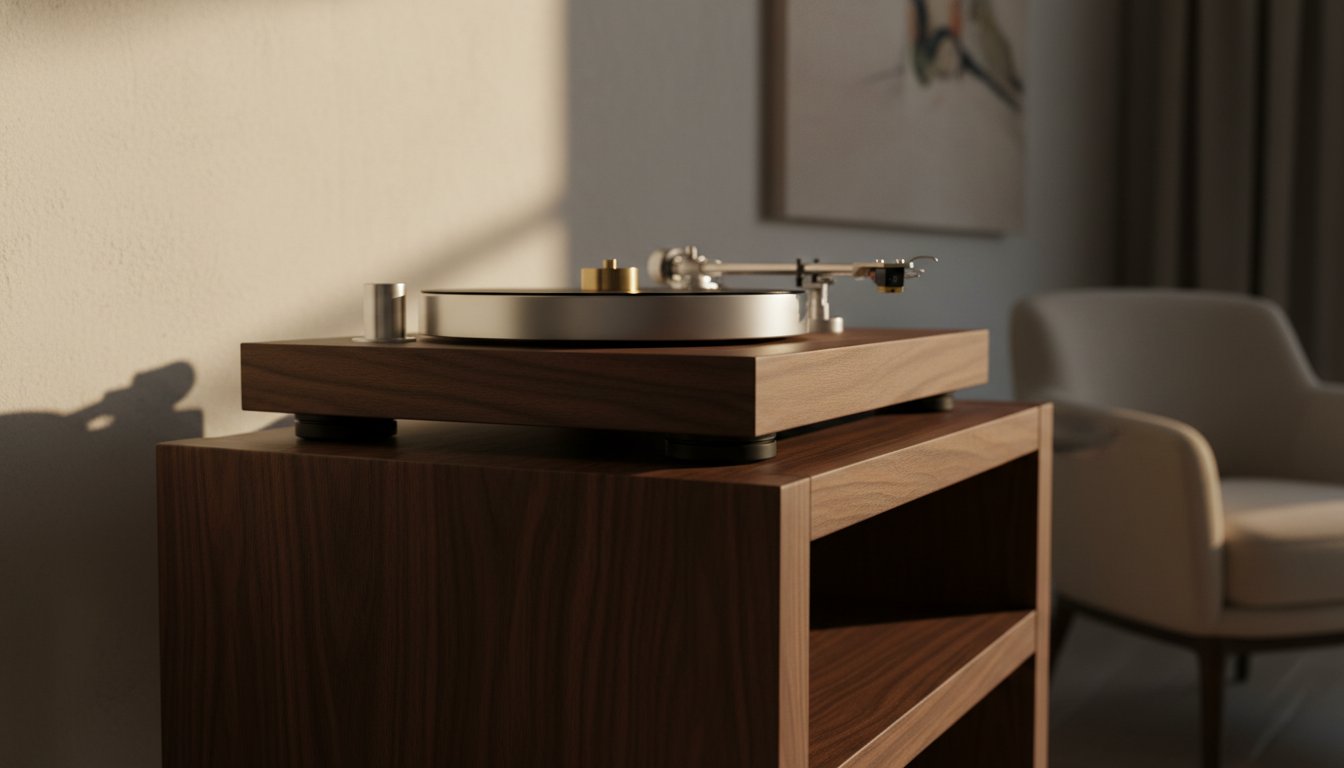
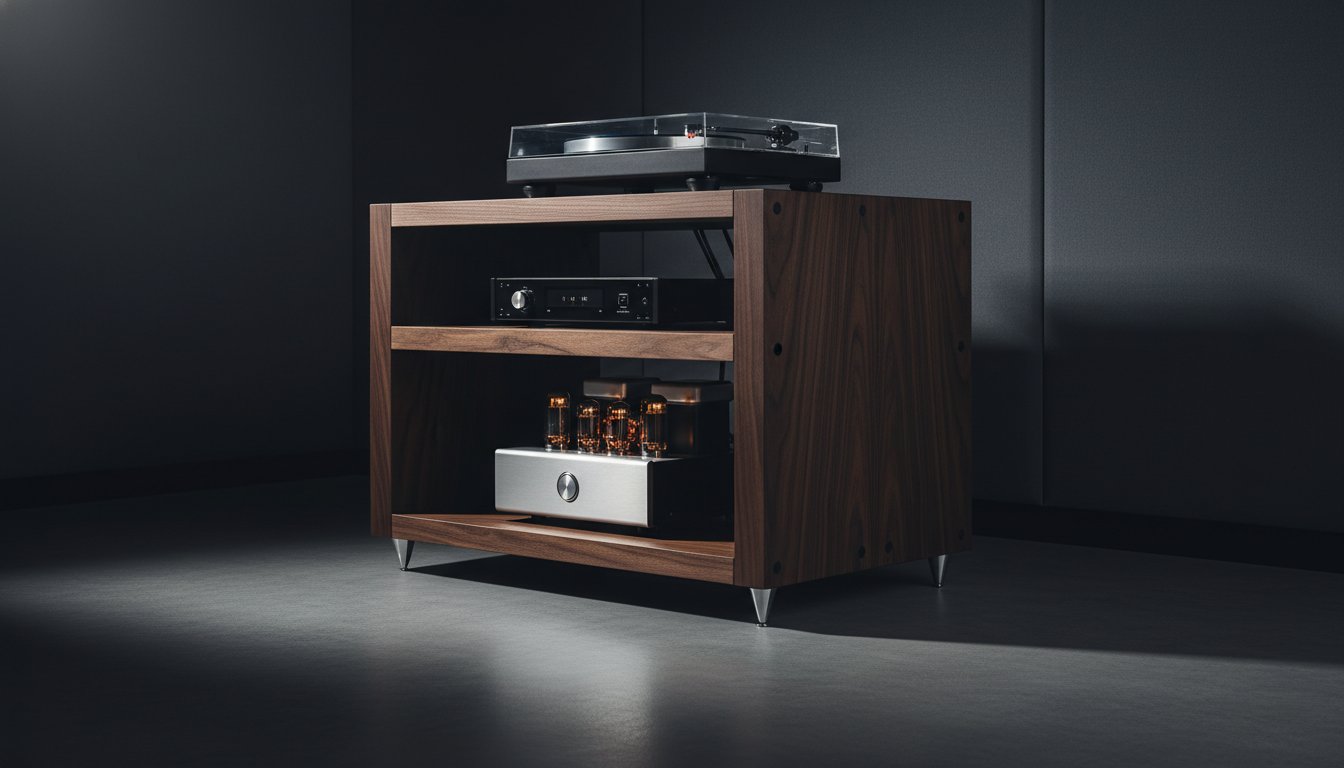
What if the most critical component in your signal chain isn't actually an electronic one? We often spend years obsessing over the nuances of a vacuum tube or the clocking of a DAC, yet we leave our equipment to struggle against the invisible enemy of mechanical resonance. You know the frustration when a complex orchestral passage loses its focus, or when simple floor vibrations threaten to pull the needle from the groove. A high end audio rack isn't merely a piece of furniture; it's a precision instrument designed to ground your system in absolute silence.
I understand the pursuit of that elusive, perfect soundstage where every instrument occupies its own physical space. By neutralizing unwanted vibrations through advanced isolation, a well-engineered rack unveils the micro-dynamics and blacker backgrounds that define a truly immersive experience. This guide will show you how structural integrity and purposeful material choice transform your listening room into a sanctuary of sound. You'll discover how to select a centerpiece that offers both timeless, artisanal beauty and the modularity needed for a lifetime of equipment upgrades.
Key Takeaways
- Understand how a dedicated rack functions as a vibration management system to reveal the hidden micro-dynamics in your favorite recordings.
- Learn why solid hardwood’s organic cellular structure offers superior natural damping compared to the artificial resonance of metal or the sonic dullness of MDF.
- Master the engineering principles of mass and isolation spikes to effectively ground your system and achieve a significantly lower noise floor.
- Discover the professional standards for equipment spacing and weight distribution to ensure your high end audio rack provides optimal airflow and structural stability.
- Explore the emotional and technical benefits of choosing handcrafted, multi-generational woodworking over mass-produced industrial alternatives.
Beyond Storage: Why Your System Needs a High-End Audio Rack
A high end audio rack is often the most misunderstood component in a listening room. While many see it as a passive container for amplifiers and turntables, I view it as an active acoustic instrument. Standard furniture is designed to hold weight, but it rarely accounts for the kinetic energy coursing through your system. When you place sensitive electronics on a surface that reflects rather than absorbs energy, you're essentially blurring the edges of your music. Standard shelving often acts like a resonator, vibrating along with the music and feeding that distortion back into your gear.
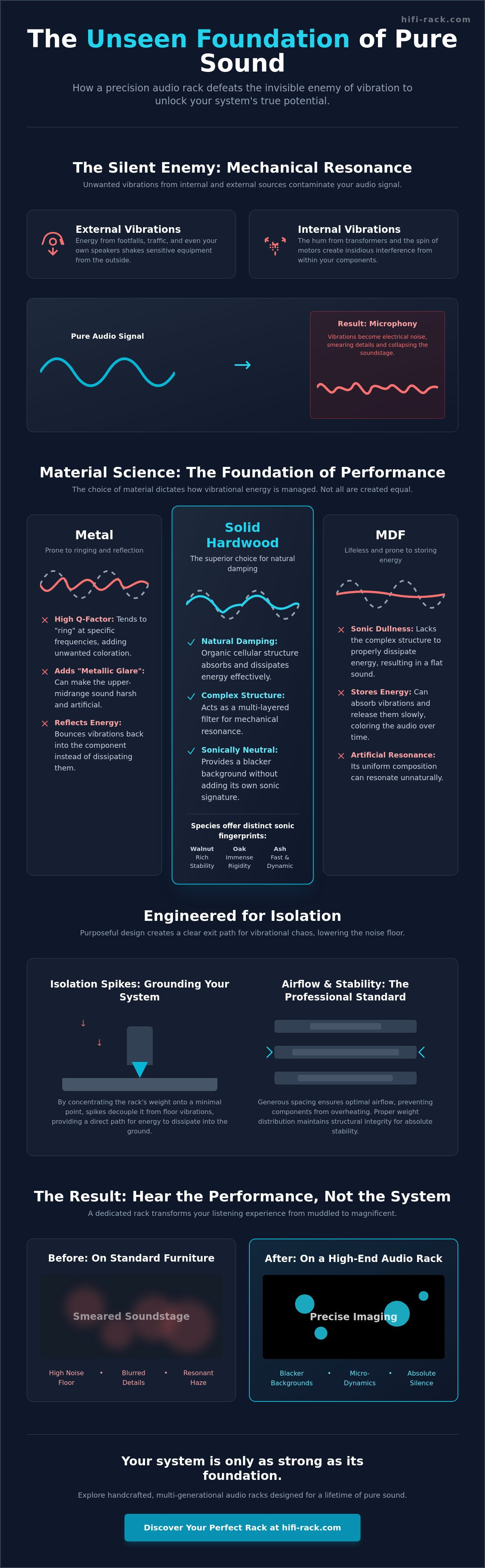
Mechanical energy is relentless. It originates from the hum of massive transformers and the rotation of turntable motors, vibrating through the chassis of your gear. This interference leads to a phenomenon known as microphony. This is where components like vacuum tubes and even capacitors act as microphones, picking up physical vibrations and injecting them back into the signal path as electrical noise. To understand the gravity of this issue, one must look at the scientific principles of vibration isolation, which dictate how energy must be channeled and dissipated to maintain signal purity. Without this management, your "high-fidelity" sound is actually being colored by the very stand it sits on.
To see how a precision-engineered frame manages these forces in a real-world setting, watch this detailed overview:
The Silent Enemy: Mechanical Resonance and Feedback Loops
Vibration comes from two fronts. External sources like footfalls or low-frequency energy from your speakers can shake your equipment from the outside. Internal sources are more insidious, born from the power supplies that drive your music. Without a dedicated mechanical sink, this energy stays trapped. It bounces back into the circuit boards, smearing the soundstage and masking those delicate micro-details that make a recording feel alive. A Reference HiFi Rack provides a clear exit path for this chaos. It ensures that the air around a cello or the decay of a cymbal remains crisp and localized, rather than lost in a haze of resonance.
From Furniture to Foundation: Defining the Reference Grade
Creating a true foundation for sound requires three pillars: mass, rigidity, and damping. It isn't enough for a shelf to be heavy. In fact, excessive mass without a drainage strategy can actually store energy and release it slowly, coloring the sound. A high end audio rack uses precision-engineered materials to ensure that energy moves quickly away from the component. This structural integrity creates a sense of calm in the presentation. When your system sits on a stable, purposefully designed platform, the backgrounds become blacker. You stop listening to the equipment and start listening to the performance. It's a psychological shift that turns a hobby into a personal sanctuary.
Material Science: Why Solid Hardwood Outperforms MDF and Metal
Choosing the foundation for your system is a decision that resonates through every note. While metal frames often offer an industrial appeal, they frequently possess a high Q-factor. This means they tend to ring at specific frequencies, adding a metallic glare to the upper-midrange. Solid hardwood, by contrast, possesses a complex cellular structure that acts as a multi-layered filter for mechanical energy. The natural damping properties of wood allow it to absorb and dissipate vibrations without reflecting them back into your sensitive electronics. It's a marriage of organic beauty and technical necessity.
In my experience, different wood species offer distinct sonic fingerprints. Walnut provides a rich, grounded stability that feels deeply sophisticated. Oak offers immense rigidity with high internal friction, making it an excellent choice for heavy power amplifiers. Ash is remarkably efficient at energy transfer, helping to maintain a fast, dynamic response. When you select a high end audio rack crafted from these materials, you're choosing a foundation that has spent decades growing the very fibers that now protect your signal. This is why we refuse to compromise with cheaper, synthetic alternatives.
The Myth of the 'Inert' MDF Rack
Many manufacturers use MDF because it's easy to machine and visually consistent. However, MDF is a dense composite of glue and sawdust that lacks a natural grain structure. It doesn't dissipate energy; it stores it. This stored energy eventually releases back into your equipment, smearing the timing and clarity of your music. Beyond the acoustic flaws, MDF and veneers are prone to peeling and moisture damage over time. A true reference system deserves a material that ages gracefully. Solid wood gains character over the years, ensuring your investment remains a centerpiece for a lifetime.
Damping Characteristics: Organic vs. Synthetic
Organic fibers are naturally non-uniform. This irregularity is a significant advantage in acoustic design because it prevents standing waves from building up within the shelf itself. Synthetic materials like plastic or metal are too consistent, which allows resonance to travel unimpeded across the surface. HiFi Rack's choice of solid materials is an acoustic necessity to ensure that every shelf works as a functional barrier against noise. If you value a presentation that feels organic and lifelike, exploring our Classic HiFi Rack is a logical next step in your pursuit of sensory perfection.
Engineering Isolation: Spikes, Mass, and Structural Rigidity
Engineering is the silent partner to material science. While I've shared how the organic damping of wood creates a lifelike sound, the structural design of a high end audio rack determines how that energy is actually channeled. A reference-grade rack relies on mass to lower the resonant frequency of the entire assembly. By increasing the weight of the shelves, we push the vibration threshold below the audible spectrum. This creates a foundation that feels immovable, ensuring that the only thing moving in your room is the air pushed by your speakers.
Structural rigidity is non-negotiable, especially when you're supporting heavy power amplifiers. These components often house massive transformers that generate significant internal vibration. If a shelf flexes even a fraction of a millimeter, it introduces micro-vibrations that smear the timing of the music. A high end audio rack must act as a mechanical sink, drawing this energy away from the circuit boards and into the floor. This process involves a delicate balance between coupling and decoupling. Coupling creates a direct path for energy to exit, while decoupling uses specific interfaces to prevent floor-borne vibrations from entering the system.
Precision Machined Spikes: The Critical Interface
The spike is the final point of contact between your gear and the ground. I've found that the choice of material here is vital. Stainless steel spikes offer a fast, clean transmission of energy, while brass provides a slightly warmer, more rounded character. Beyond the sound, these spikes allow for surgical leveling. This is crucial for turntable performance. Even a slight tilt can cause uneven wear on oil-bearings and affect tracking force. For a deeper look at how these interfaces affect your entire setup, explore our guide on Speaker Feet and Acoustic Isolation.
Modular vs. Fixed Designs: Managing Energy Transfer
Modular designs, like our Reference HiFi Rack, offer distinct acoustic advantages over fixed, single-frame units. By using stackable shelf modules, we create physical air gaps between each tier. These gaps act as a natural barrier, preventing the vibration of a humming power amp on the bottom shelf from contaminating a sensitive phono stage at the top. This modularity also serves a practical purpose. It allows you to customize the height of each tier to ensure optimal airflow. Proper heat dissipation is essential for the longevity of your electronics, and a modular setup lets your system breathe as it grows.
Planning Your Setup: Dimensions, Loading, and Airflow
A high end audio rack requires as much planning as the components it supports. I often see enthusiasts invest in world-class electronics only to crowd them into tight spaces where heat and cables become an afterthought. Proper layout isn't just about aesthetics; it's about the long-term health of your system. A well-organized rack ensures that every component operates within its ideal thermal range while remaining accessible for the occasional cable swap or upgrade. It's the difference between a collection of gear and a curated system.
Weight distribution is your first priority. I always recommend placing the heaviest components, typically your power amplifiers, on the lowest shelf. This lowers the center of gravity of the entire structure, which significantly increases stability and reduces the risk of top-heavy resonance. For the upper tiers, the 3-inch clearance rule is a reliable standard. Providing at least three inches of vertical space above heat-generating gear, especially Class A amplifiers, allows for natural convection. This prevents thermal runaway and protects the internal capacitors from premature aging. When your gear breathes, the music feels more effortless.
Cable management in an open-architecture rack is an art form. Without the hidden back panels of traditional furniture, your interconnects and power cords are visible. This transparency is actually a benefit. It prevents the "spaghetti" of wires that leads to electromagnetic interference. By using the structural pillars of the rack to route cables, you keep signal and power lines separated. This further lowers the noise floor of your system, ensuring that the only thing you hear is the recording itself.
Calculating Weight Capacity and Component Clearance
Shelf sag is the enemy of precision. In long-span racks, using inferior materials often leads to a visible dip over time, which can misalign turntable platters and stress chassis screws. Our solid hardwood shelves are engineered to maintain their profile under significant load. When planning, I suggest the "extra shelf" philosophy. Systems rarely stay static. Leaving space for a future phono stage or a dedicated power supply ensures your high end audio rack remains a permanent fixture in your home. If you're ready to build your foundation, you can explore our full range of solid wood racks to find the perfect fit for your current and future gear.
Aesthetic Integration in the Modern Listening Room
The modern listening room is a sanctuary that should reflect your personal style. High-end audio gear often has a cold, industrial aesthetic defined by brushed aluminum and sharp angles. Integrating a Reference HiFi Rack introduces the warmth of natural grain, creating a visual balance that feels intentional. This harmony between performance and organic beauty is a definitive promise of our craft. For a deeper dive into matching wood species with your interior design, read The Ultimate Guide to Choosing a Solid Wood HiFi Rack. It's about creating a space where the eyes and ears are equally satisfied.
Handcrafted Excellence: The HiFi Rack Reference Series
In the heart of Novi Sad, Serbia, our workshop serves as a bridge between multi-generational woodworking traditions and a deep-seated passion for high-fidelity sound. I believe that a high end audio rack should be more than a structural necessity; it must be a vital instrument in your pursuit of sensory perfection. Our story is one of patience and artisanal pride. We don't view our racks as mass-produced furniture, but as handcrafted foundations built to last a lifetime. This commitment to excellence is why we strictly avoid MDF and veneers. These synthetic materials lack the soul and the acoustic integrity required for a true reference system.
Choosing between our designs is a matter of personal and technical philosophy. The Myro Reference represents our uncompromising pursuit of absolute isolation, featuring a robust architecture designed for the most demanding components. In contrast, our Classic series offers a more streamlined aesthetic that retains the same organic damping properties of solid hardwood. Both paths lead to the same destination: a listening experience defined by performance, stability, beauty, and soul. Whether you require a Slim HiFi Rack for a minimalist space or a multi-tier centerpiece, our work is tailored to your specific component list.
Artisanal Serbian Woodworking Meets Acoustic Engineering
The process begins with the raw timber. We meticulously select each piece of oak, walnut, or ash for its grain density and acoustic stability. This isn't a task for a machine; it requires the eye and touch of a master craftsman. Once selected, the wood is hand-finished using techniques that preserve its natural damping properties rather than sealing them under a layer of plastic. This approach ensures that the rack breathes and ages gracefully. Our commitment to sustainability means we respect the materials we use, creating a product that honors the natural world while elevating your personal sanctuary.
Your Next Step Toward Sonic Perfection
Every system is unique, and your foundation should reflect that. We offer a bespoke built-to-order experience that allows you to specify dimensions and finishes that match your equipment and your home. Once your rack is completed, we provide worldwide shipping, ensuring that Serbian craftsmanship can find a home in listening rooms across the globe. The union of performance and aesthetics is our definitive promise to you. If you're ready to transform your listening experience and reveal the true soul of your recordings, explore the HiFi Rack Shop and find your system's new foundation. It's time to ground your passion in excellence.
Ground Your System in Absolute Purity
The journey toward sensory perfection is never truly finished, but it must always begin with a stable foundation. We've explored how a high end audio rack functions as an active participant in your signal chain, neutralizing the mechanical resonance that otherwise blurs your soundstage. By choosing the organic damping of solid hardwood over the acoustic compromises of synthetic composites, you grant your electronics the silence they need to perform at their absolute peak. It's a transformation that you'll hear in every blacker background and every revealed micro-detail.
Structural rigidity and thoughtful setup are the final pieces of the puzzle. When you prioritize airflow, mass distribution, and precision isolation, you aren't just organizing gear; you're preserving the integrity of every note. Our commitment to this craft is absolute. Every piece we create is handcrafted in Serbia using only raw, high-quality timber. We never use MDF or veneers, ensuring your investment remains an heirloom for generations. Your passion for sound has brought you this far. It's time to let your music breathe.
Discover our handcrafted Reference HiFi Racks and bring a new level of clarity to your listening room. With worldwide shipping available, the foundation your system deserves is within reach. Trust your ears and ground your passion in excellence.
Frequently Asked Questions
Do high-end audio racks actually make a difference in sound?
Yes, a high end audio rack creates a perceptible improvement by isolating sensitive components from mechanical resonance. This management of energy lowers the noise floor, which allows fine micro-details and soundstage depth to emerge from the recording. Without this foundation, your electronics are subject to microphony, a phenomenon that colors the signal and smears the timing of the music.
Is solid wood better than metal for a HiFi rack?
Solid wood is generally superior to metal because its organic cellular structure naturally absorbs and dissipates energy. Metal frames often have a high Q-factor, meaning they ring at specific frequencies and can introduce a metallic glare to the sound. Hardwood acts as a multi-layered filter, ensuring a more natural and lifelike presentation for your high-fidelity system.
How do I choose the right height for my audio rack shelves?
You should choose shelf heights that provide at least 3 inches of clearance above each component. This space is essential for natural convection and heat dissipation, especially for Class A amplifiers that run hot. If you plan for future upgrades, consider a modular high end audio rack that allows you to add or swap tiers as your collection of gear evolves.
Why should I avoid MDF or glass shelves for my turntable?
MDF and glass are poor choices because they either store or reflect vibrational energy back into the turntable's sensitive stylus. MDF is a composite of glue and sawdust that lacks the damping properties of solid grain, while glass is highly reflective and prone to ringing. For an analog source, only solid hardwood provides the necessary silent foundation to prevent sonic smearing.
What is the benefit of using spikes on a HiFi rack?
Spikes provide a high-pressure exit point for mechanical energy to leave the rack and enter the floor. They also serve as a critical leveling tool, which is vital for the tracking accuracy of turntables. By minimizing the contact area, spikes help decouple the rack from floor-borne vibrations, effectively grounding your system in absolute silence.
Can I use a regular bookshelf as an audio rack?
A regular bookshelf is rarely suitable because it lacks the structural rigidity and mass required for effective vibration management. Most domestic furniture is made of thin particle board or hollow-core materials that act as resonators rather than energy sinks. This leads to feedback loops and blurred imaging, preventing your high-end electronics from reaching their full sonic potential.
How much weight can a solid wood HiFi rack typically hold?
A precision-engineered solid wood rack can typically support significant weight, often exceeding 90kg to 130kg per shelf depending on the specific timber thickness and span. Reference-grade designs are built to handle the massive transformers found in high-current power amplifiers without any visible sagging. It's always best to verify the specific load capacity of your chosen model for long-term integrity.
Should I place my power amplifier on the top or bottom shelf?
You should always place your power amplifier on the bottom shelf of the rack. This positioning lowers the center of gravity for the entire structure, which increases overall stability and reduces the risk of top-heavy resonance. Since amplifiers are often the heaviest and hottest components, placing them at the base also aids in efficient heat management and organized cable routing.