A single inch of missing clearance can be the difference between a pristine signal and a damaged $1,219.99 Analysis Plus Silver Apex interconnect. While the 1922 EIA-310 standard defines a rack unit as 1.75 inches, the true art of a high-end setup lies in the space between the components. We understand the frustration of hand fatigue and the anxiety of cable strain when reaching into a cramped space. Getting your audio rack shelf spacing for cable access right is not just a matter of aesthetics. It is a commitment to the longevity of your equipment, ensuring your sanctuary remains a place where sound and style are one.
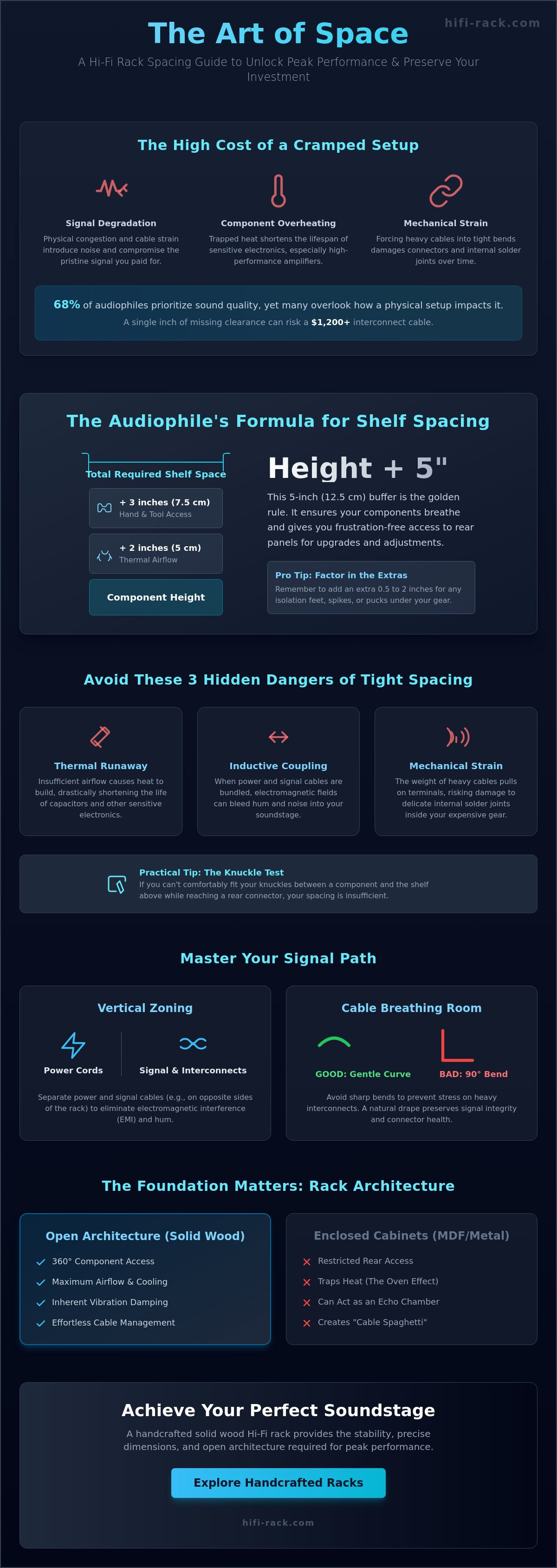
You likely believe that your HiFi Rack should be a sanctuary for sound, not a source of mechanical stress. According to a 2026 AES survey, 68% of listeners prioritize sound quality above all else, yet many overlook how physical congestion causes signal interference and overheating. This guide promises to transform your rear-rack area into a clean, organized space where components breathe and cables flow naturally. We will explore the ideal spacing for thermal management, the "cable breathing room" required for heavy connectors, and how to maintain easy access for your next equipment upgrade.
Key Takeaways
- Discover the vital concept of "cable breathing room" to prevent mechanical stress on expensive connectors and preserve the natural drape of your signal paths.
- Master the golden calculation for audio rack shelf spacing for cable access to ensure your hands have the freedom to swap components without the risk of fatigue or damage.
- Eliminate electromagnetic interference and signal hum by learning how to structure your rack into distinct vertical zones that separate power from delicate interconnects.
- Protect your system from floor-borne vibrations by identifying the "drip loop" method, a simple step to keep your cables elevated and your signal pristine.
- Gain insight into how a handcrafted, solid wood foundation like the Slim HiFi Rack provides the authentic stability and precise dimensions required for peak performance.
Why Shelf Spacing and Cable Access Define Your Soundstage
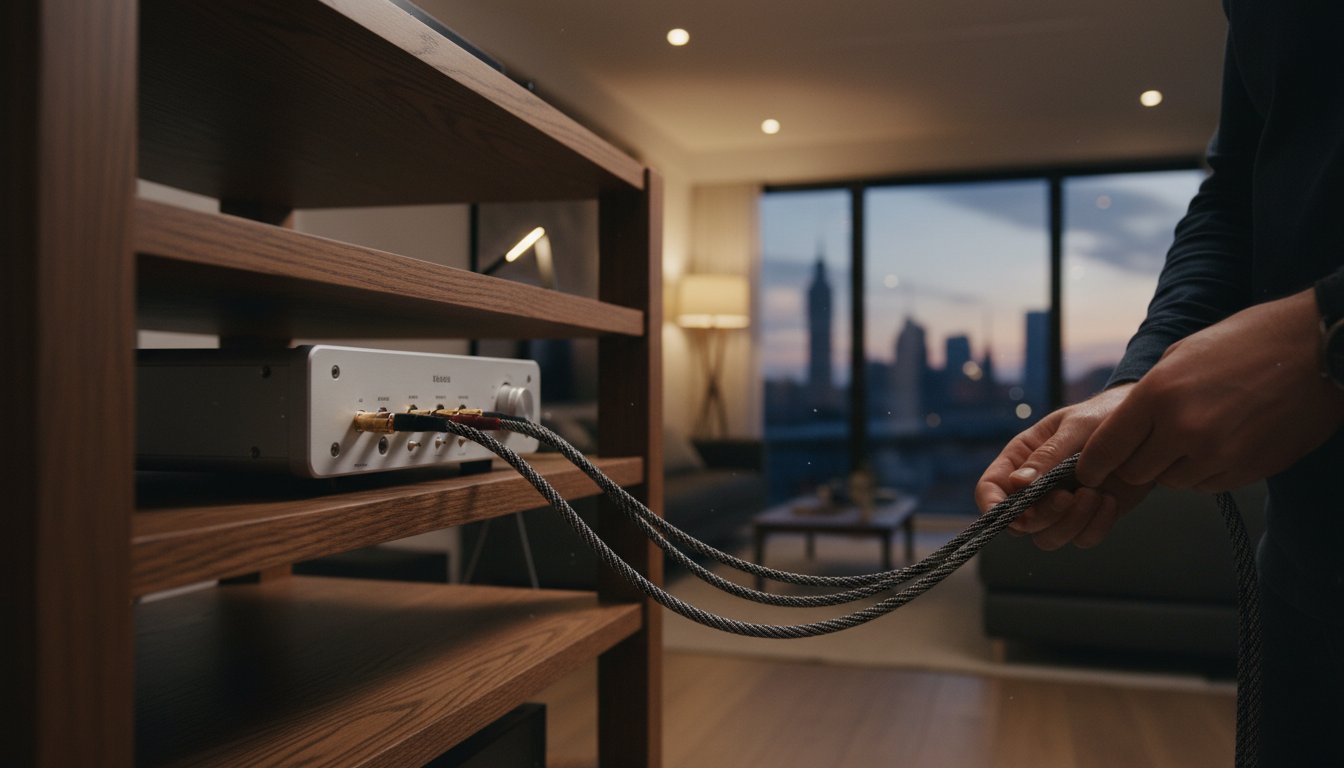
The physical layout of your system dictates the clarity of your music. When we speak of "Cable Breathing Room," we are describing the essential clearance required for a natural cable drape. High-quality interconnects are often heavy and rigid. Forcing them into tight, 90-degree bends creates mechanical stress that slowly degrades connector contact points. Over time, this strain can compromise the signal integrity of premium cables, such as those from Analysis Plus or AudioQuest. Proper audio rack shelf spacing for cable access ensures that every connection remains relaxed and secure, preserving the authentic sound you've invested in.
Beyond the physical health of your gear, spacing acts as a form of airborne vibration damping. Sound waves from your speakers can vibrate the jackets of your cables, potentially introducing microphonic noise into the signal. Providing enough air around each component allows these waves to dissipate rather than becoming trapped in a resonant cavity. Most audiophiles have felt the frustration of reaching into a dark, cramped space only to come away with hand fatigue and a tangled mess of "cable spaghetti." This isn't just an annoyance; it's a barrier to enjoying your passion.
The Hidden Dangers of Tight Spacing
Standard furniture often ignores the 1922 19-inch rack standard, leading to cluttered layouts that ruin your listening experience. When you compromise on clearance, you invite several technical compromises:
- Thermal Runaway: In high-performance amplifiers, heat is the enemy of capacitor longevity. Without airflow, internal temperatures rise, shortening the life of your electronics.
- Inductive Coupling: When power cords and signal cables are bundled too closely, electromagnetic hum bleeds into your soundstage.
- Mechanical Strain: Heavy cables pull on terminals, potentially damaging the internal solder joints of your equipment.
Try the "Knuckle Test" to check your current setup. If you can't comfortably fit your knuckles between the top of a component and the shelf above while reaching for a rear connector, your audio rack shelf spacing for cable access is insufficient.
Open Architecture vs. Enclosed Cabinets
Enclosed metal cabinets or MDF boxes often act like ovens and echo chambers. They restrict access and trap heat, which is why we favor open-architecture designs. A solid wood rack offers 360-degree access to your terminals, making component swapping a joy rather than a chore. Natural wood also provides inherent damping properties that metal or veneer cannot match. For a deeper dive into why material choice matters as much as dimensions, see The Ultimate Guide to Choosing a Solid Wood HiFi Rack. Our handcrafted approach ensures that airflow and accessibility are never sacrificed for style. Where sound and style are one, you'll find that the right spacing creates a more intimate and reliable connection to your music.
Calculating Perfect Spacing: The Audiophile Formula
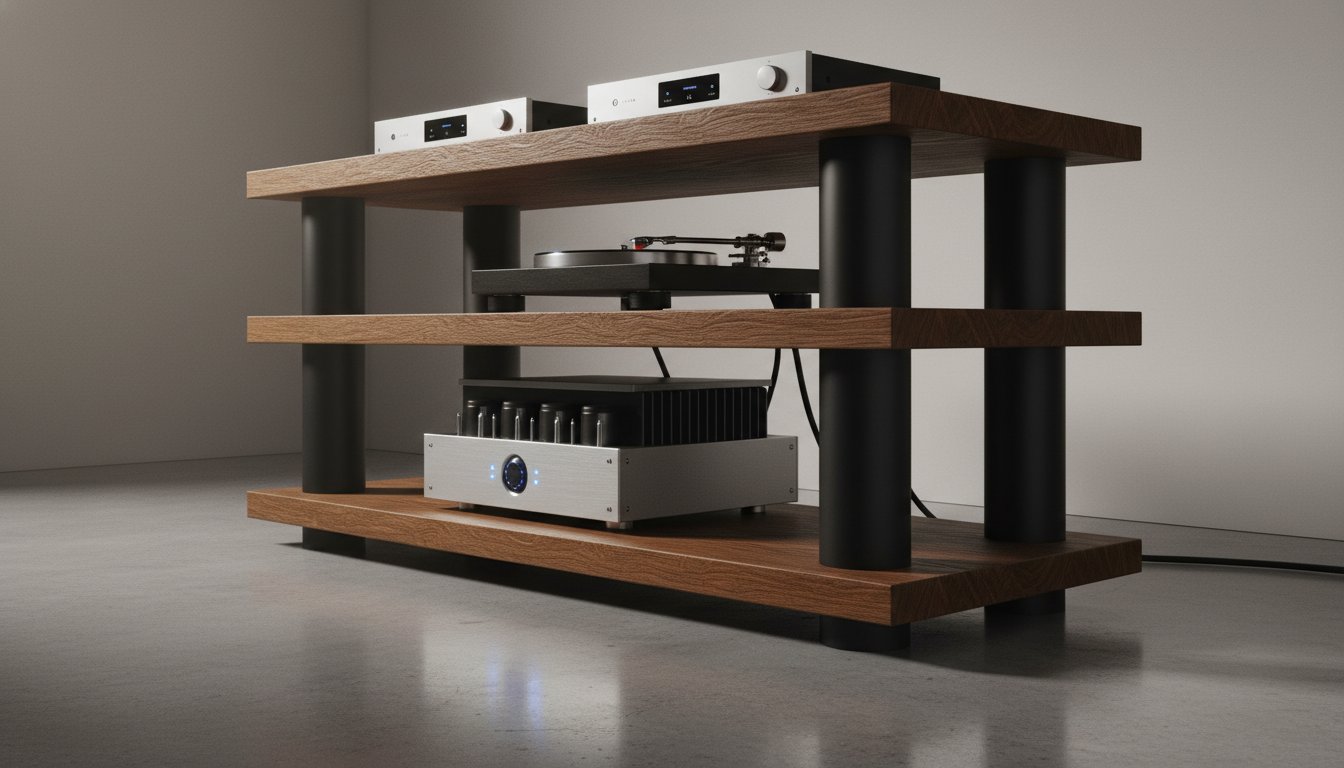
Measuring for a high-end system is an act of meticulous planning. It requires more than just checking a component's spec sheet. To achieve the perfect audio rack shelf spacing for cable access, you must account for the physical presence of the person maintaining the system. We use a Golden Rule: take the component's height, add 2 inches (5cm) for air circulation, and add an additional 3 inches (7.5cm) for your hands. This 5-inch buffer ensures that your equipment stays cool while providing the freedom to navigate the rear panel without frustration.
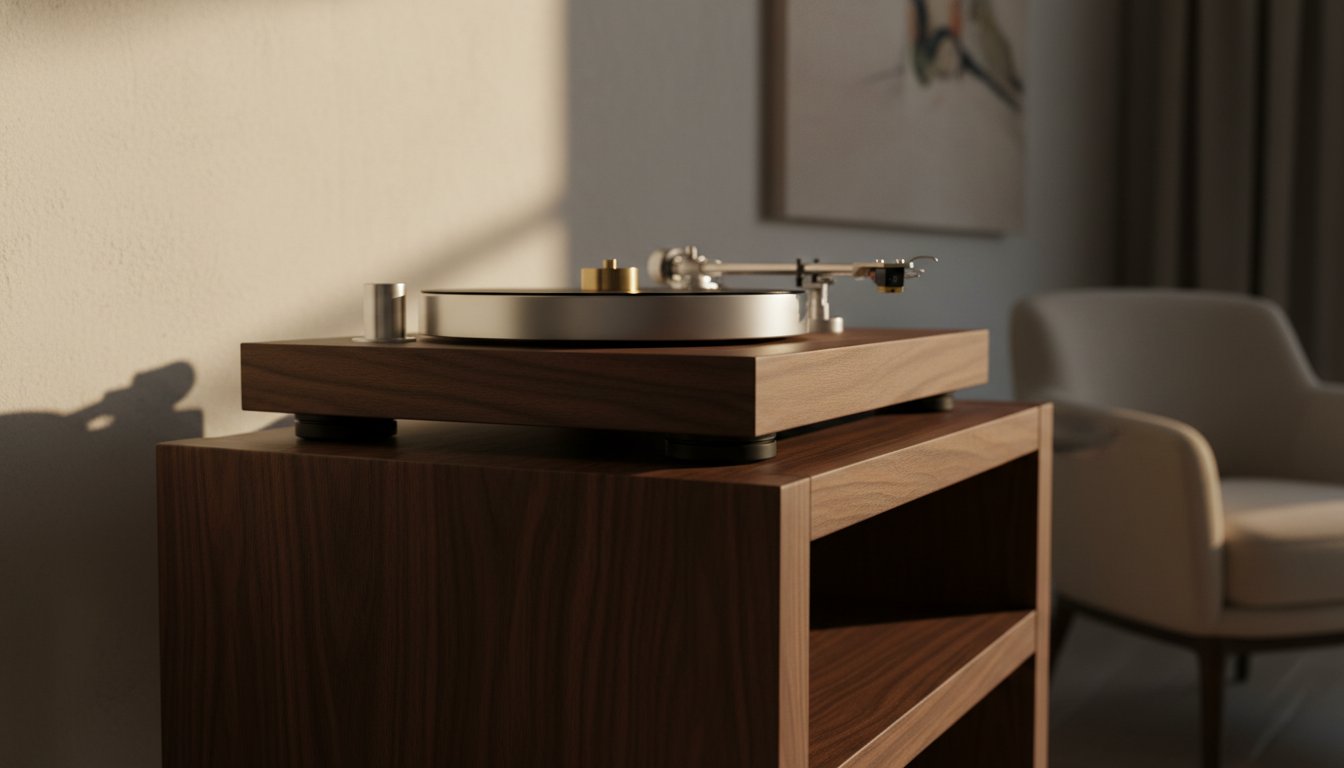
Don't overlook the height added by vibration footers or isolation spikes. These essential tools for resonance control can add between 0.5 and 2 inches to your equipment's profile. If you're using heavy-gauge power cables, their large bend radii demand even more vertical room. Forcing a thick cord into a tight corner is a recipe for signal degradation. By placing your most heat-intensive or cable-heavy gear on the top shelf, you allow heat to rise freely while giving the thickest cables the most room to breathe. This strategy preserves the integrity of your signal and the longevity of your investment.
Measuring Your Components Correctly
Precision is the hallmark of the dedicated audiophile. When measuring your gear, remember the "rear-protrusion" factor. High-end binding posts and balanced XLR connectors often extend 2 to 3 inches beyond the back of the chassis. You must also calculate the specific bend radius of your thickest interconnects to prevent internal conductor strain. Following Cable Management Best Practices ensures your signal paths remain unobstructed and your connectors remain healthy for years. Always leave room for the evolution of your passion; a slim digital bridge today may become a towering tube preamplifier next year.
The Hand-Access Clearance Rule
Effective maintenance requires a 4-inch (10cm) clear zone above your most complex equipment. This "Maintenance Gap" is the difference between a quick adjustment and a stressful afternoon of dismantling your entire system. In a truly natural listening environment, side-access is just as vital as rear-access. Our modular Reference HiFi Rack designs are built to provide this 360-degree freedom. These racks reflect our commitment to the CUSTOM | HANDMADE | NATURAL | AUTHENTIC philosophy, ensuring your equipment is treated with the same reverence as the music it plays. If you're ready to elevate your experience, view our handcrafted racks to find the perfect fit for your components.
Signal Integrity: Using Spacing to Combat Interference
True musical perfection is fragile. It can be compromised by something as invisible as electromagnetic interference (EMI). The "Parallel Cable" problem occurs when power cords and signal interconnects run alongside each other for extended distances. This proximity invites inductive coupling, which manifests as a subtle yet persistent hum in your speakers. By prioritizing generous audio rack shelf spacing for cable access, you create the physical distance needed to isolate these fields. This isn't just about tidiness; it's about protecting the delicate low-level signals that define your soundstage.
Cable dressing is an essential part of this process. You should let your cables hang freely, following their natural curve without tension. Avoiding tight bundles or zip ties-common mistakes in mass-market setups-allows each cable to breathe. This prevents the mechanical stress we discussed earlier and ensures that vibrations aren't transferred from one cable jacket to another. When your cables have the space to settle into their natural drape, you preserve the authentic character of your system.
Managing Power and Signal Crosstalk
We recommend creating "Vertical Zones" within your rack. Keep your power conditioners and high-current amplifiers separated from your sensitive phono stages or DACs by at least one full shelf. If a power cord and an interconnect must intersect, follow the 90-degree rule: ensure they cross at a perfect right angle to minimize the magnetic field's impact. Citing audiophile cable management experts, this technique is a foundational step in lowering your system's noise floor. Our solid hardwood shelves also act as a natural barrier to high-frequency noise, a benefit you won't find in Solid Hardwood vs. MDF comparisons.
Mechanical Grounding and Cable Weight
Optimizing your audio rack shelf spacing for cable access also addresses the physical weight of your looms. Heavy, high-end cables can actually pull lightweight components out of alignment on their footers. A well-designed rack provides enough vertical space so that the weight of the cable is supported by its own natural drape rather than pulling on the equipment's binding posts. Solid wood is particularly effective here. Its organic cellular structure works to absorb micro-vibrations that travel along cable jackets before they can reach your electronics. This synergy between material and space is where sound and style are one.
How to Keep Audio Cables Off the Floor for Better Performance
Floor-borne vibrations are a silent thief of audio resolution. When your cables rest on the floor, they become conduits for low-frequency energy generated by your loudspeakers. This mechanical energy travels through the floor and enters the cable jacket, potentially coloring the signal. Achieving the correct audio rack shelf spacing for cable access provides the vertical height necessary to manage these runs effectively before they ever reach the ground. By elevating your looms, you ensure that the only thing your cables carry is the music itself.
To master your layout, follow a structured audit of your system's rear environment:
- Step 1: The Drip Loop. Ensure every cable has a slight downward loop before rising to the terminal. This prevents physical tension and keeps the jacket from resting directly on the floor surface.
- Step 2: Natural Guides. Utilize the rear pillars of your Classic HiFi Rack as anchor points. These solid wood supports offer a stable, non-resonant path for cables to follow.
- Step 3: Elevate Long Runs. Cable risers are essential tools for decoupling long signal runs from floor vibrations.
- Step 4: Length Audit. Excess cable coiled on the floor acts as an unplanned inductor. Use the shortest length possible to maintain a clean signal path and avoid electromagnetic buildup.
The Benefits of Elevated Cabling
Lifting your cables provides more than just sonic clarity. It significantly reduces static electricity buildup, particularly in rooms with synthetic carpets where friction can introduce noise. It also makes your listening sanctuary easier to maintain. Dust is a primary enemy of high-end electronics, often trapping heat and moisture. By keeping the floor clear, you ensure better airflow and a simpler cleaning routine. This alignment of functional design and visual harmony is central to our "Slow-made" philosophy. A clean floor reflects the same artisanal pride found in the grain of our handmade racks, creating a space where you can truly live your passion.
DIY vs. Integrated Cable Management
Many mass-market metal racks use restrictive plastic channels. We avoid these. They trap heat and force cables into unnatural, tight bundles. Instead, we prioritize open access, allowing you to use natural materials for organization. We suggest using natural silk or cotton ties instead of plastic zip ties. Plastic can over-damp a cable or transmit high-frequency vibrations. When you optimize your audio rack shelf spacing for cable access, you gain the freedom to dress your cables with the reverence they deserve. If you're ready to refine your system's foundation, explore our handcrafted collection to see how sound and style become one.
The HiFi Rack Approach: Handcrafted Racks for the Modern Connoisseur
At HiFi Rack, we don't just build furniture; we create instruments of silence. Our core philosophy rests on the four pillars: CUSTOM | HANDMADE | NATURAL | AUTHENTIC. While mass-produced metal racks or enclosed cabinets force you into standardized, restrictive heights, we believe your furniture should adapt to your gear. Every piece we craft in our workshop is designed to optimize audio rack shelf spacing for cable access. We refuse to work with MDF or veneer. These materials lack the organic cellular structure of solid wood, which acts as a natural damping agent for the micro-resonances that plague high-fidelity systems.
For those with limited space, our Slim HiFi Rack provides a refined footprint without sacrificing the accessibility we've discussed in previous sections. It's built to accommodate high-end components while maintaining the essential maintenance gap required for easy cable swapping. Because every audiophile's journey is unique, we offer bespoke shelf heights tailored to your specific list of components. Whether you're housing a massive Class-A amplifier or a delicate digital bridge, we ensure the audio rack shelf spacing for cable access is calculated to the millimeter.
Where Sound and Style Are One
The true reward of a well-planned rack is the peace of mind it brings. When you reach behind your system, you shouldn't feel anxiety or physical strain. You should feel the smooth, hand-finished surface of natural wood and see a clean, organized flow of cables. This is where sound and style are one. Our commitment to this harmony extends to the planet. We invite you to read about our responsibility and materials, as we use only sustainably sourced timber to help you live your passion for a lifetime. A HiFi Rack isn't a temporary solution; it's a legacy piece for your personal sanctuary.
Planning Your Custom Build
Every masterpiece begins with a plan. To ensure your new foundation is perfect, we encourage you to submit your component dimensions during the ordering process. Our master craftsmen will provide a tailored spacing recommendation that accounts for heat dissipation and cable drape. From our workshop in Novi Sad, we ship our handmade racks to listening sanctuaries across the globe. Each rack is a testament to longevity and integrity. If you're ready to transform your listening experience and give your cables the room they deserve, design your custom audio rack today.
Elevate Your Listening Sanctuary
Mastering the physical architecture of your system is the final step in achieving musical perfection. By prioritizing audio rack shelf spacing for cable access, you remove the invisible barriers between you and your music. You've moved beyond the anxiety of cramped connections toward a clean, high-fidelity sanctuary where every component breathes. This transition from a cluttered rear-rack area to an organized, accessible layout ensures that your focus remains entirely on the art of listening. You don't have to compromise performance for style when your system has the room it needs to flourish.
Your high-end electronics deserve a foundation built with the same reverence as the sound they produce. Every HiFi Rack is handmade in Serbia from solid hardwood, ensuring a resonance-free environment that MDF furniture cannot provide. With customizable shelf heights tailored to your bespoke system, we help you honor the integrity of your signal path for a lifetime. Browse our handcrafted solid wood HiFi Rack to find the perfect fit for your sanctuary. It's time to live your passion with a setup as authentic and enduring as the music you love.
Frequently Asked Questions
How much space should I leave above a tube amplifier for ventilation?
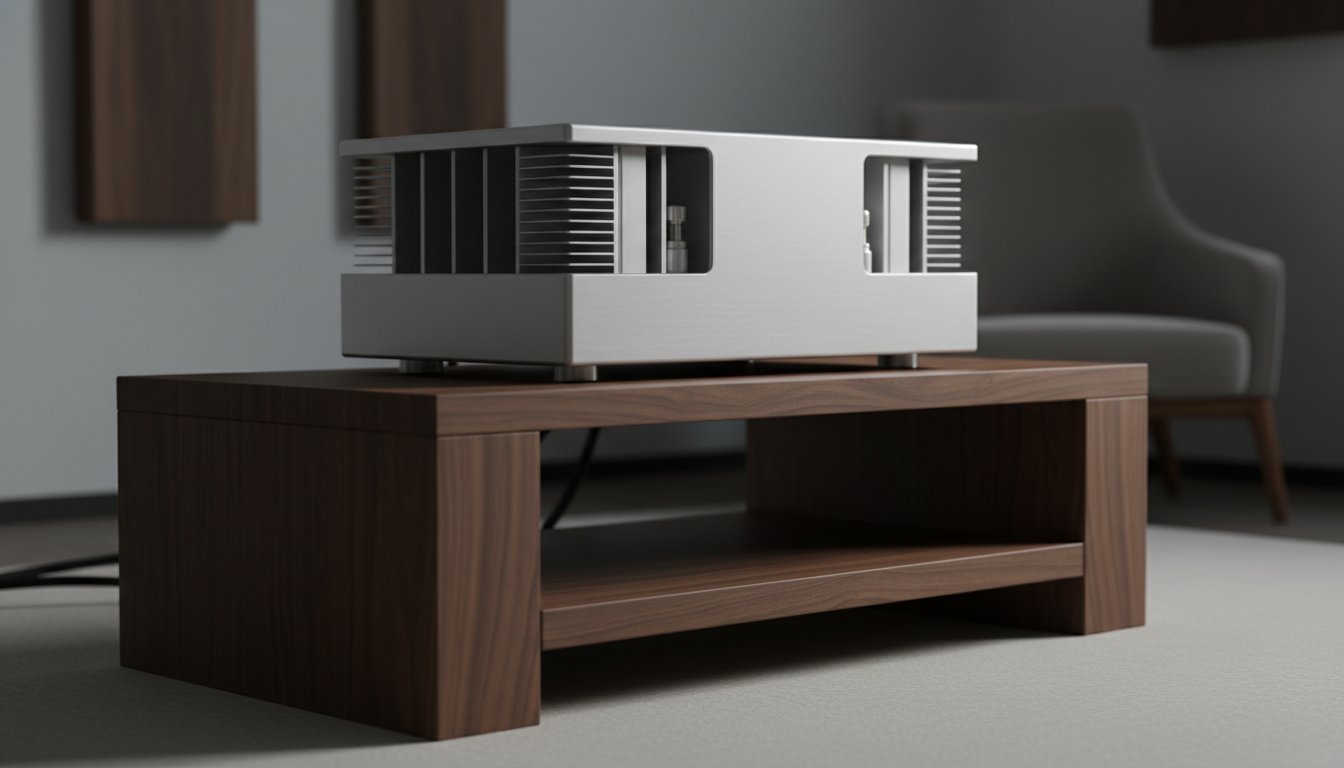
You should leave at least 6 inches (15cm) of vertical clearance above any tube amplifier. These components generate intense heat that can degrade internal capacitors if trapped in a small cavity. Proper audio rack shelf spacing for cable access ensures this rising heat escapes freely while providing room for your hands to navigate the delicate glass tubes safely during maintenance.
Can I use a standard bookshelf as an audio rack if I leave the back open?
Standard bookshelves are unsuitable foundations for high-fidelity gear. They are typically constructed from MDF or veneer, which ring with resonance and lack the structural mass to damp vibrations. Our handcrafted solid wood racks are built to support heavy components while offering the open architecture necessary for peak signal purity and thermal management that a generic bookshelf simply cannot provide.
Why is keeping audio cables off the floor considered an "audiophile" practice?
Elevating cables prevents them from acting as antennas for static electricity and conduits for floor-borne vibrations. According to a 2026 AES survey, 68% of listeners prioritize sound quality, which is directly impacted by these subtle interferences. Keeping cables lifted preserves the low-level detail that makes your music feel authentic and intimate, protecting the signal from the mechanical energy of the floor.
What is the "bend radius" and why does it matter for shelf spacing?
The bend radius is the minimum diameter a cable can be curved without causing physical or electrical damage. For heavy-gauge power cords, this radius often requires 4 inches (10cm) of horizontal and vertical clearance to avoid strain. Ignoring this limit creates mechanical stress on the internal conductors and compromises the connection at your equipment's binding posts, leading to potential signal loss.
Is it better to have one tall rack or two shorter racks for cable access?
Two shorter racks are generally superior for both stability and accessibility in a dedicated listening room. Shorter racks allow for better reach and reduce the length of interconnect runs, which is vital for maintaining signal integrity. This configuration also lowers the center of gravity, providing a more secure, vibration-resistant home for your most prized components while making the rear panel easier to reach.
Does solid wood really help with cable-induced vibrations?
Solid wood possesses an organic cellular structure that naturally absorbs micro-vibrations traveling along cable jackets. Unlike metal racks that can ring or MDF that offers little damping, our handmade hardwood designs act as a mechanical ground. This helps prevent external noise from entering your signal path through the cable's physical contact with the rack, ensuring where sound and style are one.
How do I manage cables if my rack is positioned against a wall?
You should maintain a gap of at least 12 inches (30cm) between the rear of your rack and the wall. This distance is crucial for optimizing audio rack shelf spacing for cable access, allowing you to dress your cables without them bunching against the wall surface. It also facilitates the natural airflow needed to keep your electronics running at their ideal temperature without heat reflecting off the wall.
What are the best materials for cable ties in a high-end system?
Natural fibers such as silk or cotton are the preferred materials for securing your looms in a sensitive system. Avoid plastic zip ties; they can constrict the cable too tightly and transmit high-frequency vibrations into the signal path. Using soft, natural ties reflects a reverence for the craft and ensures your system remains a sanctuary of pure, undistorted sound without the mechanical harshness of synthetic fasteners.