The hypnotic, amber glow of a vacuum tube represents the very soul of high-fidelity sound, yet this same warmth is a constant, silent adversary to your equipment's longevity. You've likely felt that surge of anxiety when touching a shelf that's grown uncomfortably hot, fearing for the delicate glass of your valves or the integrity of your handcrafted furniture. It's a common tension for the connoisseur. You desire a clean, minimalist aesthetic, but you cannot ignore the physical necessity of a HiFi Rack for amplifier ventilation that performs as well as it looks.
I've spent years refining the balance between artisanal craftsmanship and technical performance, and I'm here to help you master the science of thermal convection. You'll gain the confidence to select furniture that protects your investment while elevating your listening experience. We will define clear, measurable clearance standards, such as the recommended three to four inches of vertical space, and explore how managing heat preserves the deep, emotive quality of your soundstage. By the end, you'll understand how to create a sanctuary where your components can breathe and your music can truly shine.
Key Takeaways
- Master the principles of thermal convection to draw cool air from beneath your equipment, extending the life of your most cherished vacuum tubes.
- Implement the 15cm vertical clearance standard within your hifi rack for amplifier ventilation to ensure heat dissipates without compromising your furniture.
- Uncover the truth about solid hardwood's thermal properties and why it remains the safest, most resonant choice for supporting high-heat components.
- Learn to spot the early warning signs of poor airflow, including increased microphonics and subtle physical changes to your listening environment.
- Discover how open-architecture designs, such as the Reference HiFi Rack, provide the perfect union of technical airflow and artisanal beauty.
The Physics of Heat: Why Tube Amplifiers Demand Dedicated Airflow
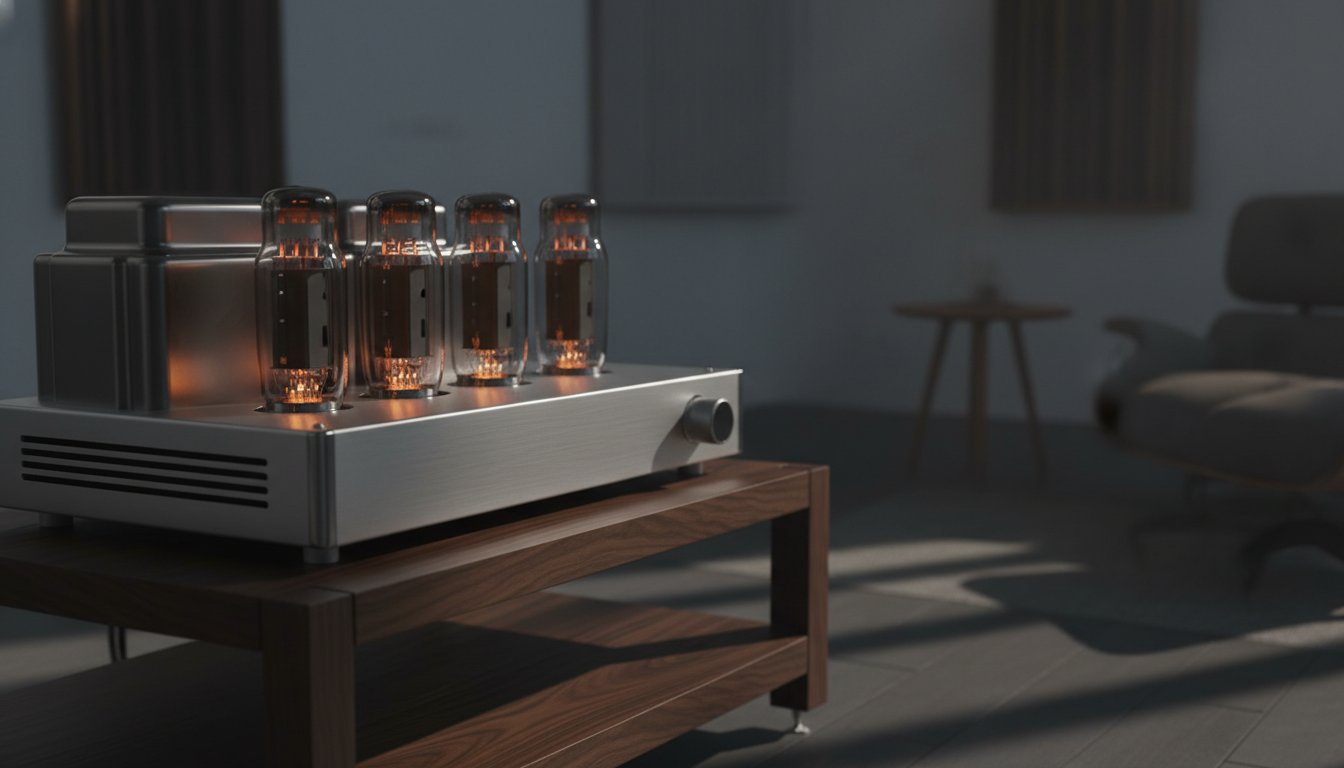
The amber glow of a vacuum tube is more than a visual delight; it's a physical manifestation of energy in transition. In the pursuit of pure, analog sound, your amplifier converts a staggering amount of electrical energy into thermal energy. This process, known as The Physics of Heat, relies on thermionic emission where a cathode is heated to release electrons. While this creates the lush harmonics we crave, it also creates an environment of intense, localized heat that must be managed with care.
Without a proper hifi rack for amplifier ventilation, this heat becomes trapped, creating a "bottled" effect around the glass. This stagnant air doesn't just warm the room; it actively degrades the delicate internal components of your amplifier. Electrolytic capacitors are particularly vulnerable, as excessive heat can dry out their internal fluids, leading to premature failure and a noticeable loss of bass definition. Furthermore, bottled heat accelerates cathode depletion, shortening the lifespan of expensive tubes and robbing your music of its transient snap.
To better understand how proper support transforms the performance of your system, watch this helpful video:
Understanding Thermal Convection in Audio Racks
Thermal convection is the natural engine of cooling. As the air around your tubes heats up, it becomes less dense and rises, creating a low-pressure zone that pulls cooler air in from below. This is often called the "Stack Effect." In a multi-tier audio furniture setup, the intake area at the base of the rack is critical. If the bottom shelf lacks an open design, the entire convection cycle stalls. I've often seen enthusiasts struggle with "heat-soak," where the rack itself begins to store thermal energy. Over time, this raises the ambient temperature around the transformers, causing them to hum. A well-designed hifi rack for amplifier ventilation ensures that this cycle remains fluid and uninterrupted.
Class A vs. Class AB: Thermal Profiles Compared
The demand for airflow varies significantly depending on your amplifier's topology. Class A amplifiers are the most demanding; they draw full power and generate constant heat regardless of the volume level. They are essentially beautiful, high-fidelity space heaters. Class AB designs are more efficient, only generating significant heat during musical peaks, yet they still require breathing room. If you're running high-bias monoblock configurations, the thermal load doubles. You can't simply tuck these into a closed cabinet. True performance requires an open-architecture solution that respects the laws of thermodynamics while maintaining the aesthetic integrity of your sanctuary.
Calculating Minimum Clearance: The Audiophile’s Rule of Thumb
Precision is the hallmark of a true listening experience. While the physics of heat establishes the "why," calculating specific clearance ensures the "how." Many enthusiasts rely on vague suggestions of "a few inches," but protecting a high-fidelity investment requires more rigor. When selecting a hifi rack for amplifier ventilation, you must treat space as a functional component, just as vital as your silver-core cables or vibration isolation. Proper spacing isn't a suggestion; it's a requirement for acoustic preservation.
Vertical Clearance: The Critical Dimension
The most important measurement in your setup is the vertical gap above your amplifier. I recommend a minimum of 15cm of clear space above the tallest point of your equipment. It's a common mistake to measure from the chassis surface; instead, you must measure from the tip of the tallest vacuum tube. For high-output tubes like the 845 or KT150, increasing this to 25cm provides a necessary safety margin. Low-profile shelving creates dangerous heat traps where stagnant air can reach temperatures high enough to degrade your circuit boards and shorten the life of your transformers.
Lateral and Rear Spacing for Cross-Ventilation
Vertical rise is only half the battle. To facilitate true ambient air exchange, maintain at least 5 to 10cm of lateral clearance on either side of the chassis. This allows cool air to be drawn in from the sides as the central heat column rises. Solid back-panels are the primary enemy of tube longevity. An open-back design is non-negotiable for any hifi rack for amplifier ventilation. Without a clear exit path, heat reflects off the rear wall and back into the amplifier's sensitive input stages. Organized cable management also plays a role here. Don't allow a tangle of interconnects to block these vital air paths.
Special Considerations for Monoblocks
Dual-mono setups present a unique thermal challenge, especially in intimate listening rooms where heat signatures can quickly become overwhelming. For high-heat monoblocks, floor-standing amplifier stands are often superior to traditional multi-tier racks. Placing these heavy, heat-intensive units closer to the floor utilizes the naturally cooler air at ground level and provides 360-degree exposure. This separation prevents the "heat-stacking" effect that occurs when two powerful units are placed on adjacent shelves. If you find your current furniture feels cramped, exploring our range of Reference HiFi Racks can provide the expansive, open architecture your system deserves to breathe and perform at its peak.

Furniture Materials and Heat: Solid Wood vs. Synthetic Alternatives
The choice of material for your audio sanctuary is more than an aesthetic decision; it's a commitment to the long-term health of your components. A common myth suggests that wood is a poor choice for tube amplification because it "traps" heat. This generalization fails to distinguish between industrial composites and the organic integrity of solid hardwood. When you invest in a high-quality hifi rack for amplifier ventilation, the material's thermal mass becomes a silent partner in your system's stability. Unlike metal, which can reflect heat back toward the chassis, solid wood absorbs and dissipates energy with a natural, steady rhythm.
I've seen many enthusiasts worry about finish damage over time. Sustained heat can indeed cause lesser furniture to cloud or peel, but this is typically a failure of the finish rather than the timber. High-quality oils and waxes used on artisanal racks allow the wood to breathe. This prevents the "brittle" effect seen in mass-produced items. By choosing a rack built from raw, high-quality materials, you ensure that your furniture ages as gracefully as the tubes it supports. It's about creating a balance where the equipment and its support exist in thermal harmony.
Why Solid Wood Outperforms MDF in High-Heat Environments
Synthetic materials like MDF are held together by chemical resins and glues. When subjected to the constant, localized heat of a tube amplifier, these binders can soften or even release off-gassing into your listening room. This isn't just an olfactory nuisance; it's a sign of structural degradation that can lead to warping or sagging under heavy transformers. Solid wood doesn't share these vulnerabilities. It possesses a natural ability to handle temperature fluctuations without structural failure. You can explore the deeper relationship between material density and performance in our guide on The Science of Vibration Damping in Solid Hardwood.
Choosing the Right Hardwood for Thermal Resilience
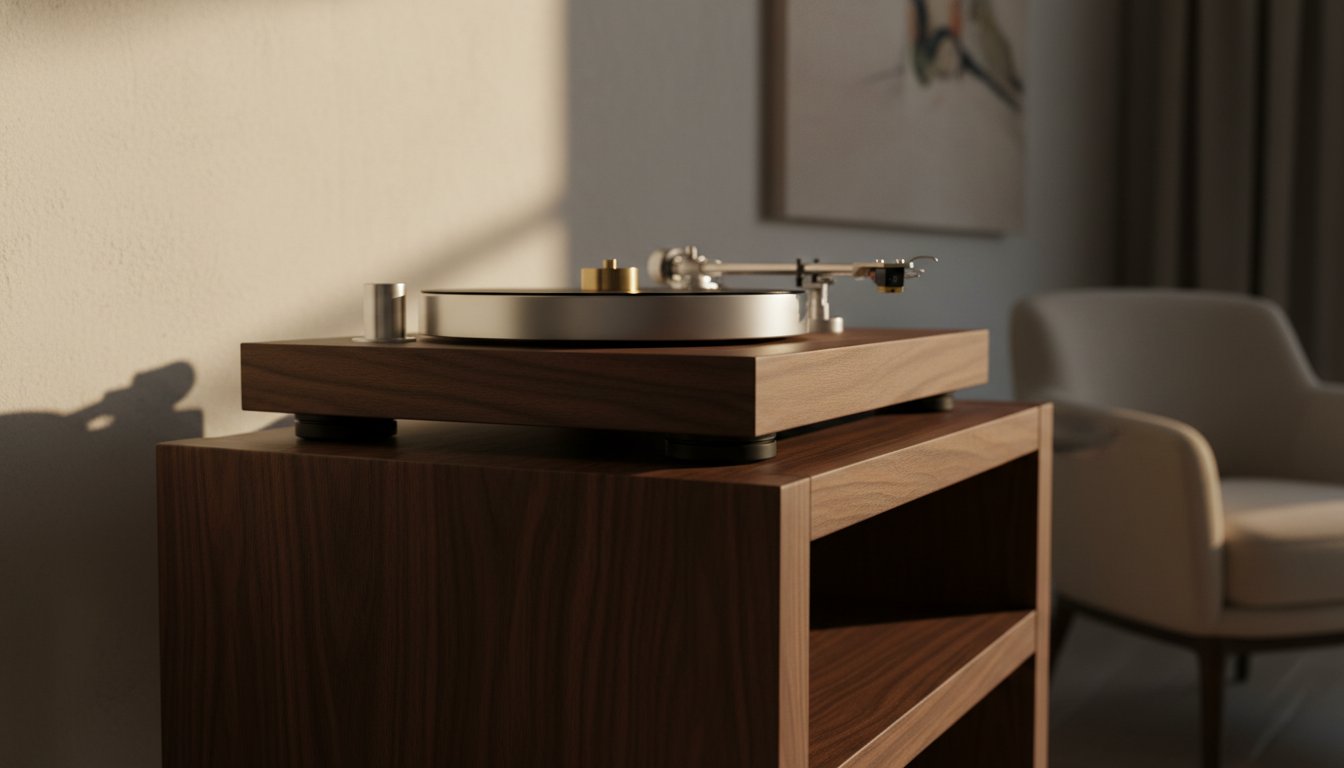
Not all timbers are created equal in the face of heat. Oak and Walnut, with their high density and tight grain structures, offer exceptional thermal resilience. These hardwoods possess natural oils that prevent the timber from drying or cracking under the sustained warmth of a large tube chassis. Cherry, while slightly less dense, provides a beautiful, warm patina that actually deepens with light and heat exposure over the years. This organic response creates a sensory bridge between the high-tech precision of your electronics and the natural beauty of your home. A dedicated hifi rack for amplifier ventilation crafted from these materials ensures your system remains a legacy piece, resisting the drying and peeling that plagues veneer-clad alternatives.
Warning Signs: How to Identify Poor Ventilation Before Damage Occurs
Vigilance is the quiet price of sonic purity. While our previous discussions established the 15cm clearance rule and the importance of material resilience, you must remain attuned to the subtle language of your equipment. Even with a high-quality hifi rack for amplifier ventilation, environmental shifts or high-bias settings can create localized thermal stress. Heat is a patient predator; it doesn't always announce its presence with a burnt smell or a sudden failure. Instead, it leaves a trail of sensory breadcrumbs for the attentive listener to follow.
I often advise enthusiasts to look for physical cues before they become permanent scars. Discoloration of nearby interconnect jackets or a slight darkening of the timber surface directly above the tubes suggests that heat is pooling rather than rising. Audibly, poor thermal management often manifests as an elevated floor of thermal noise. If your system suddenly feels less "black" in the silences, or if you notice increased microphonics, your components may be vibrating under the strain of excessive warmth. Tube health offers the most direct evidence. Premature silvering or the rapid depletion of the "getter" flash inside the glass indicates the vacuum is struggling against an external heat soak.
You can perform a simple touch test to evaluate your environment. Safely place your hand on the underside of the shelf directly above your amplifier after an hour of listening. If the surface is too hot to maintain comfortable contact for five seconds, your convection cycle has stalled. This is a clear signal that your current setup is no longer serving the music. If you find your gear is struggling to stay cool, it may be time to upgrade to a dedicated Classic HiFi Rack designed for unrestricted airflow.
Monitoring Component Stress
For the technically minded, a non-contact infrared thermometer is an invaluable tool for your sanctuary. Rather than guessing, you can precisely identify hot spots on the chassis or the rack surface. I look for consistency; if one side of your amplifier is significantly hotter than the other, it often points to a lateral airflow blockage. Identifying these patterns early allows you to consider a passive redesign of your shelf heights before any permanent damage occurs to your transformers or delicate internal wiring.
Long-term Effects of Overheating
The financial cost of poor ventilation is often hidden in the frequency of tube replacements. High-heat environments can cut the expected lifespan of a power tube by half, turning a one-time investment into a recurring expense. More dangerously, sustained heat is the primary cause of "dried out" electrolytic capacitors. These components are the heart of your power supply; as they degrade, your amplifier loses its ability to deliver the deep, controlled bass that defines a high-end system. Preserving the resale value and the emotional impact of your electronics requires a support system that respects the laws of thermodynamics as much as the laws of acoustics.
The HiFi Rack Solution: Designing for Thermal and Acoustic Harmony
True harmony in a high-end system isn't found in the components alone; it exists in the silence between the notes. While some suggest active cooling solutions like integrated fans, these often introduce mechanical vibration and a raised noise floor into your personal sanctuary. I believe the most elegant solution is entirely passive. A thoughtfully engineered hifi rack for amplifier ventilation achieves thermal stability by working with the laws of physics rather than fighting them. It's a definitive promise: you don't have to sacrifice the quiet intimacy of your listening room to keep your vacuum tubes safe.
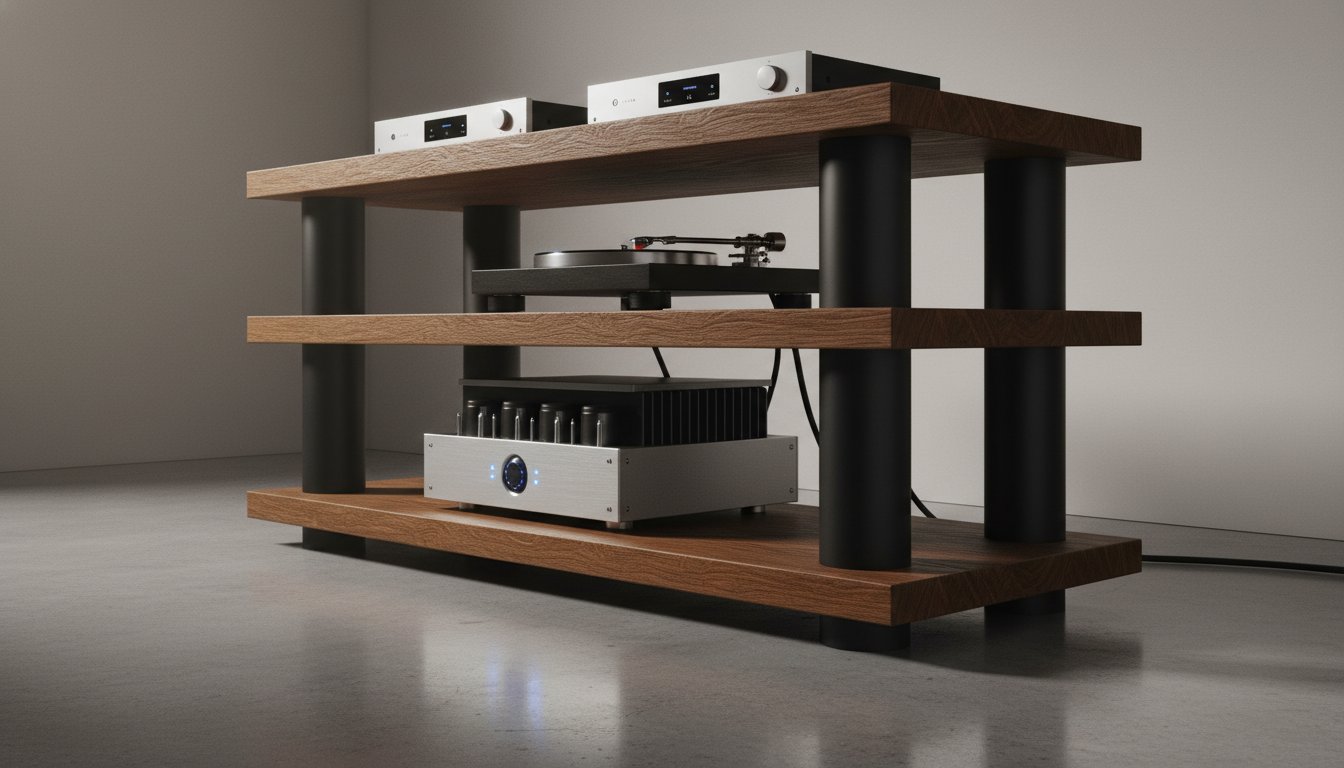
Choosing between open-architecture and closed-cabinet designs is the most critical decision for a tube enthusiast. Closed cabinets are the antithesis of performance; they act as thermal insulators that trap radiant energy. By contrast, an open design allows for the unrestricted "Stack Effect" we explored earlier, ensuring that heat rises away from sensitive transformers. This approach preserves the delicate micro-details of your music while ensuring your equipment remains within its optimal operating temperature. It's the point where high-end engineering meets organic beauty.
Reference and Classic Series: Built for Airflow
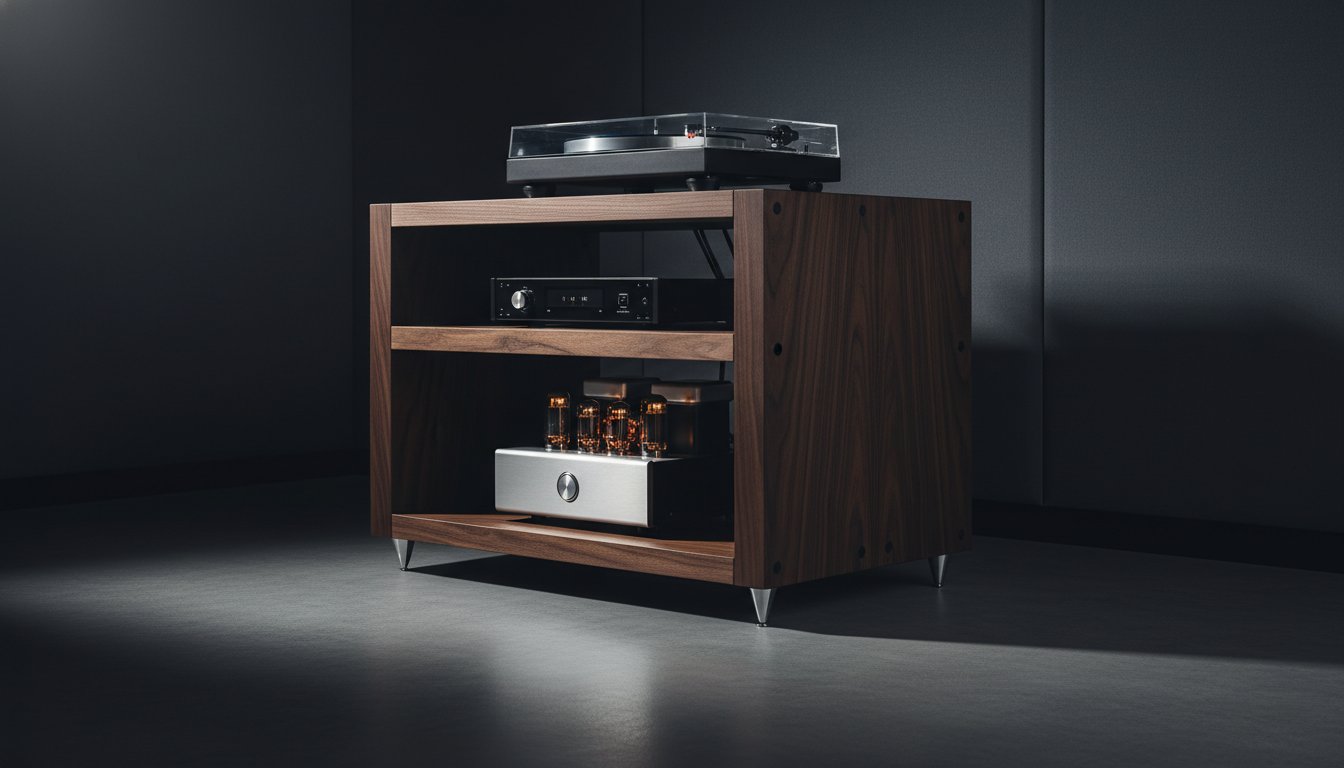
Our designs prioritize an unobstructed path for rising heat. The Reference HiFi Rack utilizes solid wood pillars that minimize the surface area where air currents might be blocked. Unlike bulky, mass-produced furniture, these slim yet incredibly dense supports allow for maximum lateral airflow. Because our systems are modular, you can specify the exact shelf spacing required to meet the 15cm vertical clearance rule for your specific amplifier. This flexibility ensures that even the most demanding Class A monoblocks have the breathing room they need to perform with effortless dynamics. A dedicated hifi rack for amplifier ventilation should be as adaptable as the system it supports.
Handcrafted Excellence in Novi Sad
In our workshop in Novi Sad, we approach furniture as a vital instrument in the pursuit of sensory perfection. This commitment to quality means we have a strict policy of No MDF or Veneer in our construction. We rely exclusively on raw, high-quality hardwoods that offer superior thermal stability and acoustic damping. Every rack is a testament to artisanal integrity, built to last a lifetime and age with a grace that synthetic materials can't replicate. We offer bespoke height options to accommodate custom tube configurations, such as the towering 845 or 211 triodes. This alignment of technical performance with natural aesthetics is our unmistakable signature, ensuring your listening environment remains a soulful, protected space for your passion.
Elevating Your Listening Sanctuary
Mastering the delicate balance of heat and harmony is a rite of passage for every tube enthusiast. By respecting the 15cm clearance rule and understanding the natural rhythm of thermal convection, you've taken the most important step in protecting your investment. You now know that the right hifi rack for amplifier ventilation doesn't just hold your equipment; it actively preserves the emotive depth and transient clarity of your most cherished recordings. It's a commitment to longevity that synthetic materials simply can't honor.
I invite you to bring this technical precision into your home without compromising on the organic beauty of your space. Our workshop in Serbia remains dedicated to a zero MDF or veneer policy, utilizing only high-quality solid hardwoods to ensure thermal stability. With our modular designs, you can customize the perfect ventilation gaps for your specific amplifier architecture. Explore our handcrafted Reference Racks designed for optimal thermal performance and give your components the breathing room they deserve. Your system has never been in better hands.
Frequently Asked Questions
How much space should be above a tube amplifier?
You should maintain a minimum of 15cm of vertical clearance above the tallest tube in your amplifier. This specific gap allows the rising heat to escape and prevents the formation of stagnant air pockets. For high-output tubes like the 845, extending this space to 25cm provides an even safer margin for natural thermal convection.
Can I put a tube amplifier in a closed cabinet?
Placing a tube amplifier in a closed cabinet is generally discouraged as it creates a dangerous heat trap. Without a clear exit path, the internal temperature can rise rapidly, causing damage to the amplifier's circuit boards and transformers. An open hifi rack for amplifier ventilation is the only way to ensure the longevity of your electronics.
Do I need cooling fans for my tube amp rack?
You don't need cooling fans if your rack features an open architecture design. While fans provide active cooling, they often introduce unwanted mechanical vibration and audible noise into your listening environment. I prefer a passive approach that relies on natural airflow to maintain sonic purity and a low noise floor.
Will the heat from my tubes damage a solid wood hifi rack?
High-quality solid wood is remarkably resilient and won't be damaged by the radiant heat of a tube amplifier. Unlike MDF or veneer, which can warp or peel, solid hardwood handles temperature fluctuations with ease. We use breathable natural oils on our handcrafted racks to ensure the timber stays hydrated and beautiful for decades.
What are the signs that my tube amp is overheating?
Look for physical indicators like the discoloration of nearby cables or a darkening of the shelf surface above the amp. Audibly, you might notice an increase in thermal noise or a persistent hum that wasn't there before. These signals tell you that the heat isn't dissipating correctly and your setup needs more breathing room.
Is it safe to stack components on top of a tube amplifier?
You should never stack components directly on top of a tube amplifier. Doing so completely blocks the rising heat, which can lead to immediate overheating and permanent component failure. Each piece of equipment in your system deserves its own dedicated shelf to ensure proper airflow and vibration isolation within your sanctuary.
Does ventilation affect the sound quality of my system?
Ventilation has a direct impact on sound quality by managing thermal noise and protecting delicate internal components. Excessive heat causes electrolytic capacitors to degrade, which often results in a loss of bass control and transient snap. A well-ventilated hifi rack for amplifier ventilation ensures your system sounds more open, detailed, and emotionally resonant.
How do I clean my tubes and rack to prevent dust-related heat build-up?
Use a soft, dry microfiber cloth to wipe down your rack and a gentle brush to remove dust from cold vacuum tubes. Dust acts as an insulator that traps heat against the glass, so regular cleaning is essential for thermal efficiency. Always ensure your amplifier is completely cool before you begin any maintenance on the tubes.