Your high-end audio system should be the soulful centerpiece of your home, not a source of domestic friction. For many enthusiasts, the challenge of integrating hifi furniture with home decor often leads to a compromise between acoustic purity and interior aesthetics. You've likely felt the frustration of a partner's disapproval over bulky metal racks or the sight of a chaotic cable nest marring your living space. It's a common struggle; standard household furniture often lacks the density to handle vibrations, which can introduce unwanted resonance across the 20Hz to 100Hz frequency range.
We believe that where sound and style are one, your listening room becomes a true sanctuary. This guide promises to help you blend world-class performance with sophisticated design using solid hardwood furniture that's built to last a lifetime. You'll learn how to match natural wood finishes and master cable management without sacrificing the authentic, handcrafted look of your home. We'll explore how furniture that is custom, handmade, natural, and authentic provides the isolation your equipment deserves, ensuring your passion for music remains a beautiful, seamless part of your daily life.
Key Takeaways
- Bridge the gap between acoustic precision and interior elegance by transforming your listening room into a soulful, cohesive sanctuary.
- Understand why solid hardwood outperforms industrial materials, offering a sensory warmth essential for integrating hifi furniture with home decor.
- Learn to select a rack profile that balances your room’s volume with its aesthetic character, from minimalist to mid-century styles.
- Discover how to conduct a room flow analysis to find the perfect harmony between technical sweet spots and your home’s natural movement.
- See how bespoke, handcrafted excellence allows for a tailored fit that honors both multi-generational craftsmanship and modern high-fidelity requirements.
The Challenge of Harmonizing High-End Audio with Interior Design
Integrating hifi furniture with home decor often feels like a battle between two opposing worlds. On one side, you have the pursuit of High fidelity (hi-fi), which requires large amplifiers, heavy turntables, and intricate cabling. On the other, you have the desire for a clean, cohesive living space. This tech-decor conflict usually forces a compromise. Either the gear dominates the room like an industrial intruder, or it's tucked away in a cupboard where it can't breathe.
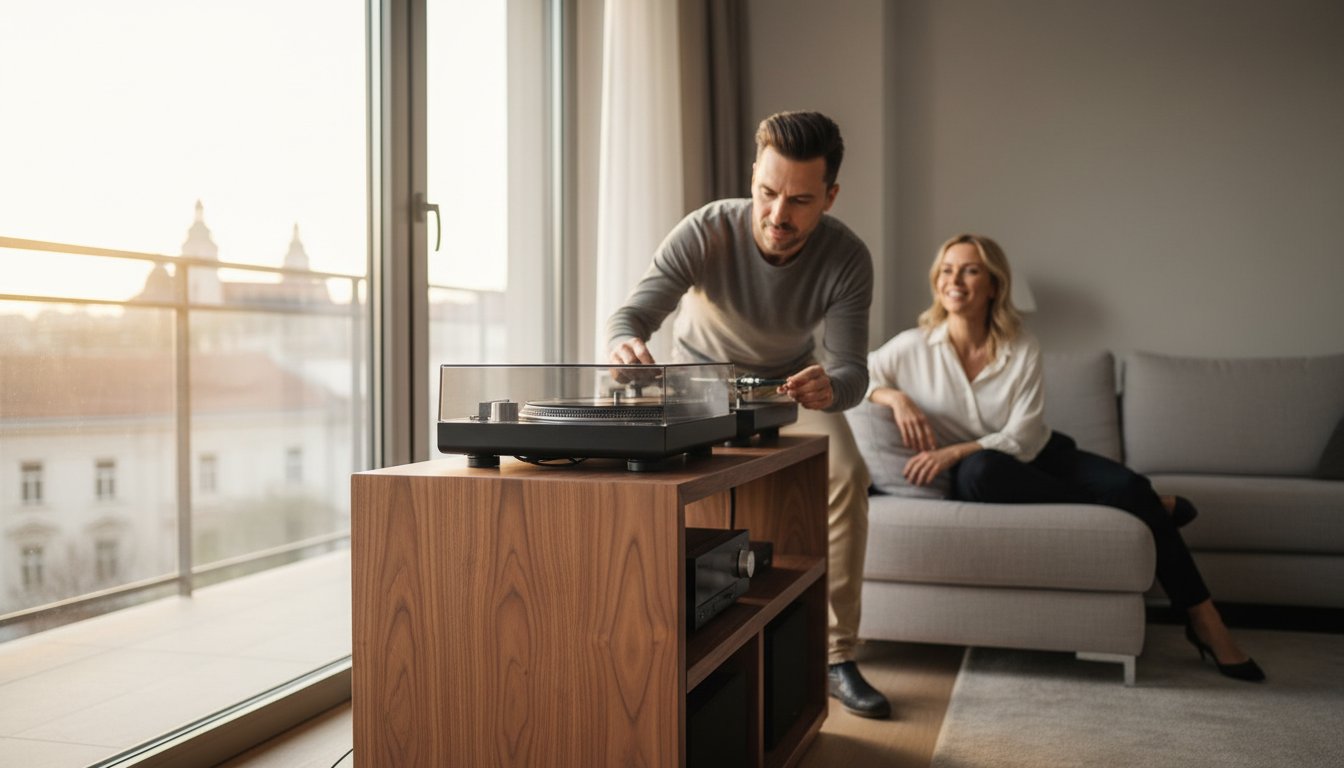
True enthusiasts know that a listening room should be a sanctuary. It's a place to slow down and connect with music. When your environment is cluttered or visually chaotic, your brain struggles to relax. A dedicated space where every component has its place creates a sense of order that enhances the auditory experience. We view the furniture not just as a shelf, but as an active part of the signal chain itself.
To better understand how to balance equipment with your living space, watch this helpful guide from Andrew Robinson:
Why "Hiding" Your System is a Technical Mistake
Hiding premium components in standard MDF sideboards or unventilated cabinets is a mistake. Most home furniture lacks the airflow required for high-current amplifiers. Trapped heat can reduce component lifespan by 40% over a five-year period. Beyond heat, standard cabinets vibrate. These micro-vibrations interfere with sensitive turntable needles and laser pickups, blurring the soundstage. Acoustic furniture is a specialized category of interior design that prioritizes resonance control and thermal management to protect your investment.
The Aesthetic Value of the Audiophile Centerpiece
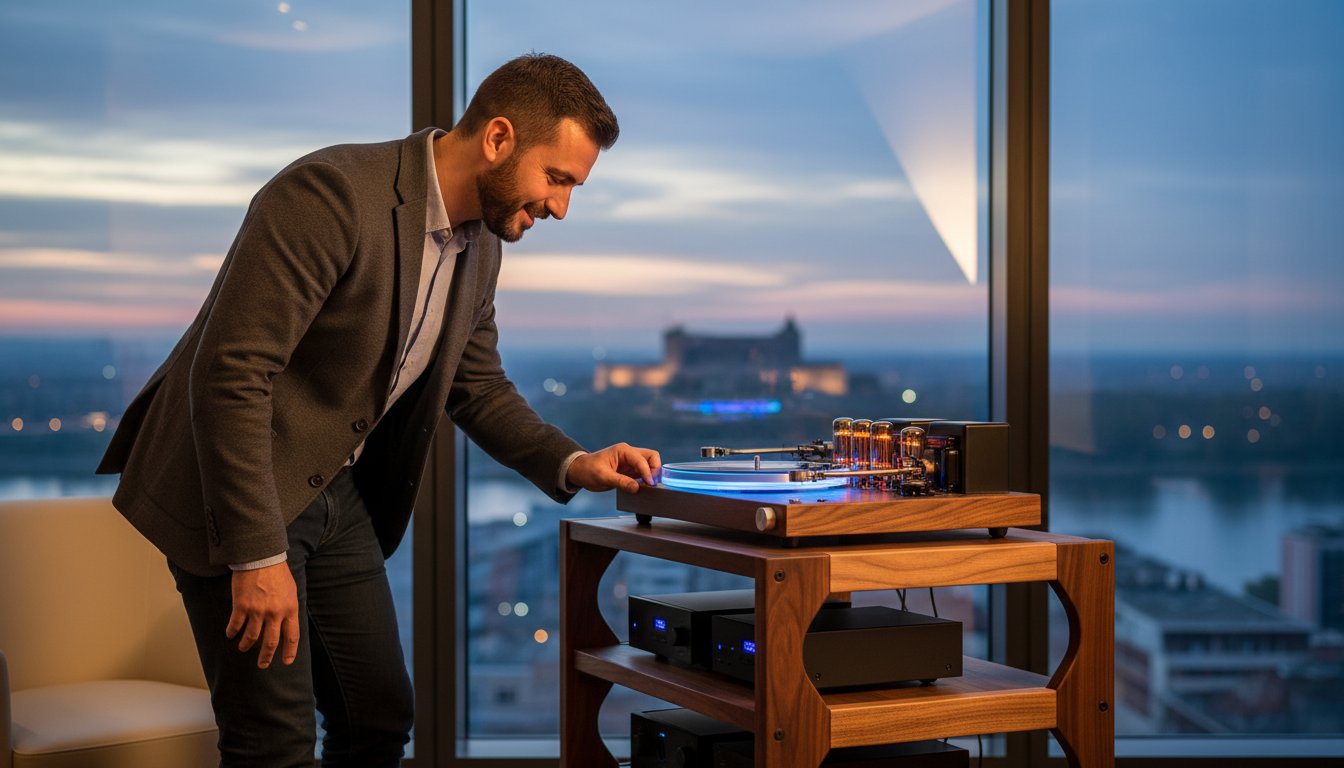
It's time to stop treating your gear as a problem to be solved. A well-designed turntable or a tube amplifier is a piece of mechanical art. When you choose the right platform, these objects become the visual anchor of the room. Much like a fireplace or a curated art wall, a handcrafted rack draws the eye and signals that this is a space for intention. Our philosophy at Myro HiFi Rack is simple: Where sound & style are One. By integrating hifi furniture with home decor through natural materials, you transform a stack of electronics into a soulful centerpiece.
Selecting Materials That Elevate Both Sound and Style
Integrating hifi furniture with home decor requires a delicate balance between acoustic physics and interior aesthetics. While industrial materials like steel and glass often dominate mass-market catalogs, they bring a cold, ringing resonance that interferes with high-fidelity signals. Solid hardwood stands at the top of the material hierarchy because it acts as a natural mechanical filter. It doesn't just hold your equipment; it refines the performance by grounding the system in an organic foundation.
The sensory experience of solid timber is incomparable. There is a palpable warmth in the natural grain that counters the clinical feel of high-end electronics. Handcrafted wood furniture provides a tactile connection to the music, turning a functional rack into a centerpiece of a personal sanctuary. Unlike synthetic alternatives, these pieces are built for longevity. A rack carved from genuine timber doesn't just survive the years; it matures into a family heirloom, gaining character and depth with every listening session.
The Acoustic Superiority of Solid Hardwood
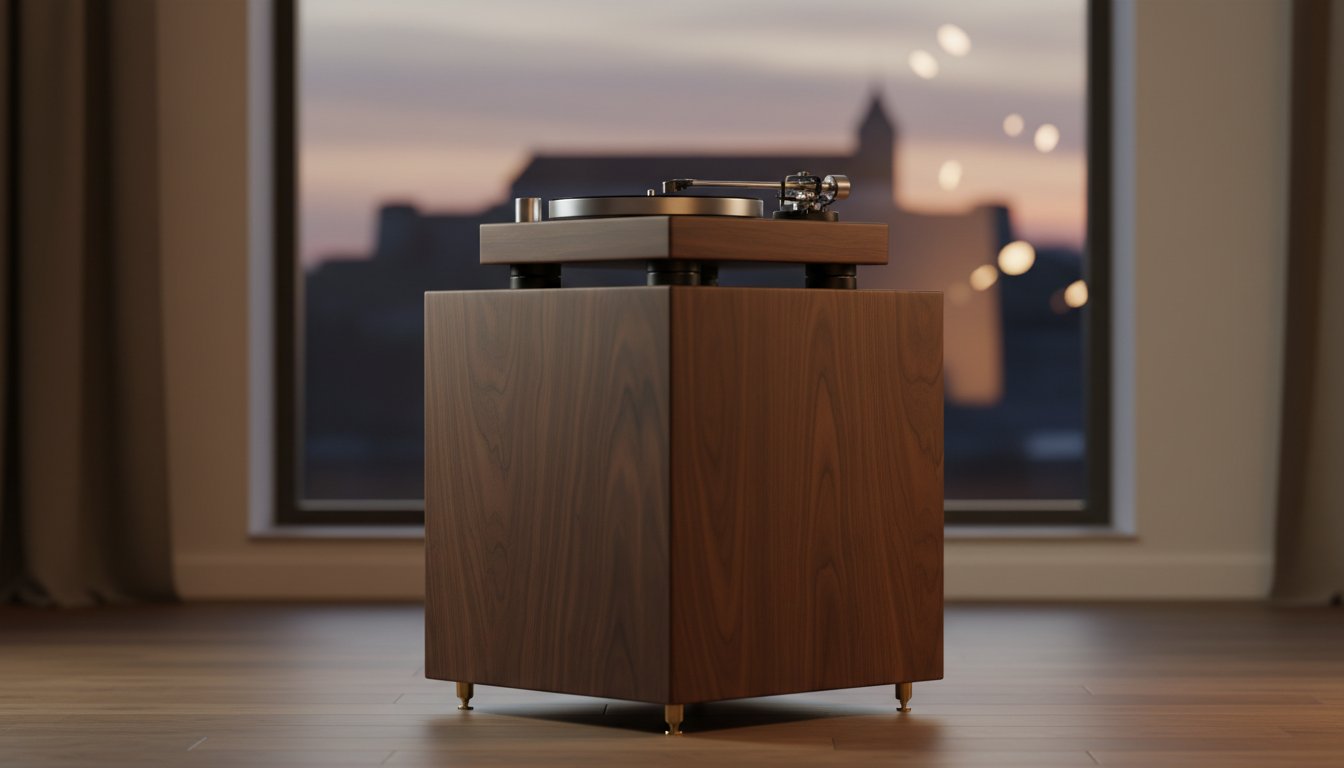
Wood is nature's most effective vibration damper. The complex, porous cellular structure of organic timber converts unwanted kinetic energy into trace amounts of heat, preventing micro-vibrations from reaching sensitive turntable needles or tube filaments. Different species offer unique damping profiles based on their density. For example, American Walnut provides a warm, rich resonance with a Janka hardness rating of 1,010 lbf. European Oak offers a denser, more analytical foundation with a rating of 1,360 lbf, while Ash provides a balanced middle ground. To understand how these species impact your specific setup, read the Ultimate Guide to Choosing a Solid Wood HiFi Rack.
Avoiding the "Mass-Market" Aesthetic Trap
Many commercial racks rely on Medium Density Fiberboard (MDF) wrapped in thin plastic veneers. These pieces often look superficial and "cheap" when placed next to premium brushed aluminum or chrome components. They lack the visual depth and soul that defines a high-end listening room. True luxury is found in the "NATURAL | AUTHENTIC" pillars of craftsmanship. While MDF swells with humidity or peels at the edges over a 5 to 10 year period, solid wood remains structurally sound for generations. It creates a space where sound and style are one, reflecting the integrity of the music itself. If you're ready to elevate your listening environment, you can explore our collection of artisanal racks designed for the true connoisseur.

Choosing the Right Rack Profile for Your Room’s Aesthetic
The physical presence of your equipment rack acts as the visual anchor for your entire listening environment. When integrating hifi furniture with home decor, you must first analyze the room's volume to determine the appropriate "weight" of the piece. A rack isn't just a shelf; it's a structural element that defines the space. In a large 400-square-foot living area, a lightweight stand can look fragile and out of place. Conversely, a massive, dark-stained rack in a 120-square-foot apartment can feel suffocating. You want a profile that complements the visual scale of your speakers and seating while maintaining a sense of balance.
Matching your rack to your existing interior style ensures the system feels like an intentional part of the home rather than an afterthought. Minimalist interiors benefit from clean lines and light woods that disappear into the background. Mid-Century Modern spaces often call for warmer tones and tapered silhouettes, while Industrial lofts can handle the raw, heavy presence of solid 40mm wood slabs. Explore our Reference and Classic collections to find a silhouette that resonates with your specific architectural DNA.
Modularity is the secret to future-proofing your decor. Your audiophile journey is rarely static; systems grow and components evolve. A modular design allows you to add tiers as you transition from an integrated amplifier to separate power units without requiring a complete room redesign. This flexibility ensures your furniture remains a permanent fixture of your sanctuary. It's a philosophy where sound and style are one, grounded in our commitment to being CUSTOM, HANDMADE, NATURAL, and AUTHENTIC.
Reference Racks for Statement Living Spaces
Large, open-concept rooms demand a centerpiece that commands attention. The Myro Reference HiFi Rack is engineered for these expansive environments. Its substantial mass provides the structural rigidity required for sensitive high-end turntables while serving as a bold design statement. To maximize impact, pair deep, natural Walnut grains with neutral wall colors like soft white or charcoal. This contrast highlights the organic patterns of the wood, transforming your equipment into a curated gallery piece that feels both premium and intimate.
Slim and Minimalist Designs for Modern Apartments
Urban dwellings often require a more disciplined approach to floor space. The Slim and Minimalist approach focuses on achieving high-performance isolation within a compact footprint. You don't have to sacrifice style for technical excellence in a smaller room. Using lighter wood finishes, such as Ash or Maple, reflects natural light and makes a room feel larger and more open. These designs provide the necessary air circulation for your components while maintaining a low-profile aesthetic that respects the boundaries of your living space.
Practical Steps for a Seamless Room Integration
Successfully integrating hifi furniture with home decor requires a methodical approach that respects both the laws of physics and the principles of interior design. It's about finding that intersection where sound and style are one, transforming a collection of electronics into a curated sanctuary. Follow these five steps to ensure your system looks as refined as it sounds.
- Step 1: Conduct a room flow analysis. Walk through your space to identify natural foot traffic. You don't want guests tripping over speaker cables or bumping into a delicate turntable. Aim for at least 3 feet of clearance around the main listening area to maintain a sense of openness.
- Step 2: Match wood species to your flooring. Avoid the "near-miss" where a rack almost matches the floor but looks slightly off. If you have light oak floors, a dark Walnut or charred Oak rack provides a sophisticated contrast that feels intentional rather than accidental.
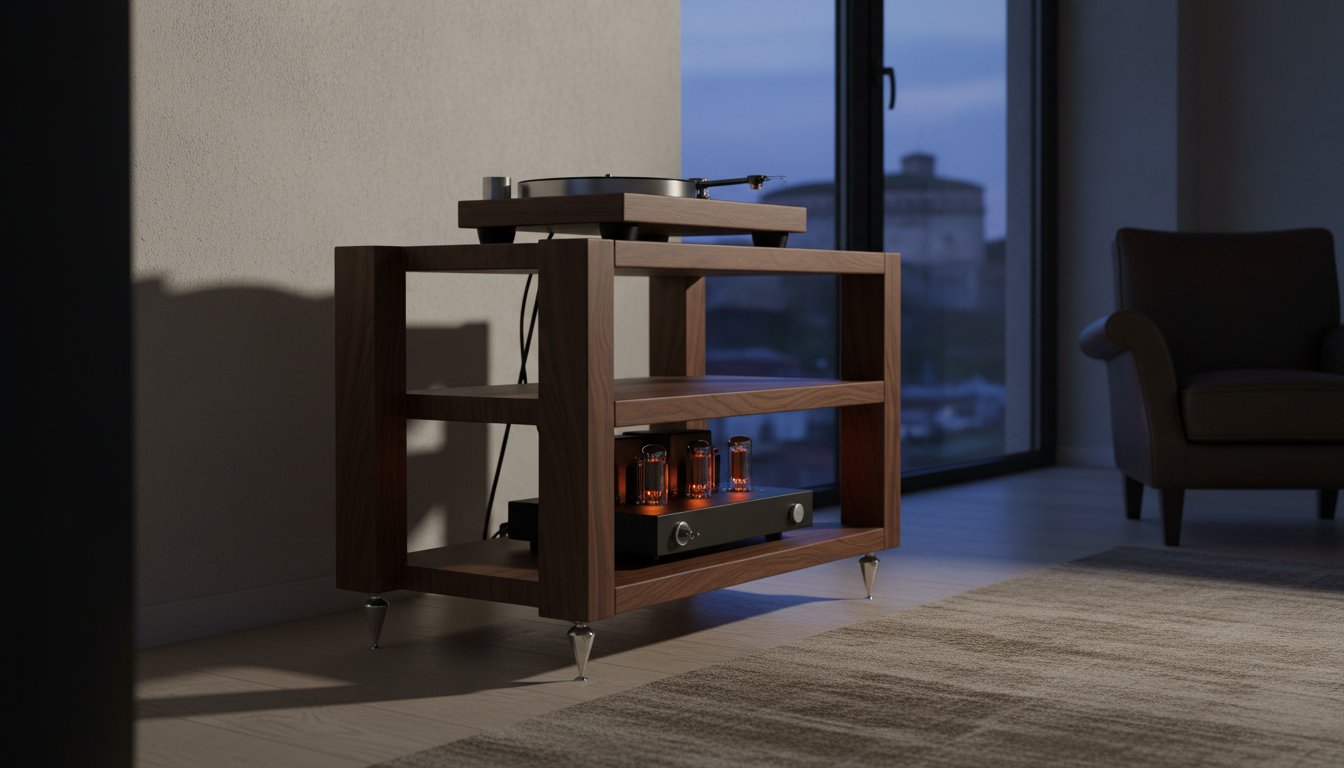
- Step 3: Implement open-architecture cable management. Premium racks are designed to breathe. Instead of hiding cables behind bulky plastic panels, use the natural lines of the wood to route your connections. Let gravity do the work, ensuring no cable is under tension.
- Step 4: Use warm lighting. Highlight the textures of the wood and the glow of vacuum tubes with 2700K to 3000K warm LEDs. Accent lamps placed at different heights create depth and make the equipment feel like part of the furniture.
- Step 5: Final leveling and isolation. A turntable requires a surface level within 0.1 degrees for accurate tracking. Once your rack is in its permanent home, use a precision spirit level to adjust the feet, ensuring the entire structure is rock-solid and perfectly horizontal.
Strategic Placement for Symmetry and Sound
Placing a heavy rack directly between your speakers is a common habit, but it's not always the best choice for the depth of field. A large physical object between the transducers can sometimes smear the center image. Moving the rack to a side wall can open up the soundstage, creating a more immersive experience. For those who prefer eclectic or boho decors, an asymmetrical setup feels relaxed and authentic. To maintain visual harmony, your speaker stands should share the same timber and handcrafted finish as the main rack.
Managing the Visual Noise of Cables
When you're integrating hifi furniture with home decor, cables are often the biggest hurdle. We advocate for a "slow-made" approach to cable dressing. High-end cables are often beautiful objects in their own right; they don't need to be hidden, but they do need to be organized. Group them using leather ties or natural hemp cord rather than harsh plastic zip ties. This respects the organic materials of your rack. For specific tips on protecting your hardwood floors from heavy equipment, see this guide on Speaker Feet and Acoustic Isolation.
Ready to elevate your listening room with a piece that bridges the gap between performance and art? Explore our collection of handcrafted hifi racks and find the perfect match for your home.
The HiFi Rack Philosophy: Custom Handcrafted Excellence
In Novi Sad, woodworking is a legacy passed through generations. Our workshop sits at the intersection of this heritage and the precise demands of modern acoustics. We don't view a rack as a static object; we see it as a vital instrument in your pursuit of musical perfection. When you choose a family-owned business, you're investing in a piece of authentic history. This human element is essential when integrating hifi furniture with home decor, as it transforms a technical necessity into a soulful centerpiece for your sanctuary.
Our philosophy centers on a simple promise: Where sound & style are One. We reject the cold, industrial feel of mass-market electronics. Instead, we embrace the warmth of natural materials. Every joint and finish reflects a "slow-made" approach that values quality over speed. This dedication ensures your equipment performs at its peak while your room retains its aesthetic harmony. It's about a grounded connection to the music you love.
Bespoke Customization for Your Unique Sanctuary
Standard furniture often forces compromises that audiophiles shouldn't have to make. A high-performance tube amplifier might require 250mm of vertical clearance for heat dissipation, while a heavy direct-drive turntable needs a specific footprint for stability. Our bespoke manufacturing process allows for perfect integration with your specific room dimensions. We don't believe in "one size fits all" solutions for your hi-end equipment.
The consultation process is a collaborative journey. We move from your initial vision to a finished solid wood masterpiece by discussing shelf counts, load capacities, and timber species. This ensures your rack fits your gear and your lifestyle perfectly. If you're ready to elevate your setup, contact us for a custom quote and let's build something extraordinary together.
Sustainable Craftsmanship as a Design Statement
Choosing solid wood is an ethical choice that defines your interior style. While a large percentage of modern furniture relies on disposable MDF and synthetic veneers, we prioritize longevity. Our commitment to the Responsibility pillar of our brand means using materials that age with grace rather than ending up in a landfill. Solid timber provides natural damping properties that synthetic boards simply can't match.
When integrating hifi furniture with home decor, the material's origin matters. We use sustainably sourced wood to ensure your listening room remains a place of peace and integrity. Your HiFi rack should be as permanent and soulful as the albums in your collection. It’s a statement of quality that respects both the artist's work and the environment. Our four-pillar mantra guides every build: CUSTOM | HANDMADE | NATURAL | AUTHENTIC. We invite you to treat your passion with the respect it deserves.
Where Sound and Style Are One
Your listening space shouldn't be a compromise between technical performance and aesthetic beauty. You've seen how selecting the right materials, specifically 100% solid wood instead of vibration-prone MDF, creates a foundation where your equipment can truly breathe. By focusing on rack profiles that mirror your room’s existing architecture, you turn a functional necessity into a focal point of artisanal pride. Mastering the art of integrating hifi furniture with home decor is about more than just gear placement; it's about creating a sanctuary where every note feels grounded and every texture feels real.
Each Myro piece is handmade in our workshop in Novi Sad, Serbia, ensuring a level of detail that mass-produced alternatives can't match. We reject veneers and fillers in favor of 100% solid materials that offer superior acoustic damping and timeless longevity. Whether you require a standard model or a bespoke customization tailored to your specific gear, our goal is to help you live your passion through high-fidelity design.
Elevate your listening sanctuary. Shop our Handcrafted Solid Wood Collections
Enjoy the harmony of a room that sounds as beautiful as it looks.
Frequently Asked Questions
Can I match a solid wood HiFi rack with my existing laminate or veneer furniture?
Yes, you can pair a solid hardwood rack with laminate or veneer furniture by focusing on complementary tones rather than identical matches. Natural wood brings a soul to a room that synthetic finishes lack. If your laminate is a dark 1970s walnut, a handcrafted oak rack provides a 20% lighter contrast that highlights the artisanal quality of your setup. This approach creates a layered, authentic aesthetic that feels curated rather than mass-produced.
Is it better to match the wood of the rack to the floor or the speakers?
You should prioritize matching your HiFi rack to your speakers to create a unified visual stage for your music. This approach treats your system as a single, harmonious instrument. While floors cover 100% of your room's footprint, your audio equipment occupies a specific focal point where matching grains, such as American Walnut, ensure your passion for sound and style are one. It's about creating a dedicated sanctuary for your listening experience.
How do I prevent my heavy audio gear from damaging my hardwood floors?
Use dedicated stainless steel floor protectors or shoes placed directly beneath the rack's spikes to distribute weight. High-end equipment can exert over 40 kilograms of pressure on a single point, which easily pierces oak or pine planks. These 30mm wide discs protect your sanctuary's flooring while maintaining the rigid coupling required for authentic, vibration-free sound reproduction. It's a simple, professional solution that preserves the integrity of your home's natural surfaces.
Does the color of the wood finish affect the sound quality of the rack?
The color of the wood finish has zero impact on sound quality, as acoustic performance depends on the density and internal damping of the solid timber. Whether you choose a dark ebony stain or a clear natural oil, the 40mm thick hardwood shelves perform identically. Sound quality is a product of the material's physical properties, not the 0.5mm layer of pigment applied to its surface. Your choice should remain a purely aesthetic decision based on your decor.
How do I integrate a large HiFi system into a small, minimalist living room?
You can integrate a large system into a minimalist space by utilizing a vertical, 4-tier solid wood rack that occupies less than 0.5 square meters of floor space. Integrating hifi furniture with home decor requires a less is more philosophy where the rack acts as a functional sculpture. By tucking cables into 2-inch diameter sleeves, you maintain the clean lines essential for a peaceful environment. It transforms bulky electronics into a sophisticated design statement.
What is the best way to clean and maintain a solid hardwood audio rack?
Clean your rack with a dry, lint-free microfiber cloth to remove dust every 7 days. Avoid chemical sprays that can degrade the natural finish over time. Applying a thin layer of high-quality beeswax every 12 months preserves the wood's moisture and ensures your handmade investment remains a centerpiece of your home for 25 years or more. This simple routine respects the craft and maintains the authentic beauty of the natural wood grain.
Can a custom HiFi rack be built to match a specific RAL color or paint code?
Yes, a custom HiFi rack can be professionally finished to match any of the 2,530 colors in the RAL Design System. This allows you to blend your audio equipment perfectly with your wall paint or existing cabinetry. While the natural grain of the wood is often the star, a custom matte or gloss lacquer finish ensures your high-end equipment fits your personal style without compromise. It's the ultimate way to personalize your musical sanctuary.
Should I use spikes or rubber feet when placing my rack on a carpeted floor?
You should use stainless steel spikes when placing your rack on a carpeted floor to ensure maximum stability. Spikes pierce through the 10mm to 15mm of carpet pile and padding to reach the solid subfloor beneath. This direct contact prevents the rack from swaying, which is vital for integrating hifi furniture with home decor while maintaining the precision required for high-fidelity playback. It's a technical choice that delivers a grounded, superior listening experience.