The most critical component in your listening room isn't your amplifier or your speakers; it's the physical foundation that supports them. You've likely spent years refining your signal chain, yet a single vibration from a floorboard can muddy a soundstage or cause a needle to skip during a prized recording. It's a common frustration for enthusiasts who find their gear stifled by resonant surfaces or poor ventilation. By integrating dedicated audiophile furniture into your setup, you address these mechanical failures at the source. We believe that a high-end system deserves a home that is as authentic and well-crafted as the music it reproduces.
This 2026 guide reveals how specialized isolation and support can transform your listening experience, offering a clearer soundstage and tighter bass response. You'll learn exactly what to look for when choosing pieces that balance technical performance with natural, handcrafted aesthetics. We'll explore the essential elements of vibration control and thermal management to help you build a sanctuary where sound and style are one.
Key Takeaways
- Understand why a dedicated isolation platform is a vital component of your signal chain, managing micro-vibrations to preserve sonic purity.
- Learn how the natural grain patterns of solid hardwood dissipate energy more effectively than the sonic "deadness" of mass-produced MDF.
- Identify the essential design features, such as open-architecture cooling and modularity, that define high-performance audiophile furniture.
- Master a step-by-step approach to evaluating your gear's weight and your room's floor type to ensure perfect mechanical support.
- Discover how artisanal craftsmanship transforms functional racks into authentic instruments where sound and style are one.
Why Specialized Audiophile Furniture is a Component, Not Just a Stand
In the pursuit of sonic perfection, every link in the audio chain serves a vital purpose. You've likely invested thousands in precision-engineered amplifiers and high-resolution sources, yet placing these instruments on a generic sideboard is like driving a supercar on a gravel road. True audiophile furniture functions as an active acoustic component. It acts as the foundation that preserves signal integrity by managing micro-vibrations and mechanical resonance that otherwise degrade the listening experience. To understand the depth of this commitment, one might ask What is an Audiophile? It is a person dedicated to high-fidelity sound reproduction, recognizing that even the smallest physical disturbance can color the output. Specialized racks transform your room into a personal sanctuary where the music finally breathes with quiet confidence.
The Problem with Standard Home Furniture
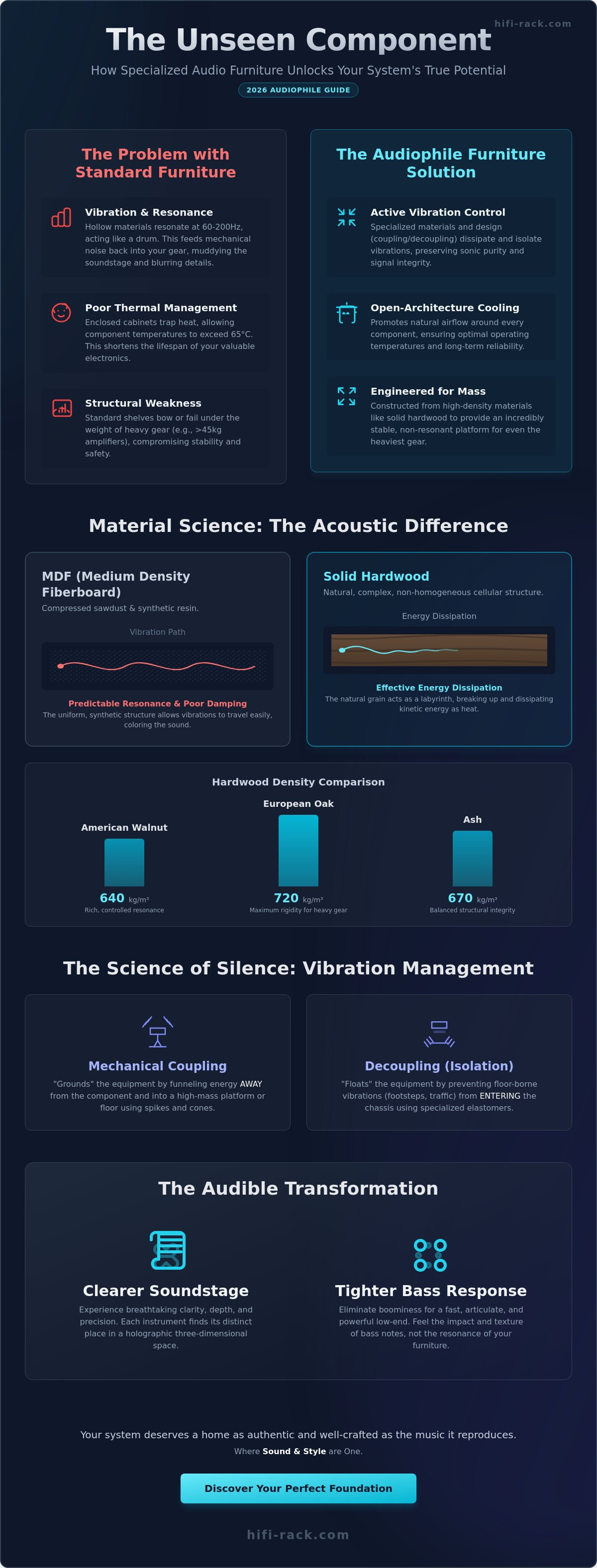
Most domestic furniture prioritizes aesthetic trends over structural physics. Mass-produced consoles often utilize hollow-core construction or thin veneers over particle board. These materials act as resonators, ringing at specific frequencies typically between 60Hz and 200Hz. When your speakers move air, these surfaces vibrate, feeding mechanical noise back into sensitive turntable needles and tube filaments. The technical limitations are also physical. High-end Class A amplifiers can weigh over 45kg, a load that causes standard shelves to bow or fail. Additionally, poor ventilation in enclosed cabinets allows heat to build up. This can lead to internal component temperatures exceeding 65 degrees Celsius, which significantly shortens the lifespan of your investment.
Vibration Management: Coupling vs. Decoupling
Managing kinetic energy requires two distinct, deliberate strategies to ensure your equipment performs at its peak:
- Mechanical Coupling: This involves "grounding" the equipment. By using hardened steel spikes or cones, energy is funneled away from the component and transferred into a high-mass platform or the floor itself.
- Decoupling: This technique uses specialized elastomers or air-suspension to float the component. It prevents floor-borne vibrations, such as footsteps or traffic rumble, from entering the chassis.
Acoustic Isolation is the systematic decoupling of HiFi components from their environment to prevent external vibrations from polluting the delicate electrical signal.
Choosing a dedicated rack is a statement of artisanal pride. It reflects a "slow-made" philosophy where quality is never rushed. When you place your gear on a CUSTOM | HANDMADE | NATURAL | AUTHENTIC platform, you create a ritual that centers your focus. This is the place where sound & style are One. These racks don't just hold equipment; they help you live your passion by removing the technical and visual distractions that stand between you and the music.
The Material Science of Sound: Why Solid Hardwood Outperforms MDF
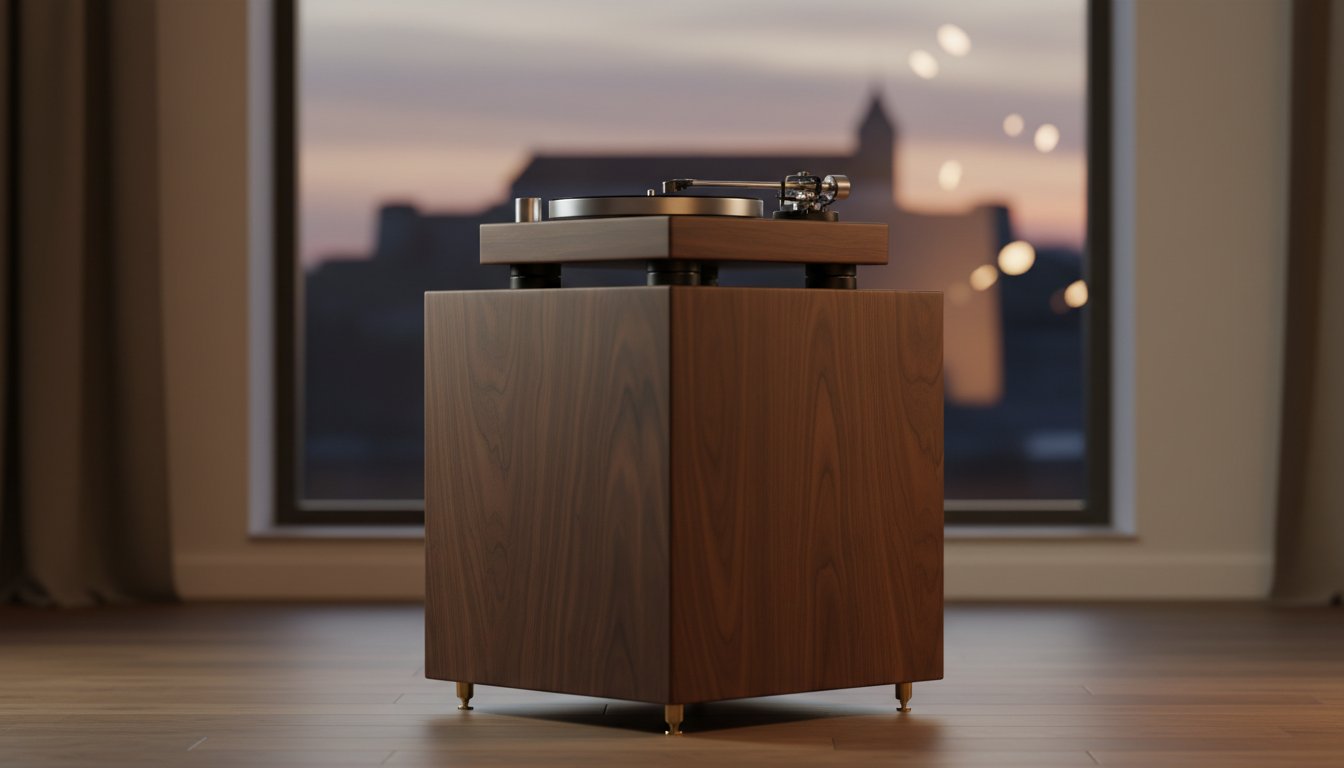
The foundation of any high-performance audio system isn't just the internal circuitry; it's the physical platform where those components reside. Choosing audiophile furniture crafted from solid hardwood isn't an aesthetic whim. It's a calculated acoustic decision. Unlike Medium Density Fiberboard (MDF), which consists of compressed sawdust and synthetic resins, solid wood possesses a complex, organic cellular structure. This natural grain acts as a labyrinth for micro-vibrations, dissipating kinetic energy before it can reach your sensitive phono stage or DAC.
The science of vibration control is rigorous. Research published by the NIST on Vibration Isolation explains how material properties like damping ratios and stiffness dictate energy transfer. Solid wood offers a non-homogeneous density, meaning vibrations don't travel in a straight, predictable path as they do in uniform, synthetic boards. Instead, the varying density of the wood grain breaks up resonance. This prevents the "boomy" or "muddy" bass response often associated with hollow or composite furniture.
- American Walnut: With a density of approximately 640 kg/m³, it provides a rich, controlled resonance that many listeners find musically engaging.
- European Oak: Denser at 720 kg/m³, this wood offers incredible rigidity, making it the ideal choice for heavy, high-torque turntables.
- Ash: Sitting at 670 kg/m³, Ash provides a balanced profile with excellent structural integrity.
Sustainability also plays a vital role in the lifecycle of your listening room. A solid wood rack is a multi-generational investment. While MDF eventually swells or degrades due to humidity, solid timber remains stable for decades. It's a natural, renewable resource that matures with age, much like the high-end equipment it supports.
Resonance Signatures of Different Materials
Metal stands often suffer from high-frequency "ringing" unless they're meticulously damped with sand or lead shot. This can result in a sound that feels clinical or overly bright. Solid wood provides a natural "warmth" by balancing rigidity with internal damping. At Myro, we completely avoid MDF and thin veneers in our Reference designs. We believe the "dead" sonic signature of glue-heavy composites robs music of its organic texture and life.
The Durability Factor in High-End Audio
High-end power amplifiers can easily exceed 50kg in weight. Solid wood handles these static loads without the sagging that typically affects MDF shelves over a five-year period. Repairability is another crucial distinction. If a solid oak shelf is scratched during a move, it can be sanded and refinished to its original state. A chipped veneer is a permanent failure. This longevity ensures the long-term value of your audiophile furniture remains intact.
CUSTOM | HANDMADE | NATURAL | AUTHENTIC. These pillars guide our workshop because we believe sound & style are One. If you're ready to elevate your system's performance, explore our bespoke hardwood racks to find the perfect foundation for your passion.
Essential Features of High-Performance Audio Racks and Stands
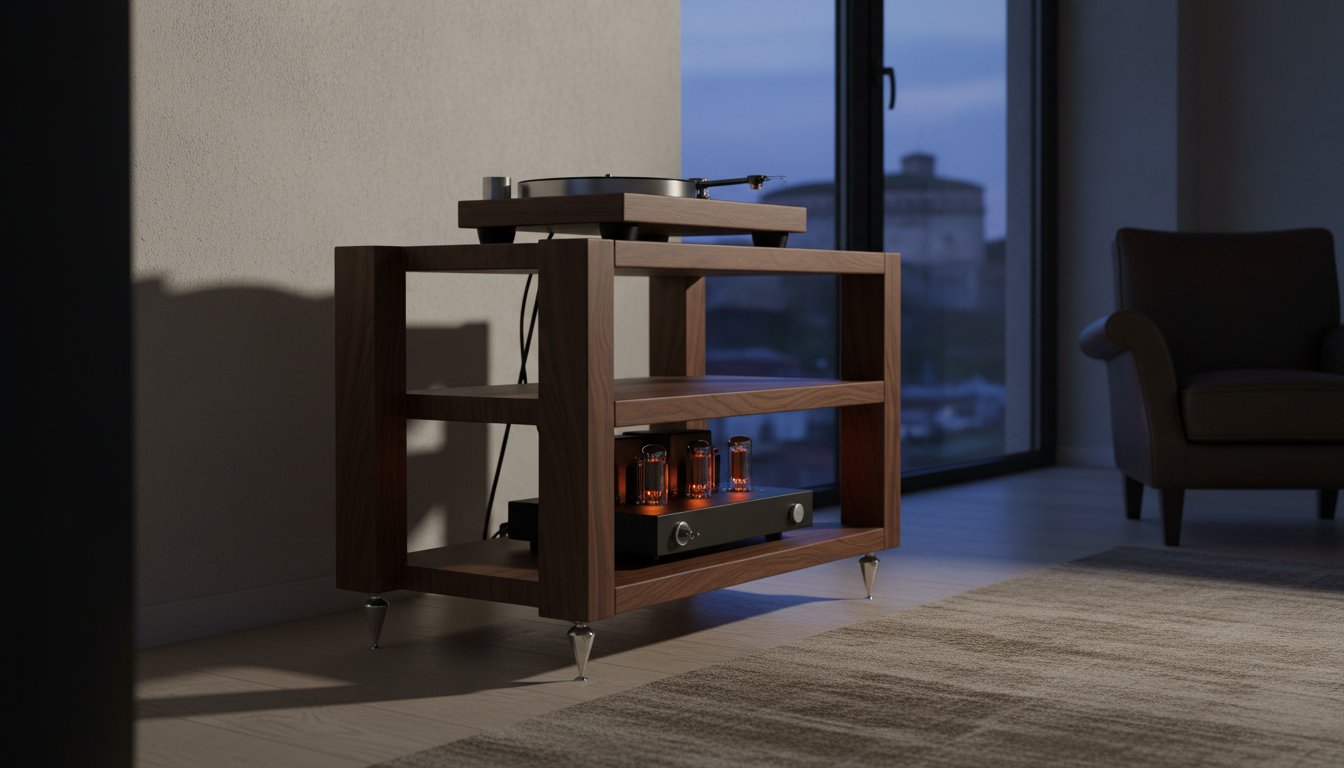
High-performance audiophile furniture serves as the silent partner in your listening room. It provides the physical foundation that allows sensitive electronics to perform without the interference of vibration or heat. Choosing the right support system requires looking beyond the wood grain to the engineering underneath. Open-architecture design is the first priority for any serious listener. Many high-end Class A amplifiers operate with low efficiency, converting a large portion of energy into heat. These components can reach internal temperatures exceeding 50 degrees Celsius. Without 360-degree airflow, this heat builds up, causing thermal drifting in capacitors and shortening the lifespan of your gear. An open rack ensures passive cooling remains consistent. System flexibility is equally vital. Your collection of components will grow and change over time. Modular shelf heights allow you to adapt the spacing as you upgrade from integrated units to massive monoblock amplifiers. This adaptability ensures your investment remains relevant for decades. Cable management is often overlooked but remains critical for signal purity. A well-designed rack provides dedicated paths to keep high-voltage power cables at least 10cm away from sensitive low-voltage interconnects. This separation prevents electromagnetic interference from manifesting as an audible hum in your speakers. Finally, precision leveling is a requirement for analog playback. A turntable that sits even 0.5 degrees off-level will suffer from uneven stylus wear and tracking errors, degrading the delicate nuances of your vinyl.Structural Rigidity and Mass
The relationship between mass and vibration is a matter of physics. Heavier structures have a lower resonant frequency, making them less likely to vibrate in sympathy with your speakers. While standard furniture uses thin veneers, a Reference HiFi Rack utilizes thick, solid shelving to act as a mechanical sink for kinetic energy. This density ensures that the shelf remains inert, allowing the component's internal clocking and mechanical parts to operate in total stillness.Isolation Accessories: Spikes and Protectors
How to Evaluate Audiophile Furniture for Your Listening Room
Choosing the right foundation for your system is a deliberate act of care. It’s about more than just holding equipment; it’s about creating a sanctuary where music can breathe. To select the perfect audiophile furniture, you must first understand the physical and acoustic demands of your specific components. Evaluation isn't just a visual process; it's a technical audit of your listening environment.
- Step 1: Inventory your gear. Don’t guess the weight. A high-end power amplifier often weighs over 30kg, and a heavy platter turntable adds another 12kg to 15kg of sensitive mass. Measure the depth of your deepest component and add an extra 10cm for cable clearance and connector strain relief.
- Step 2: Assess your floor. Concrete floors provide a stable, non-resonant base. Suspended timber floors are different; they vibrate like a drum skin. If your floor moves when you walk, you’ll need a rack with high-mass damping or a dedicated wall shelf for your analog sources.
- Step 3: Map your growth. Audiophile journeys rarely stay static. Modular racks allow you to add levels as you upgrade from an integrated amp to separate pre and power units, ensuring your investment lasts a lifetime.
- Step 4: Align aesthetics with acoustics. Natural solid wood offers organic damping properties that cold metal cannot replicate. It creates a space where sound and style are one.
Matching Furniture to Equipment Types
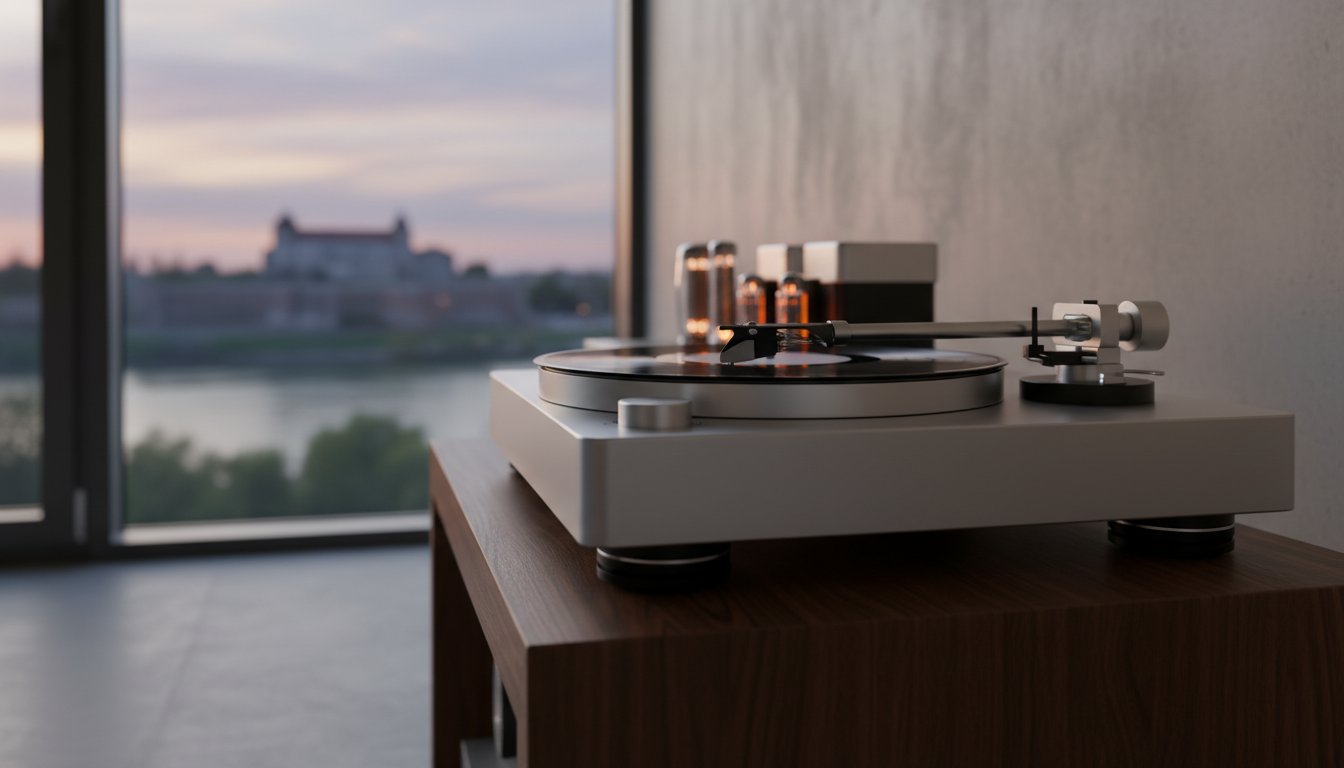
Turntables are the most vulnerable to external vibrations. They require maximum isolation. If floor vibrations are uncontrollable, a wall-mounted shelf is the gold standard for vinyl playback. Tube amplifiers present a different challenge: heat. These units can reach temperatures over 65 degrees Celsius. You must prioritize racks with open sides and at least 15cm of vertical clearance for proper ventilation. Digital streamers and DACs are sensitive to electromagnetic interference; keep them away from large power transformers on lower shelves to preserve signal purity.
Optimising for Small Spaces
A restricted floor plan shouldn't compromise your listening experience. When floor real estate is at a premium, choosing a Slim HiFi Rack allows you to stack components vertically without overwhelming the room. This vertical approach keeps the footprint small while maintaining the structural integrity required for high-end audiophile furniture. Additionally, high-quality Speaker Stands help you reclaim floor space by lifting monitors to ear level, which also clarifies the soundstage. Integrating these pieces into multi-purpose living areas requires a balance of CUSTOM | HANDMADE | NATURAL | AUTHENTIC materials that complement your home decor.
Ready to elevate your setup? You can explore our handcrafted collection to find the perfect match for your equipment and live your passion for sound.
Custom Craftsmanship: The HiFi Rack Approach to Sound and Style
In the heart of Novi Sad, our workshop serves as the intersection of family tradition and a relentless passion for high-fidelity audio. We don't view a rack as a simple piece of furniture. It's a vital component of your signal chain. Our philosophy is simple: we create spaces where sound and style are one. While mass-produced retail options focus on flat-pack convenience and cost-cutting, we prioritize the physical laws of acoustic isolation. Most store-bought units use hollow cores or thin composites that vibrate along with your speakers. We take a different path by building audiophile furniture that acts as a silent, stable foundation for your most prized electronics.
Every piece we create is a testament to our four-pillar mantra: CUSTOM | HANDMADE | NATURAL | AUTHENTIC. We have a strict zero-tolerance policy for MDF and veneers. These materials lack the internal density and organic damping properties required to manage mechanical resonance. By using 100% solid, natural materials, we ensure that your equipment isn't just sitting on a shelf; it's resting on a platform designed to let the music breathe without interference.
The Artisanal Process
The journey begins with the grain. We select each piece of timber based on its structural stability and internal density. This selection process is critical because grain direction determines how a shelf handles weight and vibration over years of use. We combine precision machining for exact fitment with hours of hand-finishing to achieve a premium feel that machines simply can't replicate. Before any unit is approved for worldwide shipping, we test it for structural integrity. This ensures the rack can support heavy, high-end amplifiers without a single millimeter of flex or bowing.
Living Your Passion
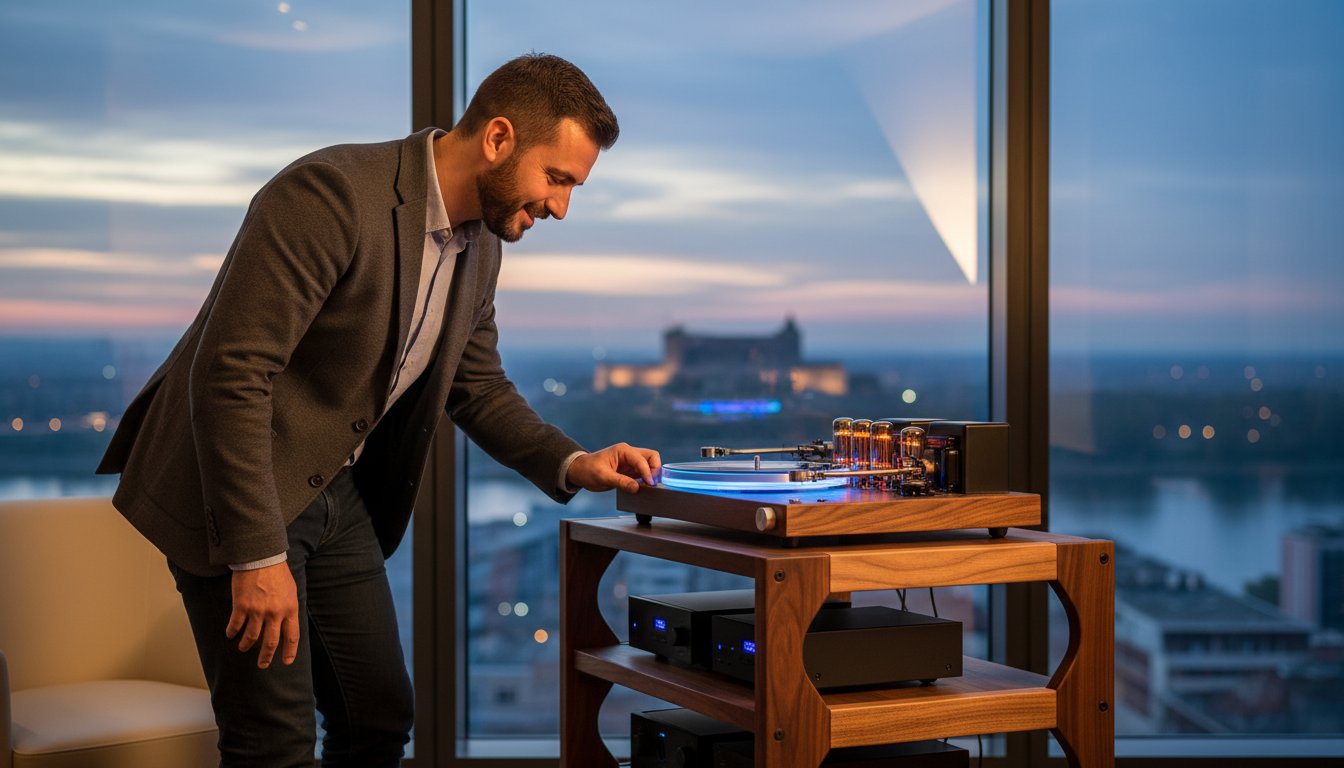
A bespoke rack transforms a casual hobby into a dedicated lifestyle sanctuary. It's about more than just organizing cables or stacking components. It's a sensory experience that begins before you even press play. You'll notice the earthy scent of natural wood and the smooth, tactile feedback of a hand-sanded surface. When your gear sits on a foundation built with the same level of care as a fine musical instrument, your entire relationship with your system changes. It becomes a centerpiece of your home that reflects your commitment to quality and authentic sound.
Treat your system to the support it deserves and elevate your listening room today. Discover our handcrafted collections and see how the right foundation can help you live your passion.
Harmonize Your System with Authentic Craftsmanship
The path to sonic perfection doesn't end with your speakers. It continues with the foundation that supports them. Selecting the right audiophile furniture transforms your setup from a collection of electronics into a cohesive high-fidelity instrument. We've explored how solid hardwood outperforms industrial MDF by absorbing unwanted resonance rather than reflecting it. This choice ensures every note remains pure and your soundstage stays wide. At HiFi Rack, we honor a multi-generational family woodworking tradition that prioritizes integrity over mass production.
Our workshop in Novi Sad produces every piece without the use of MDF or thin veneers. We rely on the organic density of natural timber to ground your system effectively. CUSTOM | HANDMADE | NATURAL | AUTHENTIC. These pillars define our commitment to excellence as we provide global shipping to enthusiasts worldwide. Where sound & style are One, your music finally has the space to breathe. It's time to treat your equipment to the support it deserves and rediscover the soul of your favorite recordings.
Explore the Handcrafted Reference Collection at HiFi Rack
Frequently Asked Questions
Does audiophile furniture really improve sound quality?
Yes, dedicated furniture improves sound quality by isolating components from mechanical and acoustic vibrations. High-quality racks can reduce the noise floor by as much as 10 decibels in sensitive equipment like turntables. This clarity allows your system to reveal the fine textures and micro-dynamics hidden within your favorite recordings.
Why is solid wood better than MDF for audio racks?
Solid wood is superior because its natural cellular structure dissipates energy rather than storing it. While MDF consists of compressed dust and glue that can ring at specific frequencies, hardwoods like oak or walnut provide organic damping. This authentic material choice ensures your music sounds natural and free from the sterile coloration common in synthetic boards.
How many shelves do I need for a standard HiFi system?
Most enthusiasts find that a 4-tier rack is the ideal starting point for a high-fidelity setup. This configuration comfortably holds a turntable, a pre-amplifier, a power amplifier, and a digital source. Leaving 20 percent of your rack space open is a wise strategy for future upgrades or additional power supplies.
Can I use a regular bookshelf for my turntable?
You shouldn't use a standard bookshelf because it lacks the structural rigidity to prevent acoustic feedback. Turntables are sensitive to vibrations as small as 2 hertz, which ordinary furniture often amplifies. A dedicated platform ensures your stylus tracks the groove accurately without interference from floorboards or speaker energy.
What is the purpose of spikes on a HiFi rack?
Spikes act as mechanical diodes that channel vibrations away from your gear and into the floor. By concentrating the entire weight of your audiophile furniture onto four tiny points, you create a high-pressure interface that prevents resonance from traveling back up the rack. This simple physics principle results in tighter bass and a more defined soundstage.
How do I prevent my heavy amplifier from damaging my audio furniture?
You must select a rack with a verified load capacity of at least 50 kilograms per shelf. Many high-end Class A amplifiers weigh over 30 kilograms and require 40 millimeter thick solid wood tiers to prevent bowing. Choosing handmade furniture built with traditional joinery ensures your heavy equipment remains safe and level for a lifetime of listening.
Is open-back furniture better for audio gear?
Open-back designs are vital because they allow for critical heat dissipation and effortless cable management. Vacuum tube amplifiers can reach internal temperatures of 70 degrees Celsius, requiring constant airflow to prevent component failure. An open architecture ensures your electronics stay cool while keeping your signal cables separated from power cords.
What is the difference between a HiFi rack and a TV stand?
A HiFi rack focuses on resonance control and component isolation while a TV stand prioritizes aesthetics and basic storage. Most TV stands are hollow boxes that resonate between 50 and 200 hertz, which muddies the lower frequencies of your music. Professional audiophile furniture uses decoupled shelves to ensure that where sound and style meet, performance isn't sacrificed.