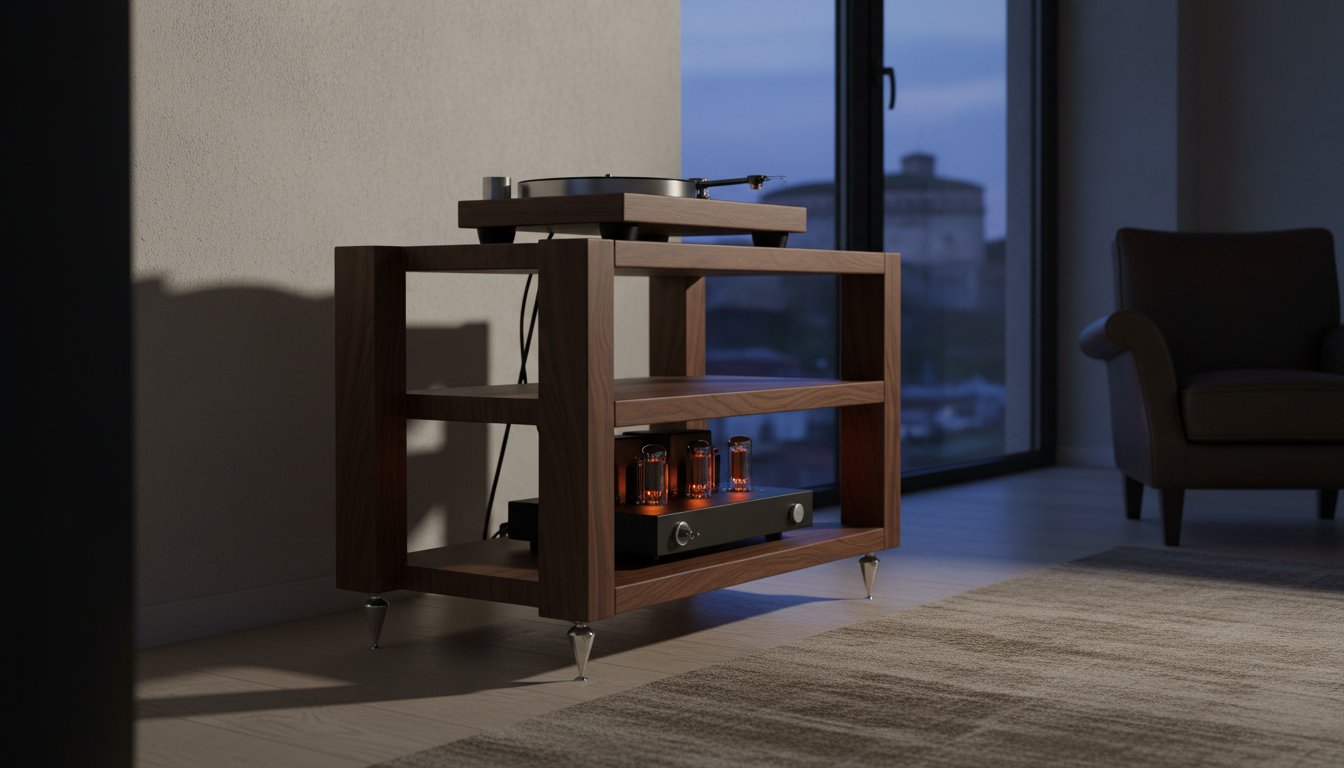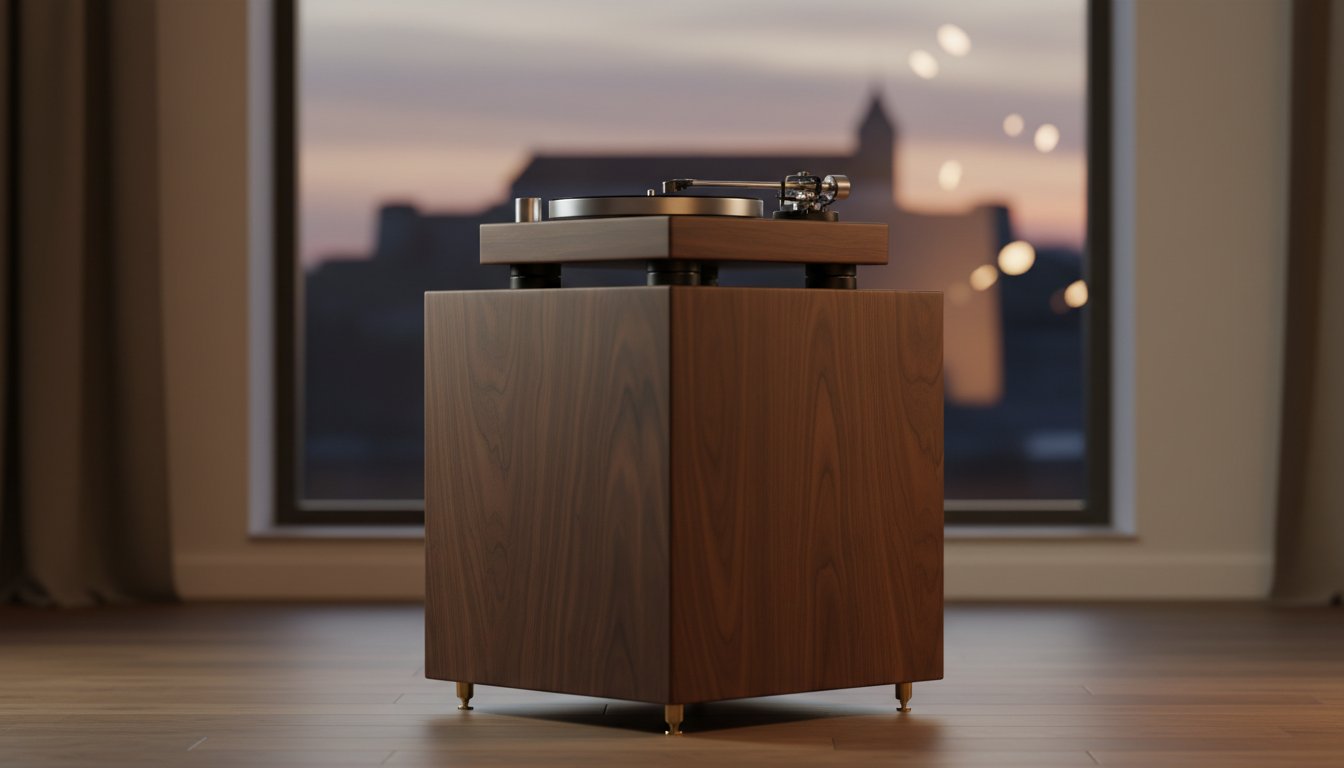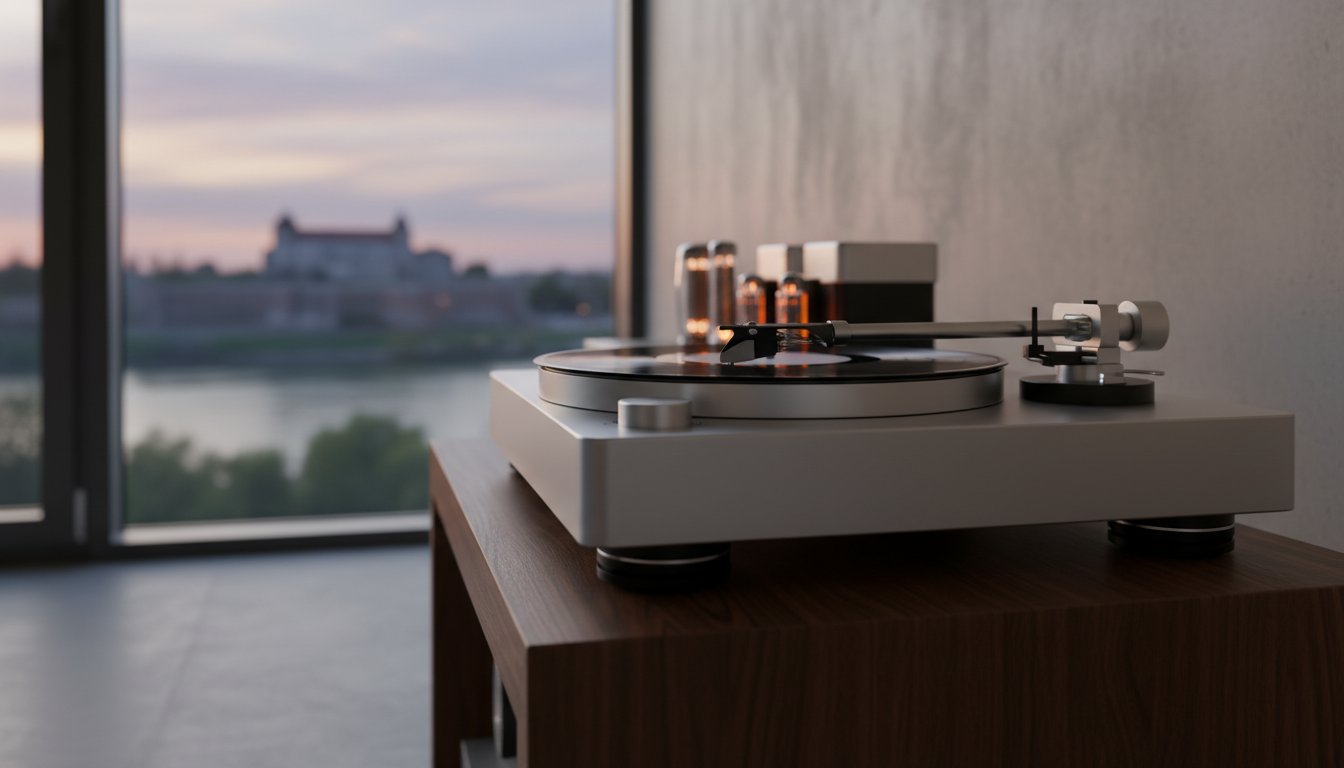
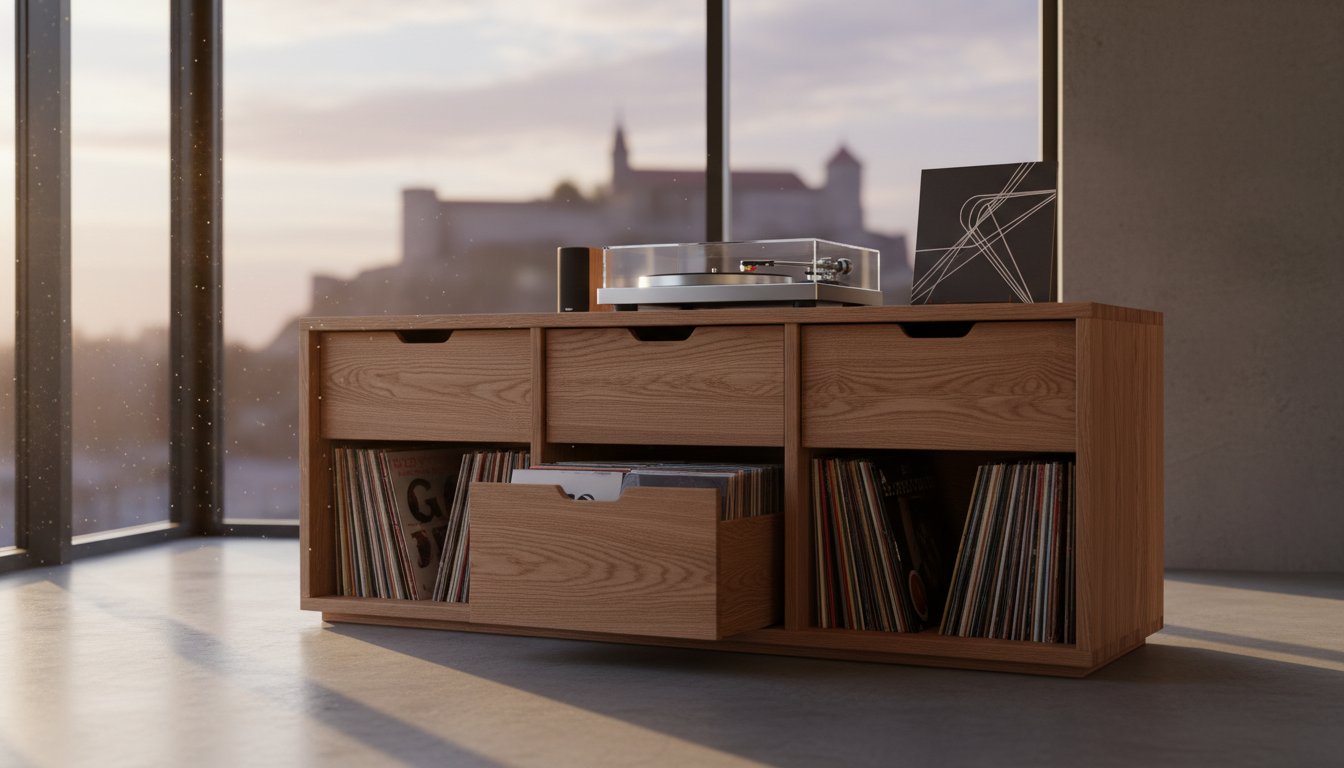
Your storage cabinet is not just a piece of furniture; it's the final, silent component of your signal chain. Most collectors realize too late that a sagging shelf is a slow death sentence for rare pressings. You've likely felt that flash of anxiety when you notice a slight curve in a vintage sleeve or hear the needle jump because a floorboard flexed under an unstable rack. Choosing the wrong vinyl record storage cabinet can lead to disaster. Recent 2024 structural tests show that standard retail shelves often bow by 5 millimeters under the weight of just 50 LPs, creating a permanent risk for your most prized recordings and your stylus.
Finding the perfect home for your collection means looking for a structural solution that honors both the wood and the wax. We promise to show you how to select a foundation that prevents warping, isolates your turntable from micro-vibrations, and enriches your room's acoustic signature. We'll examine how high-density materials and handcrafted joinery transform a simple storage unit into a vital instrument for your listening sanctuary. It's time to treat your passion with the authentic, artisanal care it deserves.
Key Takeaways
- Master the science of materials by choosing solid hardwood over MDF to ensure structural integrity and natural acoustic warmth for your collection.
- Discover how a premium vinyl record storage cabinet acts as a dedicated isolation platform, protecting your turntable from the sonic degradation of unwanted vibrations.
- Learn to calculate weight capacities for growing collections and why modular architecture is essential for a future-proof listening room.
- Explore the transformative value of bespoke, handmade craftsmanship where authentic Serbian woodworking traditions meet the specific needs of the modern audiophile.
What Defines a Premium Vinyl Record Storage Cabinet?
A premium vinyl record storage cabinet is an extension of the turntable itself. It's a specialized piece of audiophile furniture designed with a specific purpose: to protect the integrity of your collection while elevating the ritual of listening. Many generic shelves are simply "furniture that holds records." They lack the structural reinforcement required to support 40 to 50 pounds of weight per linear foot. By 2026, serious collectors are increasingly rejecting disposable MDF units. These mass-produced pieces often sag under pressure; they fail the weight test of a growing library. Instead, the focus has shifted toward heirloom-quality wood that offers both stability and soul. This transition reflects a deeper desire for longevity and a rejection of the "fast furniture" culture that has dominated the last decade.
The Functional Requirements of Vinyl Media
Vertical storage is the primary rule of record preservation. Stacking albums horizontally leads to uneven pressure, which causes permanent warping. A well-engineered vinyl record storage cabinet ensures every sleeve stands upright. Accessibility is equally vital. While spine-only storage saves space, many enthusiasts prefer "dig-through" bins that mimic the record store experience. This tactile interaction is part of the joy of ownership. Beyond organization, properly storing your vinyl collection requires protection from environmental factors. A cabinet with sufficient depth keeps delicate sleeves away from direct sunlight and dust. This ensures the 12-inch canvas of the album art remains vibrant for decades rather than fading after a few seasons of exposure.
The Aesthetic Harmony of Sound and Style
True listening rooms require a sense of cohesion. Your storage should match your Reference or Classic HiFi racks to create a unified visual language. Natural wood grains, like oak or walnut, complement the organic warmth of analog sound. This isn't just about utility; it's about creating a focal point in the modern home. When your equipment and collection sit in harmony, the room becomes a dedicated sanctuary. It's a space where the world slows down and the music takes center stage. Every piece of furniture should feel CUSTOM, HANDMADE, NATURAL, and AUTHENTIC. At Myro, we believe this is where sound & style are One. The vinyl record storage cabinet becomes more than a box; it's a vital instrument in your pursuit of musical perfection, helping you live your passion through a grounded, soulful connection to your environment.
Material Science: Why Solid Hardwood Outperforms MDF
Vinyl isn't light. A standard 12-inch record weighs between 140 and 200 grams. When you fill a vinyl record storage cabinet, you're asking a piece of furniture to support hundreds of pounds of constant pressure. MDF and particle board often fail in this environment because they rely on short-fiber sawdust held together by urea-formaldehyde resins. Over time, these materials succumb to "creep," a measurable structural sag that occurs when synthetic bonds lose their integrity. Research into the preservation of audio collections emphasizes that structural stability is vital for preventing long-term damage to your LPs. Solid hardwoods like White Oak, which carries a Janka hardness rating of 1,360 lbf, provide the tensile strength required to keep shelves perfectly level for decades.
We strictly avoid veneers because they're merely thin skins designed to mask inferior cores. A solid wood cabinet is a living heirloom that gains character and value as the decades pass. It's a commitment to CUSTOM | HANDMADE | NATURAL | AUTHENTIC quality that mass-produced units can't match.
Resonance and Vibration Damping
Wood is a natural filter for sound. The science of acoustics proves that solid wood absorbs micro-vibrations through its organic, porous structure. Synthetic composites like MDF are often too uniform in density. They can reflect energy back into the turntable's sensitive stylus, which muddies the soundstage and softens the bass response. A heavy walnut or ash frame acts as a high-fidelity anchor. This mass grounds the system against floor-borne energy and the acoustic pressure of your speakers. It ensures your vinyl record storage cabinet isn't just a box, but a functional component of your signal chain.
Handcrafted Integrity vs. Mass Production
Mass production favors speed over soul. Flat-pack furniture relies on cam-locks and staples that loosen as the wood expands and contracts with the seasons. Our "slow-made" philosophy utilizes traditional joinery, such as mortise-and-tenon or dovetails, which creates a mechanical bond that grows stronger under the weight of your records. We use natural finishes that preserve the wood's tactile warmth and breathability. This approach creates a soulful connection to your personal sanctuary. Choosing a handcrafted vinyl record storage cabinet means investing in a piece where sound and style are one. Sustainable hardwoods are harvested under strict 2024 environmental standards, ensuring your passion for music supports a healthier planet.

Core Design Features for Serious Collectors
Your collection is a living history. It deserves a foundation that respects the physical reality of analog media. A high-quality vinyl record storage cabinet must balance artisanal elegance with industrial-strength engineering. When you move beyond a few dozen records, the furniture stops being a shelf and starts being a structural component of your listening room. Every detail, from the choice of timber to the precision of the joints, affects the longevity of your pressings and the performance of your gear.
Weight is the primary challenge. Standard 12-inch LPs weigh between 0.4 and 0.6 pounds. While 100 records might only weigh 50 pounds, a dedicated collector with 1,000 titles is managing a half-ton of pressure. This constant load requires a design that resists bowing and "racking," which is the lateral leaning that can cause a cabinet to collapse. Modular architecture offers a sophisticated solution for this growth. By using a system that expands, you ensure your storage remains as authentic and intentional as the music you collect.
Airflow and organization are equally vital for active systems. If your cabinet houses an amplifier or pre-amp, ventilation is a technical necessity. High-end components can reach internal temperatures of 120 degrees Fahrenheit; without proper heat dissipation, you risk hardware failure. Integrated cable management keeps the aesthetic clean. It hides the "spaghetti" of wires, allowing the natural beauty of the wood to remain the focal point. Where sound and style are one, the technical clutter should never distract from the sensory experience.
Calculating Your Storage Needs
Precision matters. The "100 Records" rule is your benchmark: you need roughly 13 inches of linear shelf space for every 100 LPs. This allows enough room to flip through titles without tight friction. Deep cabinets, typically 18 to 22 inches, are essential if you intend to place a turntable or heavy amplifier on top. Slimmer profiles are better suited for record-only storage in corridors or smaller sanctuaries. Integrated shelving for components should always be oversized to allow for the "breathing room" required by high-fidelity electronics.
Structural Rigidity and Shelf Sag
The physics of shelf deflection is unforgiving. A 30-inch shelf made of particle board will begin to sag under just 40 pounds of pressure within a year. Solid wood and high-grade birch plywood offer significantly higher resistance to bending. A reinforced back panel is the secret to a stable vinyl record storage cabinet; it provides the sheer strength needed to keep the unit perfectly square. Finally, don't overlook the floor. Adjustable feet or isolation spikes are necessary to achieve a perfect level. A level cabinet isn't just about looks; it's critical for the delicate tracking of your turntable's stylus.
CUSTOM | HANDMADE | NATURAL | AUTHENTIC. These pillars guide the construction of a rack that doesn't just hold your music, but honors it. Choosing a cabinet with these core features ensures your passion is supported for a lifetime.
The Intersection of Storage and Sound: Turntable Integration
A vinyl record storage cabinet serves a dual purpose. It must protect your collection while providing a stable foundation for playback. Placing a turntable directly on a flimsy or vibrating surface introduces micro-distortions that cloud the soundstage. When the stylus tracks a groove, it's measuring movements as small as a millionth of an inch. Any external energy, such as foot traffic or cabinet resonance, interferes with this delicate process. You don't want your furniture to become a part of the signal chain.
Solid hardwood tops provide a natural isolation platform. Unlike particle board or metal, the dense cellular structure of oak or walnut absorbs unwanted energy. To further refine the experience, consider decoupling the cabinet from the floor. Using precision-machined brass spikes can concentrate the weight of the unit, effectively draining vibrations away from the turntable. Adding floor protectors ensures your hardwood remains pristine while maintaining this acoustic advantage. Proper positioning is equally vital. Ensure the cabinet is perfectly level to maintain tonearm stability, preventing uneven wear on your precious 180g pressings.
Managing Internal and External Vibrations
Your vinyl collection is more than just music; it's 100 pounds of vibration-dampening mass. A fully loaded vinyl record storage cabinet is significantly more stable than an empty one. This mass helps solve the "bouncy floor" problem common in older homes. By anchoring the furniture with weight, you reduce the risk of the needle skipping when someone walks past. To isolate motor noise, ensure the turntable feet are positioned away from hollow points in the cabinet structure. This creates a silent background where the music can truly breathe.
The Reference Setup: Cabinet and Rack Synergy
Serious audiophiles often choose to separate their storage from their primary playback equipment. While a cabinet is perfect for browsing, a dedicated Reference HiFi Rack offers superior isolation for sensitive electronics. This setup allows you to keep your records accessible while giving your turntable a specialized environment free from the mechanical interference of a large vinyl record storage cabinet. Matching solid wood finishes across both pieces creates a cohesive, sophisticated look in your listening room. It's a professional approach where sound and style are one.
Ready to elevate your listening experience? Explore our collection and find the perfect reference rack for your high-end system.
Investing in Bespoke: The HiFi Rack Approach
Mass-produced furniture often fails the most basic test of an audiophile's collection: the weight of history. A growing collection of LPs is heavy, demanding a structural integrity that flat-pack units simply can't provide. Choosing a bespoke vinyl record storage cabinet means you aren't just buying a shelf; you're commissioning a foundation for your musical sanctuary. In our workshop in Novi Sad, we draw upon a Serbian woodworking tradition that spans generations. We transform raw, solid timber into functional art that honors the analog experience.
In a digital age defined by the ephemeral, the value of authentic and natural materials becomes a statement of intent. We believe your storage should be as organic as the sound produced by a needle on a groove. Our approach is defined by four core pillars: CUSTOM | HANDMADE | NATURAL | AUTHENTIC. By tailoring dimensions to your specific room layout and collection size, we ensure that sound and style are one. If you're planning your listening room upgrades for 2026, the time to begin the design conversation is now, as slow-made quality requires patience and precision.
From Concept to Listening Room
The design process is a true collaboration. We don't just build boxes. We talk about the height of your turntable, the depth of your amplifier, and how many records you plan to acquire over the next decade. This partnership ensures we create a piece that helps you live your passion. Once the wood is selected and the joinery is complete, we focus on the logistics of protection. International shipping for solid wood furniture is a specialized craft. We use custom-built crates and reinforced packing materials to ensure your investment arrives safely, whether you're in London, New York, or Tokyo. Every piece comes with the HiFi Rack guarantee. It's furniture built for a lifetime of listening, standing firm while lesser materials sag and fail.
Final Checklist for the Vinyl Connoisseur
Before you commit to a permanent home for your records, review these technical and aesthetic priorities. A high-quality vinyl record storage cabinet must balance structural density with visual harmony. Consider these factors:
- Material Density: Solid wood provides natural vibration damping that synthetic boards lack.
- Weight Capacity: A standard 12-inch LP weighs approximately 180 to 200 grams. A full shelf can easily exceed 25 kilograms. Ensure your cabinet is rated for this load.
- Isolation: Look for designs that decouple the storage from the floor to prevent acoustic feedback.
- Wood Species: Choose Oak for its rugged, timeless grain; Walnut for a dark, sophisticated warmth; or Cherry for a wood that develops a rich patina as it ages.
Your collection deserves more than a temporary solution. It's time to treat your records to the craftsmanship they deserve. View our collection of handcrafted audio furniture and discover how we bridge the gap between high-end engineering and natural beauty.
Elevate Your Listening Sanctuary
Choosing the right vinyl record storage cabinet is an investment in both your collection's longevity and your daily listening ritual. You've seen why 100% solid hardwood outperforms mass-produced MDF, providing the structural mass required to protect delicate grooves from unwanted resonance. A true audiophile environment demands furniture that functions as a precision instrument. By prioritizing structural integrity and turntable integration, you transform a simple room into a dedicated sanctuary for sound.
At Myro HiFi Rack, we reject the shortcuts of modern manufacturing. Our artisans in Novi Sad draw upon multi-generational woodworking expertise to build pieces that contain zero MDF or veneer. We understand that every collection is unique; that's why we offer custom dimensions tailored to your specific space and library size. It's about honoring the music through the purity of natural materials. CUSTOM | HANDMADE | NATURAL | AUTHENTIC. These pillars define our work. Where sound and style are one, your passion finally finds its home.
Explore Handcrafted Solid Wood Record Cabinets and start building a legacy for your music today.
Frequently Asked Questions
How much weight can a standard vinyl record storage cabinet hold?
A standard 12 inch vinyl record weighs approximately 180 to 200 grams. A 13 inch shelf filled with 75 records carries about 35 pounds of constant weight. High quality cabinets are specifically engineered to support 50 pounds per linear foot. This ensures the structural integrity of your collection remains uncompromised over years of use, protecting your investment in sound and style.
Should I store my records vertically or horizontally?
You must always store records vertically to prevent permanent warping. Horizontal stacking applies uneven pressure that can damage the delicate grooves of a 180g pressing within 90 days. Vertical placement ensures the weight is distributed across the outer edges of the sleeves. This method preserves the authentic sound of your music and keeps your personal sanctuary organized and beautiful.
Is solid wood better than MDF for record storage?
Solid wood offers superior density and longevity compared to MDF. While MDF often sags under 20 pounds of pressure, a handcrafted vinyl record storage cabinet made from solid oak or walnut maintains its form for decades. Natural wood also provides better dampening properties. This is essential for a high fidelity listening environment where every vibration affects the clarity of your music.
How do I prevent my record shelves from sagging?
Limit your shelf spans to 30 inches or less to prevent visible bowing under the weight of your LPs. For wider units, use vertical dividers every 12 to 15 inches to act as structural supports. These dividers also keep your records upright. This prevents the domino effect that puts 100% of the weight on the end record, which can cause sleeve damage.
Can I place my turntable on top of my record cabinet?
You can place a turntable on your cabinet if the unit is heavy and isolated from vibrations. A 1.5 inch thick solid wood top provides a stable foundation that resists motor resonance. Ensure the cabinet is leveled using adjustable feet to maintain a 0 degree tilt. This precision is vital for accurate stylus tracking and a premium listening experience.
What is the best way to organize a large vinyl collection?
Organize your collection using the Library Method with 12 inch tabbed dividers for clarity. Grouping by genre first, then alphabetically by artist, allows you to find any record in under 10 seconds. For collections exceeding 500 LPs, dedicated sections for Recent Arrivals or Audiophile Pressings help you navigate your passion. It's about creating harmony between your library and your lifestyle.
How does wood type affect the sound of my audio system?
Wood type influences the acoustic resonance of your room through vibration absorption. Dense hardwoods like walnut have a Janka hardness rating of 1,010 lbf, which helps absorb micro vibrations better than softer woods. This results in a cleaner soundstage where your vinyl record storage cabinet works in harmony with your speakers. It reduces unwanted feedback and honors the natural beauty of the recording.
Do I need a custom cabinet or will a standard shelf work?
A standard shelf often fails to meet the 13 inch depth requirement for oversized box sets and thick gatefolds. Custom cabinets provide the exact dimensions needed for your specific gear and room layout. Investing in a handmade piece ensures every joint is reinforced to handle the 400 pound load of a growing 1,000 record collection. It's a commitment to excellence that lasts a lifetime.