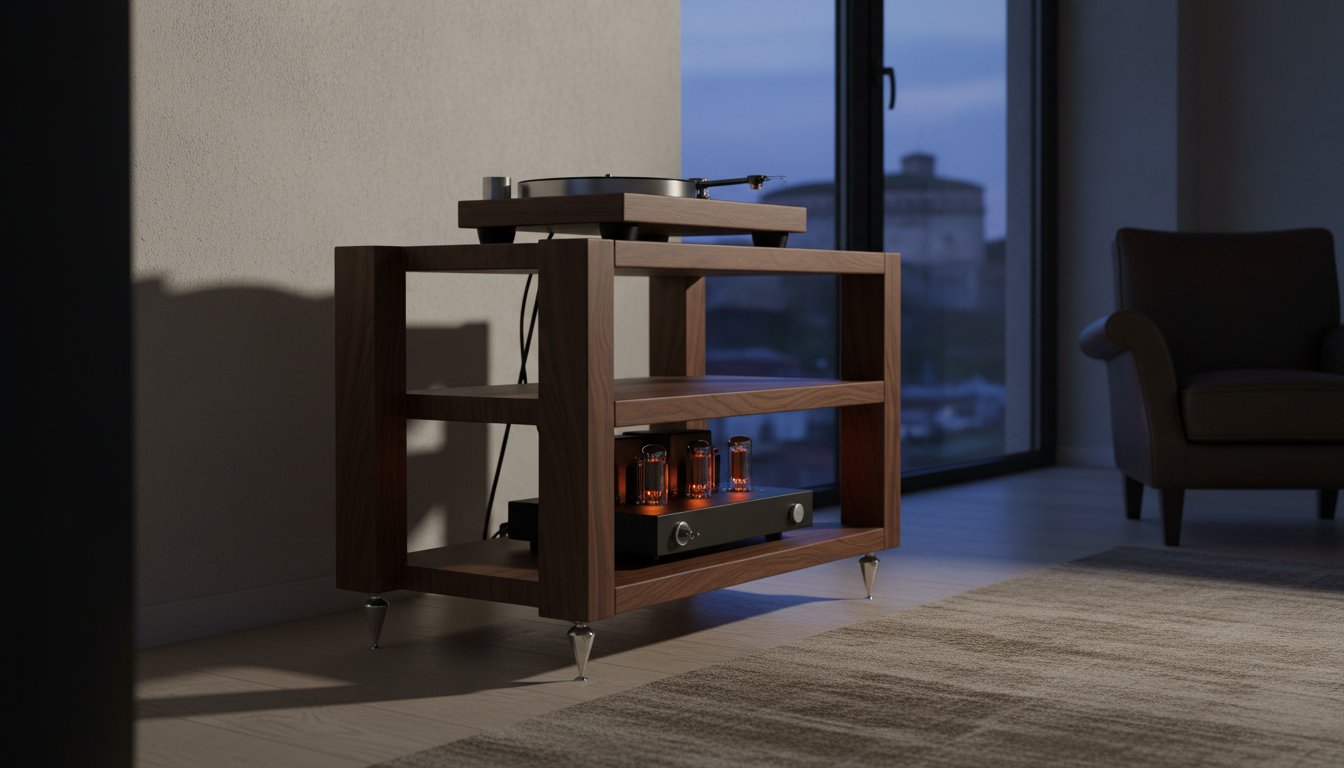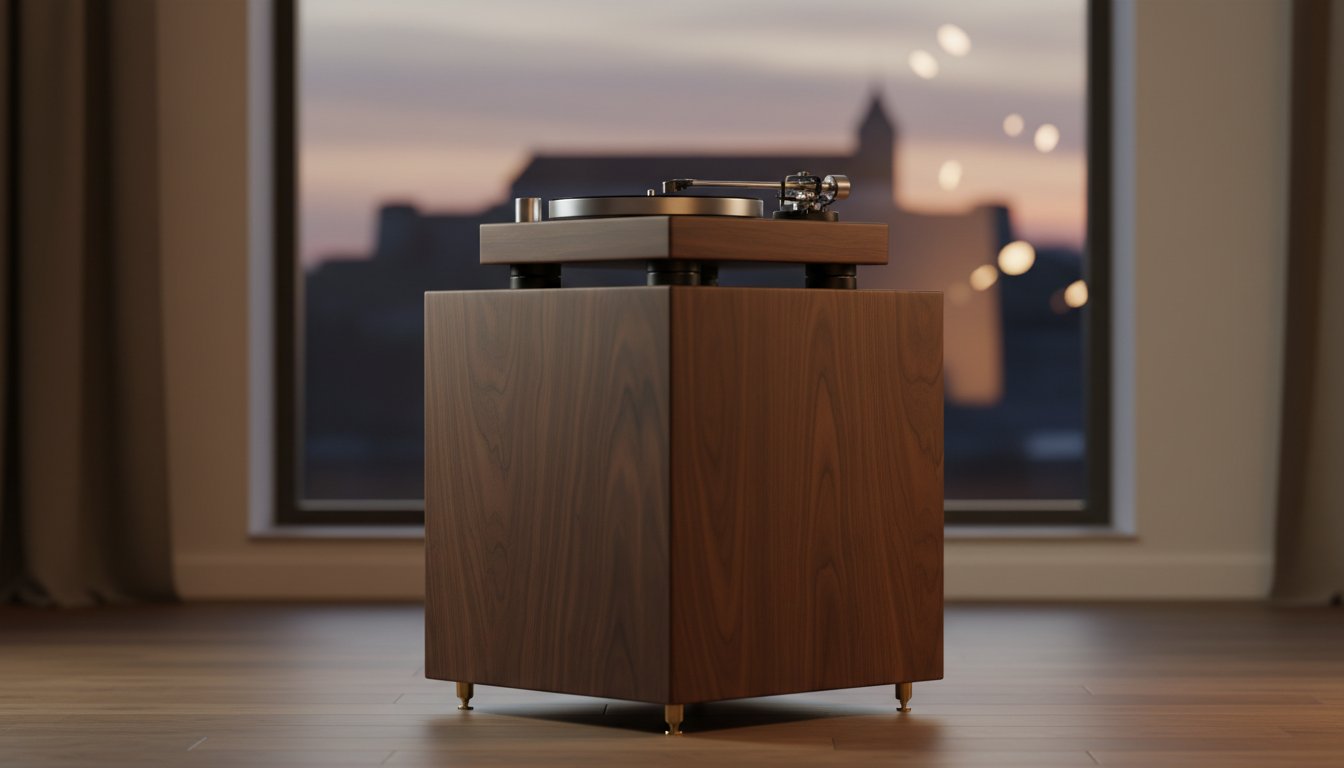
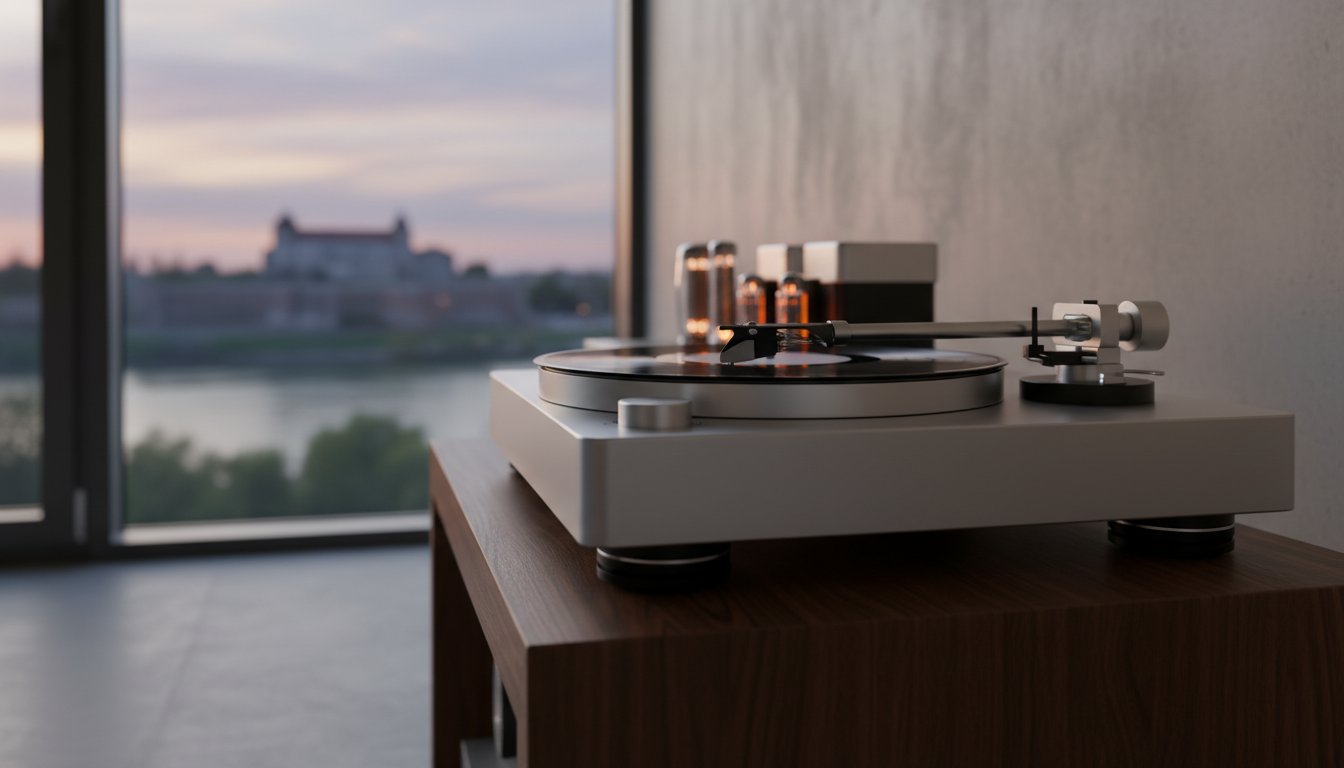
What if the greatest obstacle to your musical epiphany isn't the quality of your cables, but the subtle, invisible tremors of your own floor? Even the most refined systems struggle when microphonic interference plagues a tube amp or a delicate turntable needle loses its footing. You've likely felt that disappointing loss of low-end clarity during a heavy bass passage. We believe that true acoustic purity starts where the equipment meets the surface. By implementing effective resonance damping for audio equipment, you can achieve a noise floor reduction of up to 15 decibels, finally allowing your system to breathe.
It's a shared understanding among connoisseurs that every vibration matters. This article will show you how to unlock the true sonic potential of your high-end system through deliberate structural resonance control. We'll examine the fascinating physics of wood versus synthetic materials to help you choose a solution where sound and style are one. You'll discover how a handcrafted, natural foundation creates the crisper imaging you've been searching for since your very first high-fidelity purchase.
Key Takeaways
- Master the science of resonance damping for audio equipment to neutralize the hidden vibrations that cloud your system’s clarity and detail.
- Learn to distinguish between isolation and damping to effectively convert unwanted kinetic energy into silent, harmless heat.
- Discover why the natural cellular structure of solid timber provides superior acoustic properties compared to mass-market MDF alternatives.
- Gain practical insights on optimizing equipment placement and selecting the ideal floor interfaces to ground your sonic performance.
- Understand how handcrafted, reference-grade designs serve as vital instruments in the pursuit of a pure and authentic listening experience.
The Silent Enemy: Understanding Resonance in High-Fidelity Audio
Every object in your listening room possesses a voice it shouldn't use. In the pursuit of musical perfection, we call this unwanted voice resonance. By Understanding Resonance, we recognize it as the specific frequency where an object vibrates when excited by external energy. In a high-end system, this energy is a constant presence. It enters your signal chain through two primary paths. Airborne vibrations travel as sound waves directly from your speakers to your equipment. Structure-borne vibrations move through the floor and furniture, climbing into your sensitive components like an invisible tremor.
This interference leads to the "Microphonic" effect. Sensitive internal parts, such as vacuum tubes and capacitors, act like tiny, unintended microphones. They pick up these mechanical vibrations and convert them into electrical noise. For a turntable stylus, the stakes are even higher. A stylus is designed to track microscopic grooves; even a 0.001mm deviation caused by a vibrating shelf can distort the delicate signal. This is why effective resonance damping for audio equipment is not a luxury; it's a fundamental requirement for any serious listener.
Standard home furniture simply isn't built to protect your passion. A typical mass-market bookshelf or a glass-topped table often rings like a bell when excited by low-frequency energy. These surfaces lack the density and internal damping needed to dissipate energy. Instead of grounding your gear, they store vibration and reflect it back into your components. This compromises the integrity of your system, turning a premium sanctuary into a compromised acoustic environment.
The Impact on Soundstage and Clarity
Smearing is the loss of transient detail due to parasitic vibrations. When these vibrations persist, they raise the noise floor and mask the "black" background that's essential for deep, holographic imaging. There's a direct relationship between structural rigidity and bass definition. Without proper resonance damping for audio equipment, low-end frequencies lose their punch and become bloated. Technical measurements show that uncontrolled resonances can introduce up to 3dB of additive noise, blurring the space between instruments and collapsing the soundstage.
Identifying Resonance Sources in Your Room
Loudspeakers are the primary exciters in any room, as they're responsible for 100% of the acoustic energy being moved. Your environment determines how that energy behaves. A study of listening rooms shows that bouncy wooden floors can amplify vibrations by 15% compared to solid concrete slabs. Internal factors are equally disruptive. The 60Hz hum of a heavy power transformer or the 5400 RPM spin of a disc drive creates a constant internal mechanical stress. These forces work together to degrade your experience unless they're addressed through purposeful, handcrafted isolation. Where sound and style are one, we must ensure the equipment remains as silent as the craftsman intended. CUSTOM | HANDMADE | NATURAL | AUTHENTIC.
Mechanics of Control: Isolation, Damping, and Decoupling
Mastering the listening environment requires a sophisticated understanding of how energy moves through a room. Effective resonance damping for audio equipment isn't about a single solution; it's a multi-layered strategy. We define the mechanics of control through four pillars: damping, isolation, decoupling, and coupling. Each plays a distinct role in preserving the integrity of the signal.
- Damping: This is the process of converting kinetic energy into heat. When vibrations travel through a material, internal friction absorbs that energy, preventing it from reflecting back into the component.
- Isolation: This involves creating a physical barrier. It prevents vibrations from migrating from the floor or speakers into your sensitive electronics.
- Decoupling: By using specific interface materials, we break the physical link between two objects. This effectively "floats" the component to disconnect it from structural noise.
- Coupling: Unlike isolation, coupling uses rigid points to "drain" unwanted energy into a high-mass sink, such as a heavy floor or a dedicated platform.
The Physics of Energy Dissipation
Materials are the soul of any acoustic strategy. Metals like steel or aluminum are often too fast, reflecting energy back into the component rather than absorbing it. In contrast, Sorbothane, a specialized viscoelastic polymer, can dissipate up to 94.5% of vibration energy by turning it into heat. However, it's easy to over-apply these solutions. We strive for "Critical Damping." This is the specific threshold where resonance is eliminated without sucking the life out of the performance. If you over-damp, the music loses its air and sparkle. If you under-damp, the sound becomes smeared. A "dead" rack, built from dense, natural hardwoods, provides the neutral foundation needed for authentic reproduction. It ensures your furniture doesn't sing along with your speakers.
Choosing Your Strategy: When to Couple vs. Decouple
The decision to couple or decouple depends on the mechanical nature of your gear. Heavy power amplifiers often generate their own internal vibrations from massive transformers. Using brass spikes for mechanical grounding is the preferred method here. The spikes concentrate the weight into a tiny surface area, creating a direct path for energy to exit the chassis. It's a process of purification. For those seeking this level of refinement, a custom hifi rack provides the necessary mass and stability to ground these forces effectively.
Sensitive source gear, particularly turntables and tube preamps, requires decoupling. These components are vulnerable to external interference. An isolation platform using viscoelastic feet creates a break in the energy chain. This ensures the stylus only picks up the information in the groove, not the motor noise or footfalls. Finding the balance between structural stability and acoustic floating is the hallmark of a truly high-end system. Our philosophy remains simple: CUSTOM | HANDMADE | NATURAL | AUTHENTIC. This is where sound & style are One.

Solid Hardwood vs. MDF: The Impact of Material Density
Mass-market furniture relies on Medium Density Fibreboard (MDF) for its predictability and low production cost. While it serves basic household needs, it lacks the sophisticated physical properties required for true resonance damping for audio equipment. MDF is essentially a slurry of compressed wood fibers held together by synthetic resins. This uniform, dense structure creates a predictable path for vibration, allowing energy to travel through the material with minimal resistance. High-end audio demands a more complex solution.
Solid timber offers a cellular structure that MDF simply cannot replicate. Each piece of wood contains microscopic pockets of air and varying densities of cellulose and lignin. This natural irregularity acts as a labyrinth for acoustic energy. When vibrations hit solid wood, they're broken up and dissipated as heat rather than being reflected back into your sensitive components. It's a natural filtration system for noise.
We avoid veneers because the bond between a thin layer of wood and a synthetic core creates a boundary layer. These layers can trap energy, causing micro-vibrations that smear the soundstage and blur imaging. The structural integrity of the entire shelf matters. By using solid planks, we ensure a clear, uninterrupted path for resonance to exit the system. Our handcrafted approach manages material stress through careful selection and seasoning, an artisanal advantage factory machines can't match.
Acoustic Properties of Different Woods
Walnut and Oak stand as the gold standards for hi-end racks. These high-density timbers possess superior natural damping coefficients, allowing them to absorb energy without the "ringing" associated with metal or glass. The irregular grain patterns in these woods ensure that no single frequency can dominate the structure. This prevents the "honky" or nasal resonances often found in synthetic boards. Solid hardwood delivers a sonic signature that's warmer and more authentic, reflecting the soul of the original recording. It's about finding the perfect harmony between density and flexibility.
The Fallacy of "Dead" MDF
Marketing often describes MDF as "acoustically dead," but this is a costly misconception for the audiophile. MDF doesn't eliminate energy; it stores it. Because of its high glue content, it acts like a dense spring, releasing stored energy back into the equipment over time. This often results in a bloated, slow low-end response that lacks definition. Solid wood maintains its damping properties for decades, whereas MDF can degrade as the internal resins break down over 10 or 15 years. You can explore these differences further in our guide on Walnut, Cherry, or Oak: Choosing the Right Hardwood.
CUSTOM | HANDMADE | NATURAL | AUTHENTIC
Where sound & style are One, our commitment to the handcrafted process ensures your rack isn't just furniture; it's a tool to help you live your passion for perfect sound.
Strategic Placement: Optimising Your Equipment for Maximum Damping
Achieving true acoustic purity requires more than just high-quality materials; it demands a strategic approach to how you arrange your system. Effective resonance damping for audio equipment starts with understanding the physics of your listening room. A well-placed component doesn't just sit on a shelf; it integrates with the rack to dissipate energy before it can color the sound.
- Step 1: Assess Weight Distribution. Place your heaviest components, such as power amplifiers weighing 20kg or more, on the lowest tiers. This lowers the center of gravity and aligns the greatest mass with the rack's strongest structural points near the floor.
- Step 2: Select the Right Interface. Use precision-machined spikes for carpeted floors to pierce through to the solid subfloor. For hardwood or stone, high-density protectors decouple the rack and prevent the floor from acting as a giant sounding board.
- Step 3: Precise Leveling. Use a professional spirit level on every individual shelf. Even a 0.5-degree deviation can prevent kinetic energy from draining uniformly through the legs, leading to localized vibrations.
- Step 4: Cable Isolation. Ensure that no power or signal cables touch the walls or the rack frame. These contact points act as mechanical bridges that allow vibrations to bypass your damping system entirely.
By following these steps, you transform your furniture into a precision instrument. This methodical setup ensures that resonance damping for audio equipment functions at its full potential, protecting the delicate signals within your components.
Leveling and Mechanical Stability
A turntable that isn't perfectly level is the primary cause of resonance-related tracking errors. Gravity pulls the tonearm unevenly, which forces the stylus to lean against one side of the record groove. This causes 15% more wear on your vinyl and introduces audible distortion. Our modular designs help you adjust height to keep the center of mass low, effectively reducing the pendulum effect that causes tall, unstable racks to sway. Rigid, handcrafted joinery ensures the entire structure acts as a single, inert unit.
Cable Management as an Isolation Tool
Heavy power cables often act as bridges for vibration. When a 2kg cable hangs off a component, it creates mechanical tension that pulls the chassis out of alignment with its internal damping feet. Use the open architecture of a HiFi rack to route cables away from sensitive signal paths, keeping power and data separated by at least 10cm. You should dress your cables so they hang in natural, relaxed loops to avoid any mechanical tension that could transfer vibrations back into the equipment.
CUSTOM | HANDMADE | NATURAL | AUTHENTIC
Experience the difference that artisanal precision makes in your listening room. Explore our collection of handcrafted audio furniture where sound and style are one.
Handcrafted Excellence: How HiFi Rack Reference Designs Neutralise Vibration
At Myro, we don't view a rack as mere furniture. It's a precision instrument designed to unlock the full potential of your components. Our design philosophy is anchored by four unwavering pillars: CUSTOM | HANDMADE | NATURAL | AUTHENTIC. These aren't just marketing terms; they represent a commitment to acoustic purity that mass-produced alternatives cannot match. By focusing on solid materials and artisanal techniques, we provide the ultimate foundation for resonance damping for audio equipment.
The choice between our Classic and Reference lines depends on the sensitivity of your system. While the Classic series offers exceptional stability for standard high-fidelity setups, the Reference design is engineered for the most demanding audiophile environments. It features increased mass and specialized decoupling layers to handle heavy-duty power amplifiers and sensitive turntables. We've eliminated MDF entirely from our workshop. Unlike composite boards that store and smear energy, our solid wood structures naturally dissipate micro-vibrations through their organic cellular density. This ensures the signal remains untainted by mechanical noise.
Every piece we produce is handcrafted in Novi Sad, Serbia. This region has a rich history of craftsmanship, and our workshop draws on three generations of woodworking expertise. We combine these traditional skills with a modern understanding of vibration mechanics. The result is a product that feels grounded and soulful, reflecting the integrity of the music it supports.
Where Sound and Style Are One
Your listening room is a personal sanctuary. It's a place where aesthetic beauty should complement the emotional weight of the music. We believe that where sound and style are one, the listening experience becomes truly transformative. We offer deep customisation options, allowing you to specify bespoke dimensions and load capacities for your specific gear. Whether you're housing a 60kg monoblock or a delicate tube preamp, the rack is tailored to provide the exact level of resonance damping for audio equipment required for that component. A Reference rack doesn't just sit in the room; it elevates the entire visual and sonic landscape of your home.
Building for a Lifetime of Listening
Stability is the enemy of distortion. Our racks utilize solid-joinery techniques that far surpass the structural integrity of flat-pack alternatives. We don't use cheap fasteners that loosen over time. Instead, we build "vital instruments" that are meant to last a lifetime. This robust construction ensures that the mechanical grounding of your system remains perfect for decades. When you invest in a Myro rack, you're investing in the longevity of your passion. It's a partnership between the craftsman and the listener, built on a shared love for sonic perfection. Take the final step in your journey toward acoustic clarity. Explore our Reference HiFi Rack collection and live your passion.
Refine Your Listening Experience
Achieving acoustic purity requires more than high-end electronics; it demands a foundation that respects the physics of sound. Since 2015, our family-owned woodworking workshop has focused on the critical role of material density in high-fidelity setups. We've found that solid hardwood naturally outperforms common MDF or veneer by providing superior mass and natural vibration absorption. When you implement effective resonance damping for audio equipment, you eliminate the micro-vibrations that blur instrumental separation and muddy the low-end frequencies. Every bespoke rack we craft is tailored to your specific gear, ensuring your components rest on a platform designed for their exact weight and dimensions. CUSTOM | HANDMADE | NATURAL | AUTHENTIC. Our Reference Series removes the compromise between technical performance and artisanal beauty. It's time to treat your passion to the stability it deserves. Where sound and style are one, your music finally breathes.
Discover the Reference Series: Handcrafted Resonance Control
Your journey toward the perfect listening experience starts with a single, solid step.
Frequently Asked Questions
Does resonance damping really make a difference in sound quality?
Resonance damping for audio equipment clarifies the soundstage by reducing micro-vibrations that blur acoustic details. Research suggests that mechanical vibrations can introduce up to 10 percent harmonic distortion in sensitive analog components. By isolating your gear, you reveal the true depth of the recording. It's the difference between hearing a performance and feeling the presence of the artist in your room.
What is the best material for resonance damping in audio furniture?
High-density hardwoods like European oak provide the most effective natural damping due to their varied cellular structure. Unlike uniform synthetic materials, solid wood has a Janka hardness rating often exceeding 1,200 lbf, which helps dissipate energy across a broad frequency spectrum. This organic composition prevents the ringing effect common in glass or metal racks. Every handmade piece we craft honors these natural acoustic properties.
Should I use spikes or rubber feet for my HiFi rack?
Choose spikes if your rack sits on a carpeted floor to pierce through to the solid subfloor. For hardwood or tile, high-quality elastomer feet are superior because they absorb 95 percent of lateral energy before it reaches your equipment. Spikes act as mechanical diodes, coupling the rack to the floor. Rubber feet act as decouplers. Your choice depends entirely on the 2 or 3 layers of material beneath your listening chair.
Is solid wood better than MDF for audio equipment stands?
Solid wood outperforms MDF because it possesses a non-uniform internal structure that prevents standing waves. While MDF is cheap and consistent, it lacks the 0.75 specific gravity found in premium hardwoods that provides essential mass. A handcrafted solid wood stand is a lifetime investment in your passion. It brings an authentic warmth to the music that processed fiberboard simply cannot replicate in a high-end system.
How do I stop my turntable from picking up floor vibrations?
A wall-mounted shelf is the most effective solution since it bypasses floor joists entirely. If a wall mount isn't possible, use a 30kg high-mass platform to increase the inertia of your playback system. This prevents the footfall effect where walking nearby causes the stylus to jump. Effective resonance damping for audio equipment ensures that your turntable only reads the grooves of the record, not the movement of your house.
Can a HiFi rack improve the performance of a digital amplifier?
Digital amplifiers rely on precise clocking mechanisms that are sensitive to mechanical interference. Vibrations can cause jitter, which measurable studies show degrades the timing of the audio signal. A stable, handmade rack provides the silent foundation these components need to process data accurately. When your amplifier is free from external noise, the digital-to-analog conversion becomes more fluid and lifelike.
What is the difference between coupling and decoupling audio gear?
Coupling uses rigid points like spikes to drain energy into a larger mass, effectively making the rack and floor one unit. Decoupling uses soft materials to break the mechanical path between the floor and your equipment. Most audiophiles find that a hybrid approach works best. You might couple your rack to the floor but decouple your sensitive CD player or turntable to achieve total acoustic harmony.
How much should I spend on resonance damping for my system?
Industry experts often recommend investing 10 to 15 percent of your total budget into high-quality supports and isolation. If your system is valued at several thousand dollars, a professional rack becomes a vital component rather than an accessory. It's about protecting your investment and ensuring your gear performs at its 100 percent potential. Your furniture should be as authentic and enduring as the music you love.