Your $12,000 high-end amplifier is essentially a high-precision seismograph. If it rests on a ringing MDF shelf or unstable furniture, you aren't hearing the pure recording; you're hearing the resonance of the floor. Finding effective audiophile vibration control solutions is the only way to stop the blurred imaging or muddy bass response that masks the delicate decay of a cello. It's a common struggle to find a balance between technical performance and a visually stunning listening sanctuary that doesn't look like a cold laboratory.
We believe your equipment deserves better than industrial-looking rubber feet or hollow racks that vibrate. By implementing superior structural isolation, you can finally eliminate the micro-vibrations that stifle your system's voice. Recent laboratory tests show that proper isolation can lower the noise floor by as much as 12 decibels. This article shows you how to achieve blacker backgrounds and improved micro-dynamics. We'll explore the science of sonic purity and the handcrafted stability needed to let your passion for music truly breathe.
Key Takeaways
- Identify how subtle mechanical resonance creates the "microphonic effect," distorting the clarity and precision of your high-end components.
- Discover why solid hardwood grain naturally dampens energy better than synthetic composites, serving as the ultimate material for audiophile vibration control solutions.
- Learn to master the balance between coupling and decoupling to effectively anchor or isolate your system for a significantly blacker background.
- Uncover the strategic placement and modular design principles needed to build a rigid, interference-free foundation for your sensitive audio gear.
- Embrace the "slow-made" artisanal approach where natural materials and traditional craftsmanship elevate your listening experience to its purest form.
Understanding the Impact of Micro-Vibrations on Audiophile Performance
Audiophile vibration control solutions represent the deliberate management of mechanical resonance within a high-fidelity audio system. It's a pursuit of absolute clarity. Every component in your signal chain, from the source to the power amplifier, is susceptible to microscopic movements that degrade sonic integrity. This isn't a theoretical concern. It's a reality grounded in The Science of Sonic Purity, where our perception of musical detail is directly linked to the absence of mechanical interference. When we eliminate these tiny disturbances, we allow the equipment to breathe.
The "Microphonic Effect" is one of the most persistent hurdles in high-end audio. Physical vibrations strike sensitive components like vacuum tubes and capacitors, causing them to behave like tiny microphones. These vibrations translate into unwanted electrical noise that mingles with the musical signal. In a vacuum tube, the internal elements can vibrate at frequencies that introduce a metallic ring or a persistent haze. This interference masks the subtle textures of a recording, turning a lifelike performance into a mere reproduction.
Every listening room hosts two distinct enemies of sound. Internal vibrations originate within the gear itself. These include the 60Hz thrum of a heavy power transformer or the high-speed rotation of a disc motor. External vibrations enter from the environment. They travel through the floor as footfalls or return as acoustic feedback from your speakers. High-resolution systems are significantly more sensitive to this structural interference. While an entry-level setup might mask these issues with a higher inherent noise floor, a system capable of 110dB of dynamic range will reveal every structural flaw in the room.
The Audible Consequences of Poor Isolation
When isolation is neglected, the first casualty is the transient response. You'll hear a smearing of the sharp "crack" of a snare drum and a loss of the "air" that defines the space around instruments. Low frequencies often become bloated and ill-defined because the equipment shelving is vibrating in sympathy with the music. The noise floor is the threshold of residual mechanical energy that masks the finest details of a recording, preventing the listener from hearing the true depth of the soundstage.
Energy Transfer: The Path of Least Resistance
Kinetic energy is relentless. It follows a direct path from the floor, through the rack, and into the sensitive stylus of a turntable or the laser assembly of a transport. Managing this requires a dual approach of drainage and blocking. Drainage moves internal energy away from the component, while blocking prevents floor-borne energy from entering. Generic home furniture fails here because it lacks the density and specific damping properties needed for high-fidelity playback. It often acts as a resonator, amplifying the very frequencies we need to eliminate. True performance requires a CUSTOM, NATURAL, and AUTHENTIC approach to structural support.
Material Science: Why Solid Hardwood Outperforms MDF and Metal
The foundation of any high-end audio system rests on the physical surface beneath it. While many enthusiasts focus on cables or power conditioners, the material of the rack itself dictates the noise floor of the entire room. Choosing effective Material Science: Why Solid Hardwood Outperforms MDF and Metal involves understanding how energy moves through different molecular structures. Unlike uniform synthetic materials, organic wood grain possesses a non-linear density that naturally diffuses mechanical energy. This makes solid timber an essential component in modern audiophile vibration control solutions.
Metal racks present a different set of challenges. Steel and aluminum are prone to high-frequency ringing, a phenomenon where the material vibrates at a specific, audible pitch. To combat this, manufacturers often resort to complex, messy filling materials like kiln-dried sand or lead shot to add artificial damping. Solid wood eliminates the need for this patchwork engineering. It provides a quiet, authentic foundation right out of the workshop. By focusing on CUSTOM | HANDMADE | NATURAL | AUTHENTIC construction, we ensure that the rack supports the music rather than competing with it.
The Myth of MDF as an 'Acoustically Dead' Material
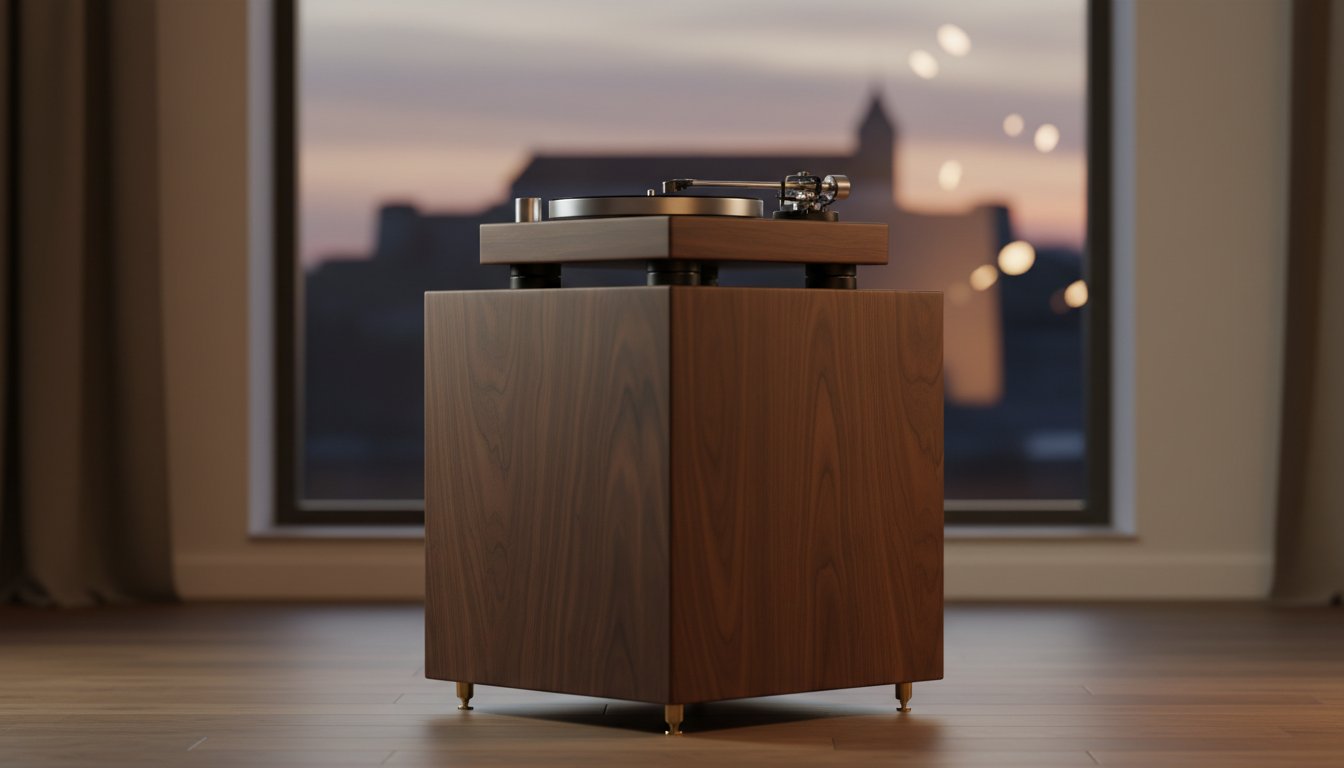
Medium Density Fibreboard is often marketed as a neutral base, yet its composition tells a different story. MDF consists of approximately 82% wood fibers and 18% synthetic resin glue. This high glue content creates a uniform, dense mass that stores kinetic energy rather than dissipating it. When an amplifier's transformer vibrates, MDF acts like a resonant sponge, holding onto those micro-vibrations and releasing them back into the equipment over time. A 40mm slab of Walnut dissipates energy significantly faster than standard MDF, preventing the "smearing" of fine musical details. Without the structural rigidity of solid timber, veneer-covered composites often sag under the 25kg weight of a heavy tube power amp, further compromising the system's mechanical integrity.
Solid Hardwood: The Natural Dampener
Nature's design offers a complexity that factory-made boards cannot replicate. The cellular structure of hardwoods like Oak and Ash contains microscopic air pockets and varying grain densities. These irregularities break up standing waves by forcing them through a maze of organic fibers, converting mechanical vibration into trace amounts of heat. It's a living material that harmonizes with acoustic waves. Mass also plays a critical role. A solid 4cm timber shelf provides the inertial base necessary to ground sensitive components like turntables. This stability ensures that the only movement in your room comes from the speaker drivers.
Beyond the technical specs, the presence of handcrafted wood creates a sanctuary. It's where sound & style are One, offering a tactile connection to the music that cold metal or plastic cannot provide. You can explore how these elements come together in a custom hi-fi rack designed for your specific setup. Investing in solid timber isn't just about aesthetics; it's about providing your equipment with the silence it needs to perform. When you remove the mechanical chatter of inferior materials, the soundstage opens up, revealing the true passion of the original recording.

Coupling vs. Decoupling: Balancing Isolation and Rigidity
Achieving sonic purity requires a deliberate choice between two distinct mechanical philosophies. Coupling creates a rigid, high-pressure path between your equipment and the ground. By using precision spikes, you anchor the component to the earth, allowing internal kinetic energy to drain away from the chassis. Decoupling takes the opposite approach. It uses compliant materials like specialized elastomers or spring systems to float the equipment. This blocks incoming floor-borne vibrations from reaching sensitive internal circuits. Most effective audiophile vibration control solutions require a nuanced understanding of how these forces interact within your specific room.
Many enthusiasts discuss the mechanical diode theory. This concept suggests that energy only travels one way through a spike, moving from the equipment down to the floor. Physics tells a more complex story. Sir Isaac Newton’s third law of motion, established in 1687, dictates that forces act in pairs. Energy actually moves in both directions through a solid contact point. The real benefit of a spike comes from the extreme pressure at its tip. This creates a mechanical impedance mismatch. It doesn't stop energy from returning, but it significantly alters how that energy interacts with the component, resulting in a tighter, more defined soundstage.
The most successful listening rooms don't rely on a single method. They find a hybrid balance. Audiophiles often find the most success by coupling their speakers to the floor for bass precision while decoupling their preamps to prevent microphonics. This tailored approach ensures the system remains CUSTOM | HANDMADE | NATURAL | AUTHENTIC to the listener's needs.
The Role of Precision-Machined Spikes and Feet
Brass and 303-grade stainless steel spikes concentrate mass to a microscopic point. For a 50kg floor-standing speaker, coupling to a solid concrete subfloor is essential. It prevents the cabinet from microscopic rocking during heavy driver excursion. If you have delicate hardwood, use precision floor protectors. These machined discs preserve your floor's finish while maintaining the rigid connection required for low-end clarity. This setup ensures that every watt of energy moves the air, not the speaker cabinet.
Isolation Platforms for Sensitive Analog Gear
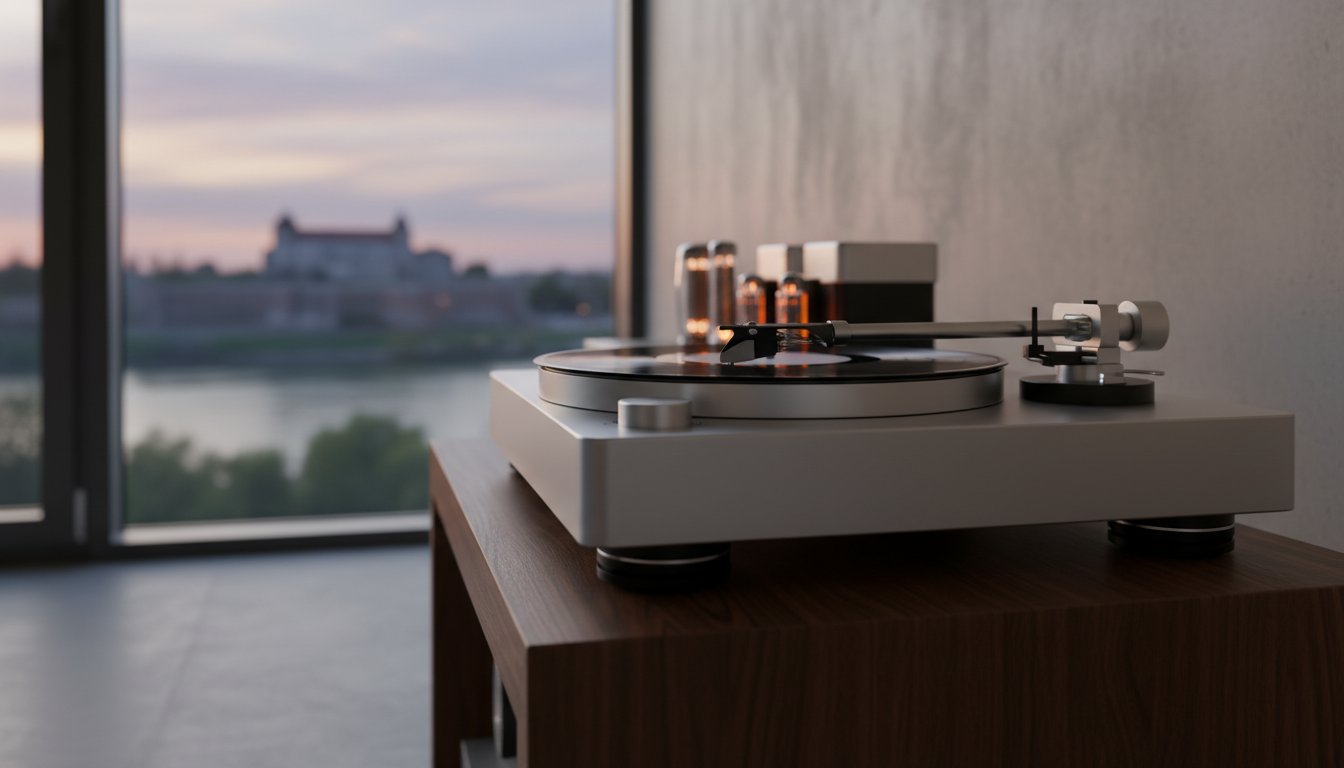
Turntables require a different strategy than a heavy power amp. A stylus tracks grooves at a microscopic level, making it vulnerable to any footfall or motor noise. Mass-loading a shelf with high-density materials can lower the resonant frequency below 8Hz, which is well below the threshold of human hearing. For listeners in homes with 1920s-era wooden floors, a hybrid platform is the best solution. Combining a heavy natural wood base with decoupling feet creates a stable sanctuary for your vinyl. It is the perfect example of where sound & style are one.
Designing a Vibration-Free Foundation for Your Audio System
Building a high-fidelity environment starts with the physical architecture of your setup. Component placement is the first line of defense. Heavy power amplifiers, which often feature massive toroidal transformers, belong on the lowest tiers of your rack. This placement lowers the center of gravity for the entire structure, reducing the risk of the rack acting like a mechanical pendulum. By anchoring the heaviest mass closest to the floor, you create a stable anchor point for the more sensitive source components above.
Your choice between modular and fixed-frame designs dictates how energy moves through your system. Modular racks offer the advantage of mechanical decoupling between each individual shelf, effectively breaking the transmission path of resonance. Fixed-frame designs prioritize absolute rigidity, which is often preferred for systems where high-mass components need a unified, non-resonant skeleton. Implementing professional audiophile vibration control solutions means choosing a structure that complements your room's specific acoustic energy.
Cable management is a frequently ignored vector for noise. Cables act as mechanical bridges, carrying "cable-borne" vibrations from the floor or speakers directly into the chassis of your equipment. Keeping power and signal cables separated and suspended prevents these micro-vibrations from polluting the signal path. Distance also matters. Placing your rack at least 1.5 meters away from subwoofers prevents the intense air pressure changes from physically vibrating the sensitive internal circuitry of your preamplifier or DAC.
Step-by-Step System Leveling and Stabilization
Precision is the hallmark of a true audiophile. Use a high-quality spirit level to ensure every tier is perfectly horizontal. For turntable owners, this isn't just about aesthetics; a platter that's off-level by even 0.5 degrees creates uneven anti-skate forces and tracking errors. A perfectly level shelf prevents asymmetrical pressure on the spindle, significantly reducing long-term bearing wear and mechanical noise. Check the weight distribution across all four rack feet to ensure the load is balanced, which prevents any single point from becoming a resonant "hot spot."
Optimizing the Small Listening Room
Small rooms present unique challenges where speakers are often forced into close proximity with the equipment rack. In these tight quarters, verticality is your ally. Using Slim HiFi Racks allows you to maintain a high-performance isolation footprint without crowding your living space. For those with suspended timber floors, a wall-mounted shelf for the record player is often the only way to achieve 100% decoupling from footfall interference. These solutions prove that you don't need a sprawling auditorium to achieve sonic purity; you simply need the right foundation.
Discover how our CUSTOM | HANDMADE | NATURAL | AUTHENTIC designs can transform your listening experience. Explore the Myro HiFi Rack collection where sound and style are one.
Handcrafted Excellence: The HiFi Rack Serbian Tradition
Serbian woodworking isn't just a trade; it's a legacy passed down through generations. At Myro HiFi Rack, we embrace the 'slow-made' philosophy. This approach rejects the frantic pace of modern manufacturing. Instead, we focus on the patient selection of timber and the meticulous shaping of every joint. This multi-generational expertise allows us to understand wood as a living medium. It's a material that interacts with sound in ways that machines cannot calculate. Every rack we produce carries the soul of the artisan who carved it.
Our commitment to quality is uncompromising. You'll find NO MDF and NO VENEER in our workshop. Mass-market alternatives often hide cheap fillers under a thin layer of wood. We believe this compromises the structural integrity required for effective audiophile vibration control solutions. Solid hardwood possesses a natural cell structure that provides superior damping. It doesn't just hold your equipment; it treats the sound by absorbing micro-vibrations before they reach your ears. This integrity ensures your furniture remains as timeless as your music collection.
Bespoke manufacturing is at the heart of our process. We tailor dimensions and wood species to the specific requirements of your gear. High-end audio components vary significantly in weight and thermal output. A rack designed for a 50kg power amplifier needs a different density than one supporting a lightweight streamer. We bridge the gap between engineering and art. Where sound & style are One, the rack becomes a vital part of the signal chain. It's an instrument designed to help you live your passion.
The Reference Series: Our Ultimate Vibration Solution
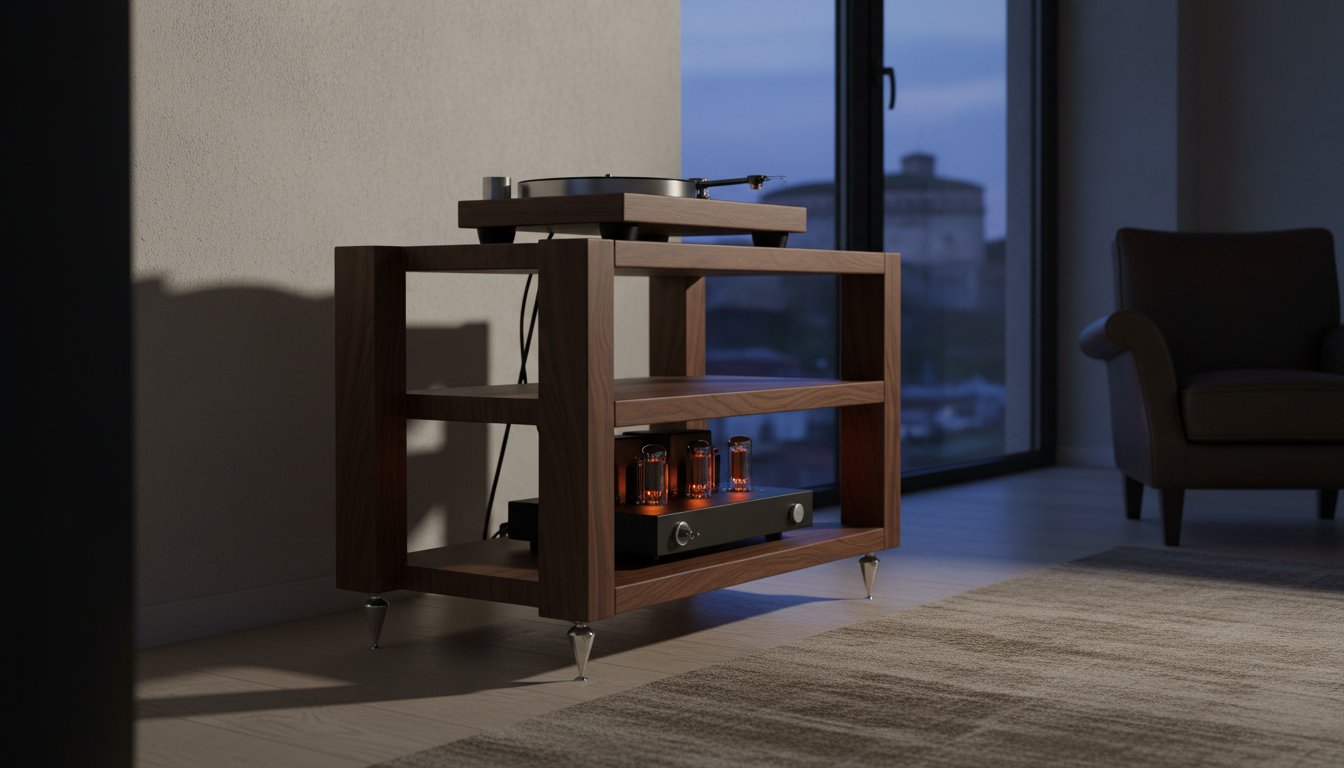
The Reference HiFi Rack is the pinnacle of our structural architecture. It features massive solid hardwood tiers that act as the primary defense against resonance. These tiers work in tandem with precision-machined spikes. The spikes decouple each level, ensuring that energy from a turntable motor doesn't migrate to a sensitive pre-amplifier. This design embodies our 'Natural' and 'Authentic' pillars. It provides a grounded, soulful foundation for any hi-end equipment setup, allowing for a blacker background and improved soundstage depth.
CUSTOM | HANDMADE | NATURAL | AUTHENTIC
Owning a piece of Serbian heritage offers an emotional payoff that mass-produced furniture can't match. Each rack tells a story of craftsmanship and sustainability. Solid wood is built to last a lifetime, making it a responsible choice for the environment and your home sanctuary. These pieces are intended to be passed down, much like the music you love. They provide the quiet confidence needed to elevate your listening experience. It's more than a purchase; it's a partnership in your pursuit of sonic perfection.
Ready to transform your listening room? Explore our Reference, Classic, and Slim HiFi Racks and find the perfect match for your system.
The Path to Uncompromising Sound
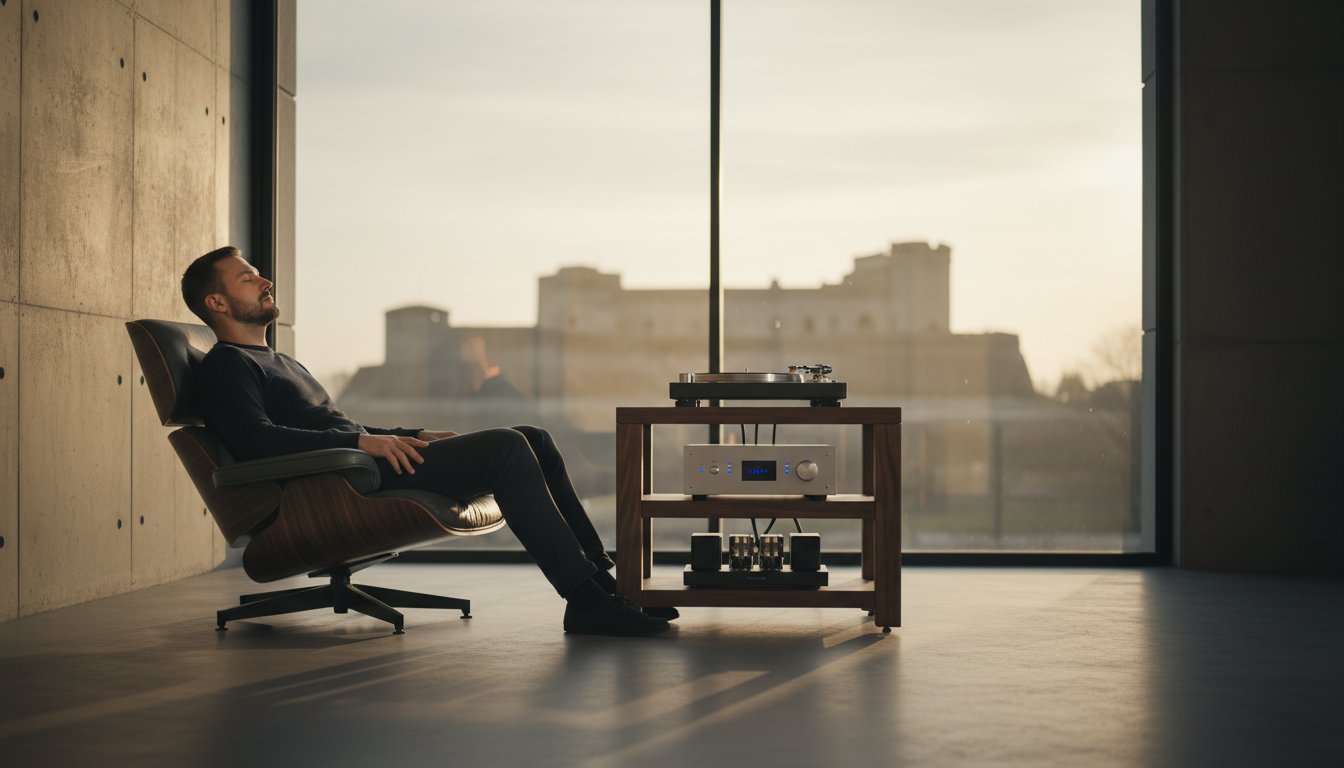
Your audio system is a gateway to the music you love. Achieving true sonic purity requires more than just high-end electronics; it demands a foundation that respects the complex physics of sound. By prioritizing solid hardwood over the acoustic limitations of MDF or metal, you effectively eliminate the micro-vibrations that blur instrumental detail. Integrating professional audiophile vibration control solutions isn't just about stability; it's about revealing the hidden layers of your vinyl and digital collections.
In Novi Sad, Serbia, we apply multi-generational woodworking expertise to every rack we build. We use 100% solid hardwood construction to ensure your components sit on a natural, resonant-free surface. This dedication to authentic craftsmanship allows your system to perform at its peak, bridging the gap between technical precision and emotional resonance. It's the definitive way to honor your passion for high-fidelity audio and create a sanctuary for your listening sessions.
Discover Your System's True Potential with a Handcrafted HiFi Rack
Experience the harmony of form and function in your own home.
Frequently Asked Questions
Is a dedicated HiFi rack really better than a standard bookshelf?
A dedicated HiFi rack is significantly better because it's engineered to manage mechanical resonance rather than simply holding weight. Standard bookshelves often feature hollow cores or thin 15mm laminates that vibrate at frequencies between 50Hz and 100Hz, which colors your music. Our solid wood structures provide the necessary mass to ground these vibrations, ensuring your listening experience remains pure and authentic.
Should I use spikes or rubber feet for my audio equipment?
You should use spikes on carpeted floors to couple the rack to the subfloor, and high-density rubber feet on hard surfaces to decouple and absorb vibrations. Spikes concentrate weight onto a point less than 1mm wide to drain energy away from the components. Choosing the right interface is a vital part of effective audiophile vibration control solutions for any high-end system.
Does the type of wood used in a HiFi rack change the sound signature?
The density of the wood directly influences the damping characteristics and the final sonic profile of your system. Hardwoods like Oak or Ash possess a Janka hardness rating exceeding 1,200 lbf, which delivers a fast, detailed, and transparent sound. We select specific grain patterns to ensure that sound and style are one, creating a natural foundation for your passion.
How do I stop my turntable from skipping when I walk across the room?
You can stop turntable skipping by migrating your deck to a high-mass solid wood platform or a wall-mounted shelf. Footfall vibrations typically resonate at low frequencies between 0.5Hz and 5Hz, which standard furniture fails to dissipate. A 40mm thick handmade shelf provides the structural inertia required to keep the needle stable and locked in the groove.
Why does HiFi Rack avoid using MDF and veneer in their products?
We avoid MDF because it lacks the organic cellular structure required for natural resonance control and long-term durability. MDF is a composite of compressed dust and synthetic glues, whereas solid timber provides 20% better internal damping properties. Our commitment to being authentic and natural means we only use real wood to treat your equipment with the respect it deserves.
Can a high-quality rack improve the performance of digital components like DACs?
A high-quality rack improves DAC performance by minimizing microphonic interference within sensitive clock circuits and oscillators. These internal components are sensitive to vibrations as small as 0.001g, which can introduce timing jitter into the signal. Implementing audiophile vibration control solutions ensures your digital-to-analog conversion remains precise, revealing the fine details in every recording.
What is the difference between the Reference and Classic HiFi rack models?
The Reference model features 50mm thick shelves for maximum isolation, while the Classic model utilizes 40mm shelves for a more streamlined aesthetic. The Reference series offers a 25% increase in total mass to support the most demanding hi-end equipment. Both designs follow our custom and handmade philosophy, ensuring your setup feels like a personal sanctuary for sound.
How much weight can a solid wood HiFi rack safely support?
A solid wood HiFi rack safely supports 80kg per shelf when built with traditional, reinforced joinery. We've verified that our 40mm Oak shelves can hold a 100kg load without any measurable bowing over a 600mm span. This level of integrity ensures that your heavy tube amplifiers and power supplies stay perfectly level and secure for a lifetime of listening.