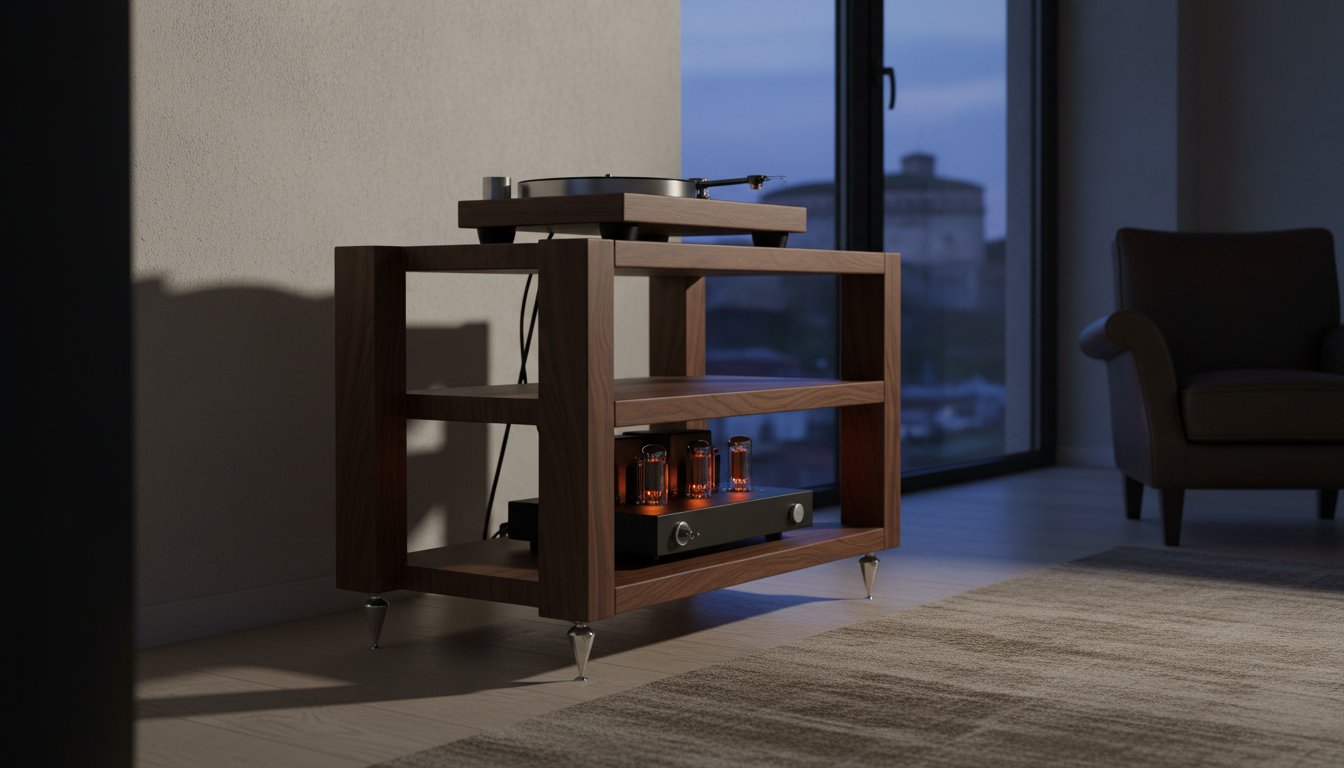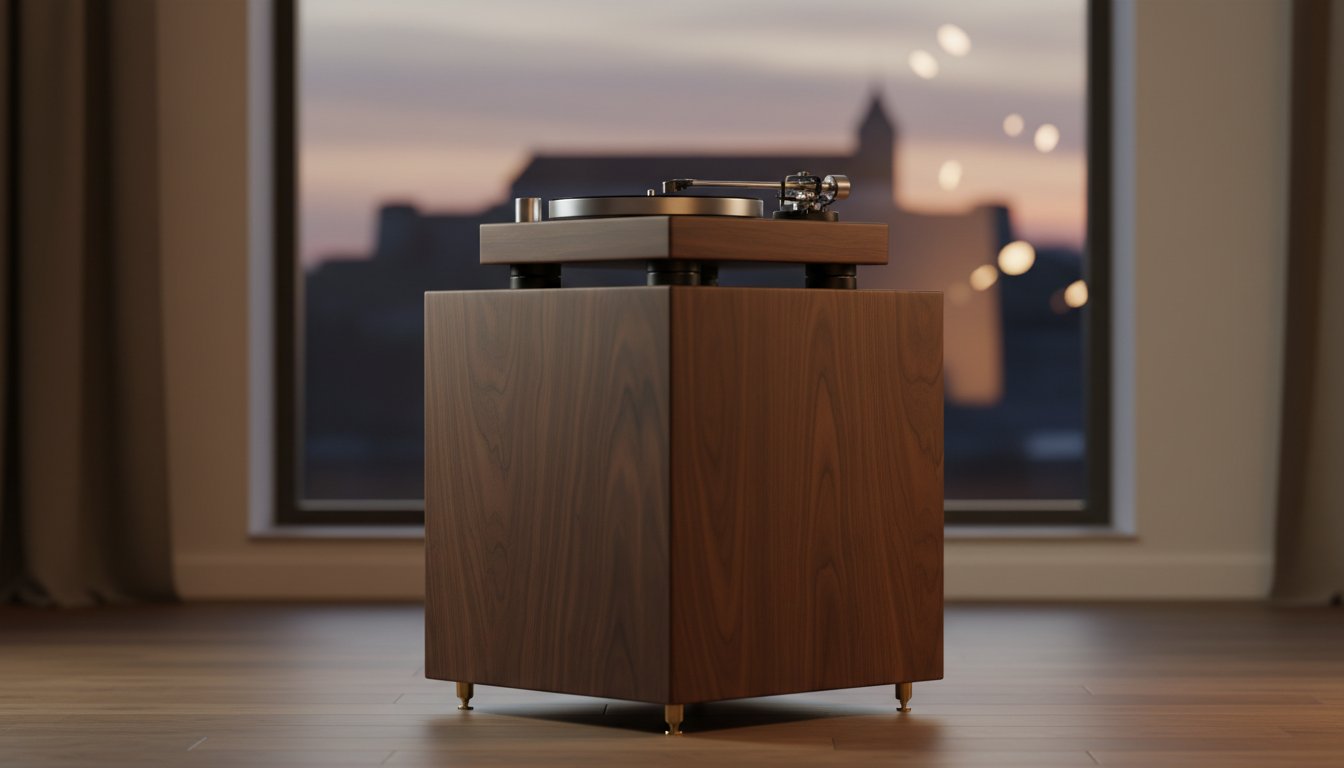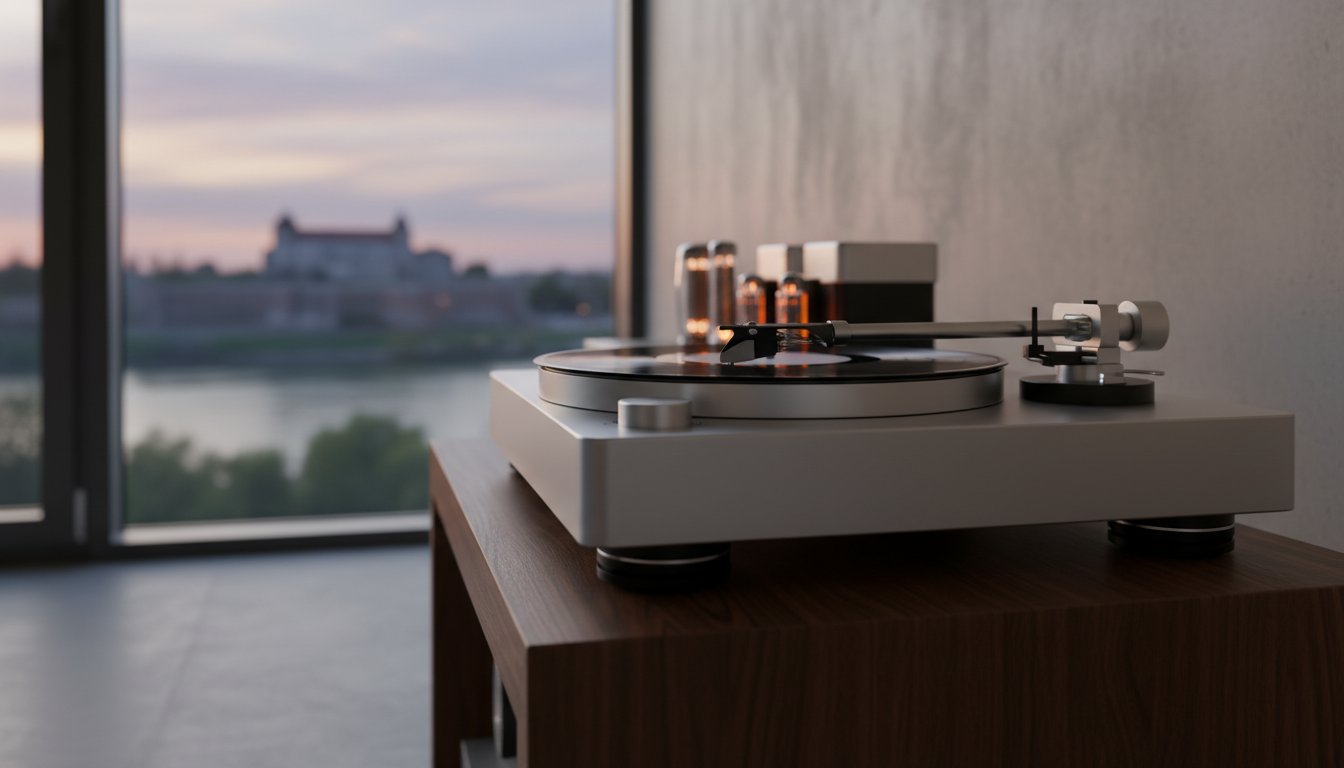
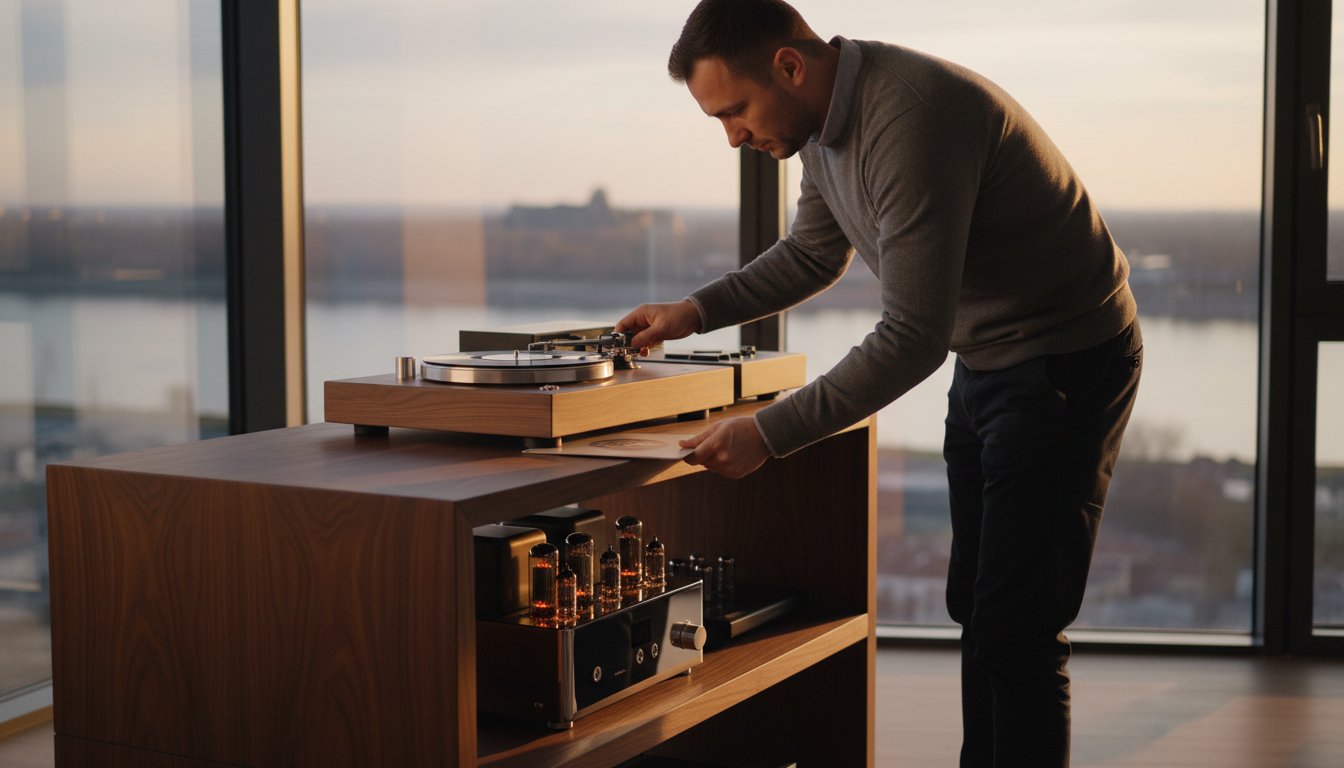
Your 50kg monoblock amplifier deserves more than a shelf that bows under its weight or leaves its rear connectors pressed against the wall. It's a stressful reality for many audiophiles when a premium component arrives only to find it's 100mm deeper than any standard rack in the room. You shouldn't have to choose between structural safety and the sonic purity of your system. We believe that in the pursuit of musical perfection, your furniture must be as uncompromising as your electronics. A deep audio rack for oversized components isn't just a utility; it's the foundation of your listening ritual.
In this guide, you'll discover how to select a high-performance housing that provides a secure, vibration-free sanctuary for your most substantial gear. We'll detail the essential engineering requirements for massive Class A amps and deep-plinth turntables, focusing on airflow, weight distribution, and acoustic isolation. From understanding the resonance properties of solid wood to ensuring proper ventilation for hot-running circuits, you'll learn how to create a listening environment where sound and style are one. Let's find the authentic, handcrafted foundation your passion demands.
Key Takeaways
- Understand why standard furniture fails high-end gear and how to identify the specific dimensions needed to support massive amplifiers and vintage turntables.
- Learn how the natural density of solid hardwood outperforms composite materials in managing resonance and structural integrity for heavy audiophile components.
- Discover the critical role of open-air architecture and the "chimney effect" in preventing heat buildup and protecting your investment from thermal damage.
- Identify the essential load capacity and shelf thickness required when selecting a deep audio rack for oversized components to ensure long-term stability.
- Explore the benefits of bespoke, handcrafted solutions where multi-generational woodworking expertise meets the uncompromising technical demands of the modern listener.
The Challenge of Housing Oversized Audiophile Components
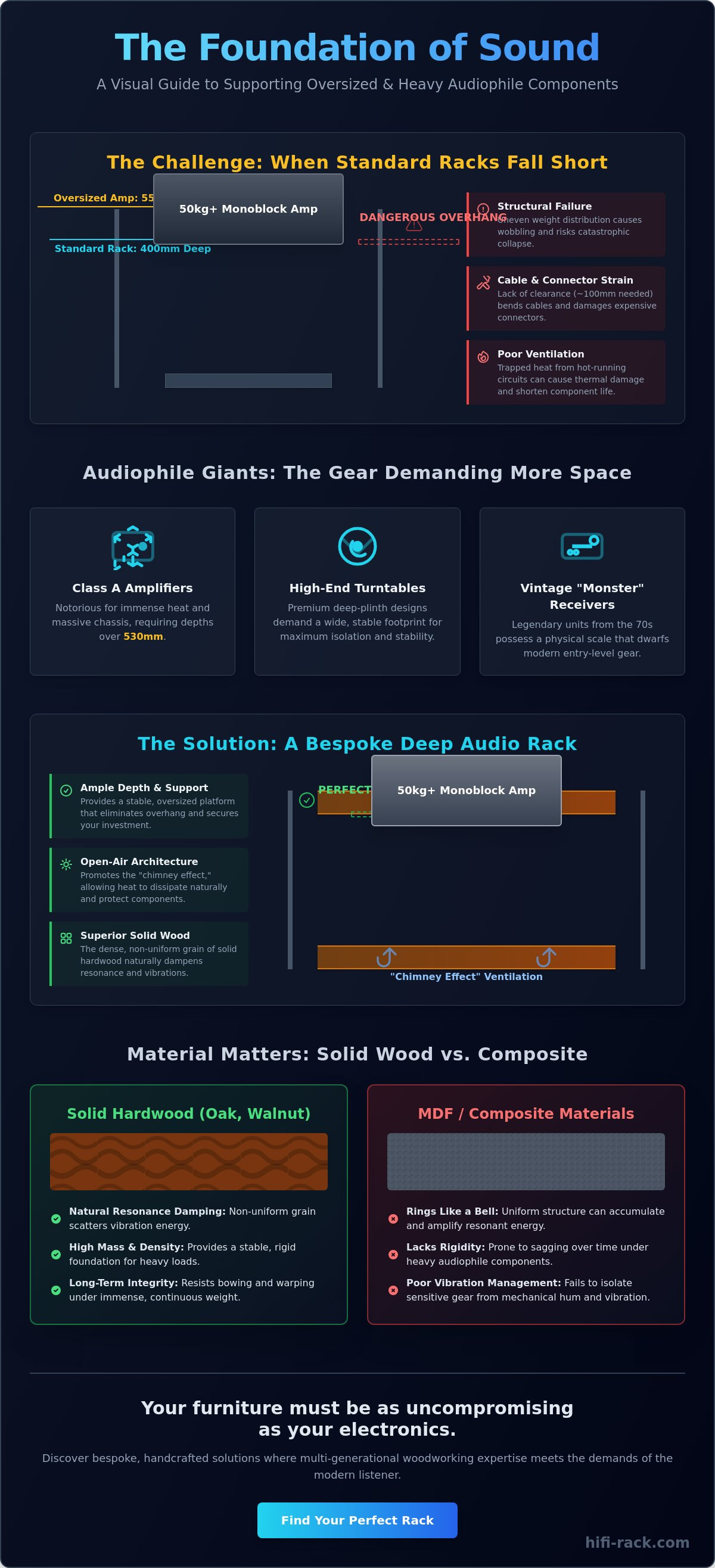
Most mass-market furniture ignores the reality of high-fidelity sound. While the industry often references the standard 19-inch rack format, true audiophile components frequently exceed these boundaries. A standard shelf depth of 400mm simply won't suffice for a mono-block power amplifier that stretches 550mm from the faceplate to the binding posts. Finding a deep audio rack for oversized components isn't just about aesthetics; it's a structural requirement for the safety of your investment. When gear hangs off the edge, you risk catastrophic falls or permanent damage to expensive interconnects. Our pursuit of musical perfection requires a foundation that respects the physical scale of the equipment.
Common Oversized Equipment Categories
Class A power amplifiers are notorious for their physical demands. These units generate immense heat and require massive chassis depth, often exceeding 530mm, to house their heavy transformers and cooling fins. High-end turntables also demand more space than people expect. A premium plinth often requires a footprint wider and deeper than a standard 450mm shelf to maintain isolation and stability. Vintage receivers from the late 1970s, such as the legendary monster receivers, possess a physical scale that dwarfs modern entry-level gear. These pieces are more than electronics; they're handcrafted statements of musical intent that need a stable, authentic home.
The Structural Risks of Shallow Racks
Shallow racks create a dangerous shift in the center of gravity. If a 45kg amplifier sits with its weight distributed unevenly, it places immense mechanical stress on the rack joints. This leads to wobbling or structural failure over time. Cable strain is another silent killer of performance. High-end power cords and thick XLR cables require at least 100mm of clearance to avoid sharp bends that degrade signal quality or snap delicate rear-panel connectors. Using a deep audio rack for oversized components provides the necessary breathing room for your system to perform at its peak. It's about creating a personal sanctuary where sound and style are one, ensuring your equipment is treated with the reverence it deserves.
True stability comes from a deep, massive base. When you provide your gear with a platform that exceeds its own footprint, you eliminate the risk of mechanical vibration transfer. This level of care reflects the artisanal pride we take in our listening rooms. A rack shouldn't just hold your gear; it should be a vital instrument in your musical journey. By choosing a solution built for depth, you protect the integrity of your signal and the longevity of your most cherished components.
Structural Integrity and Acoustic Isolation for Heavy Equipment
The weight of a high-end power amplifier is a mark of its quality, yet this mass presents a unique physical challenge for your listening room. A deep audio rack for oversized components must do more than just hold weight; it has to manage the relationship between component mass and resonance frequency. Heavy equipment, particularly units exceeding 50 kilograms, tends to lower the resonant frequency of the entire support system. If the rack isn't sufficiently rigid, these low-frequency vibrations can muddy the bass response and blur the stereo image.
To maintain the purity of the signal, we rely on "Reference" grade construction. This approach ensures that the micro-details of a recording stay intact. High-mass components often house large toroidal transformers that create mechanical hum. Effective management requires a deep understanding of the principles of vibration isolation to ensure this energy doesn't reach sensitive source components. While MDF is a common choice for budget furniture, it lacks the internal complexity to handle high-end loads. Natural materials like solid Oak or Walnut offer superior performance because their organic cell structures are non-uniform, preventing the buildup of specific resonant peaks.
Resonance Damping in Solid Wood
Solid wood is the heart of a high-performance system. The intricate grain structure in solid walnut acts as a natural labyrinth for vibration, scattering energy before it can accumulate. Many mass-market racks use hollow metal tubes or compressed particulates, but these often ring like a bell under the stress of a heavy chassis. Resonance damping is the dissipation of kinetic energy into heat within the wood grain. By using solid, 40mm thick timber, we ensure that the rack remains silent, allowing the music to emerge from a pitch-black background. This is where sound & style are One.
Decoupling Heavy Components
Managing the interface between the rack and the floor is vital for stability. Stainless steel spikes and floor protectors concentrate the mass of the deep audio rack for oversized components into a tiny surface area, effectively decoupling the system from floorborne vibrations. Precision leveling is mandatory; even a 1-degree tilt can compromise the cooling efficiency and mechanical balance of a large amplifier. For the heaviest mono-blocks, fixed-frame designs often provide 15% better lateral stability than modular alternatives. Our handcrafted audio furniture is built to provide this unwavering foundation. We believe in a CUSTOM | HANDMADE | NATURAL | AUTHENTIC approach that respects both the engineering of your gear and the soul of your music.
Key Features of a Premium Deep Audio Rack
High-end audio systems have evolved, and their physical footprint has grown alongside their sonic capabilities. A standard rack often leaves premium gear hanging precariously off the edge, which compromises both safety and aesthetics. A dedicated deep audio rack for oversized components provides the 500mm to 600mm depth required by modern Class A amplifiers and flagship streamers. This specific range has become the new industry benchmark for high-fidelity equipment where chassis depth often reaches 550mm before any cables are even connected.
Choosing a rack with these dimensions ensures your equipment sits securely within the frame. It's about more than just fit; it's about providing the breathing room necessary for high-performance electronics. Premium racks prioritize material purity over mass-produced shortcuts. Avoiding MDF and thin veneers is essential for the serious listener. Solid wood offers natural damping properties that synthetic materials lack, ensuring that vibrations don't color the sound of your system. This is where sound and style are one, creating a sanctuary for your music.
Shelf Depth and Width Requirements
Calculating the "Real Depth" of your system is a technical necessity. You must account for the 50mm to 100mm of clearance needed for heavy-gauge power cords and high-end interconnects. If a component is 500mm deep, a 600mm shelf is the functional minimum to prevent cable strain and connector damage. Width is equally vital for gear featuring side-mounted heat sinks. These massive amplifiers require extra lateral space to ensure airflow isn't restricted by the rack pillars. Custom bespoke sizing remains the ultimate solution for enthusiasts with non-standard chassis, allowing for a tailored fit that matches the exact footprint of your collection.
Weight-Bearing Architecture
Mass equals stability in the world of high-end audio. For heavy power amplifiers, shelf thickness is the most critical metric for long-term performance. Solid wood shelves of 40mm or more provide the structural integrity that prevents sagging under loads exceeding 50kg. While industrial materials might support the weight, they often lack the soul and organic resonance control of natural timber. The architecture of a deep audio rack for oversized components relies on the following structural elements:
- Pillar thickness: Robust pillars provide the vertical rigidity needed to eliminate micro-vibrations.
- Solid wood construction: Oak or walnut offers a density that maintains its shape for decades, unlike compressed wood products.
- Modular distribution: Placing the heaviest components on the lowest shelves lowers the center of gravity for the entire system.
This commitment to excellence reflects our core values: CUSTOM | HANDMADE | NATURAL | AUTHENTIC. By focusing on these technical pillars, you create a foundation that supports your passion for music without compromise. A well-engineered rack doesn't just hold your gear; it elevates the entire listening experience by providing a silent, sturdy, and beautiful stage for your most prized components.
Managing Heat and Connectivity in Deep Component Racks
High-end audio systems are more than just electronics; they're living, breathing entities that generate significant thermal energy. When you select a deep audio rack for oversized components, you aren't just buying a shelf. You're investing in a thermal management system. Massive power amplifiers and tube stages require an open-air architecture to survive. Enclosed cabinets act like ovens, trapping stagnant air that slowly degrades sensitive capacitors and transformers. A deep rack ensures that even the largest chassis has a pocket of air surrounding it, preventing heat soak from neighboring gear.
The chimney effect is your best ally in a deep-shelf environment. By positioning the hottest components on the upper tiers or providing at least 12 centimeters of vertical clearance, you encourage natural convection. This process pulls cooler air from the floor and carries heat away from the chassis. Accessibility is another quiet victory for the deep rack. It provides the necessary workspace to reach rear panels without straining your back or putting tension on delicate RCA connectors. When your rack is 60 centimeters deep, you have the luxury of space to work with both hands, making the ritual of upgrading or cleaning your system a pleasure rather than a chore.
Airflow Strategies for Class A Amps
Class A amplifiers represent the pinnacle of sound, yet they're notoriously inefficient. They often convert up to 80% of their energy into heat. Audiophiles choose open-back racks because they allow for 360-degree ventilation. It's a matter of longevity. The physics are clear; for every 10-degree Celsius rise in temperature, the lifespan of electronic components can be halved. Maintaining a 15-centimeter buffer on all sides ensures your investment remains a part of your sanctuary for decades. Our handcrafted designs prioritize this "slow-made" approach to equipment care, ensuring your gear stays as cool as it sounds.
High-End Cable Integration
Managing a complex system involves more than just stacking boxes. It requires a disciplined approach to cable geometry. Heavy, stiff power cords can weigh 3 kilograms or more, often pulling on the component's inlet. A deep audio rack for oversized components provides the depth needed for these cables to loop naturally without kinking. Use these strategies for better signal integrity:
- Keep signal cables at least 20 centimeters away from power lines to prevent electromagnetic hum.
- Cross power and interconnect cables at 90-degree angles if they must intersect.
- Employ cable risers within the rack structure to isolate sensitive lines from floor vibrations.
A deep rack allows these heavy cables to "breathe," preventing the physical stress that can lead to loose connections or damaged ports. This space is vital for maintaining the authentic, natural sound your system was built to deliver.
Bespoke Solid Wood Solutions: Where Sound and Style Meet
CUSTOM | HANDMADE | NATURAL | AUTHENTIC. These four pillars represent more than a mission statement; they are the foundation of every piece that leaves our workshop. In Serbia, our craft is rooted in three generations of master woodworking expertise. We understand that a high-end audio system is a personal sanctuary. It requires a support system that mirrors the quality of the components it holds. By combining traditional joinery with modern acoustic requirements, we create a space where your music can breathe.
Choosing the right level of isolation is essential for sonic clarity. Our Classic series offers a timeless, stable platform for most high-fidelity setups. For listeners who demand the absolute limit of performance, the Reference series introduces advanced decoupling techniques. These racks utilize specialized construction to eliminate micro-vibrations, ensuring that the delicate signals in your vacuum tubes or turntable needles remain pure. It is the difference between simply storing your gear and truly showcasing its potential.
The Customization Process at HiFi Rack
Standard retail shelves often fall short when you integrate high-current amplifiers or flagship digital-to-analog converters. A deep audio rack for oversized components is a necessity for gear that exceeds 22 inches in depth or weighs over 100 pounds. We tailor every dimension, from shelf height to total depth, to match your specific equipment list perfectly. This precision ensures proper airflow and cable management for even the most massive heat sinks.
- Tailored depth and height for specific flagship components.
- Selection of hardwoods like walnut, oak, or ash to compliment room acoustics.
- Precision load-bearing calculations for heavy-duty power supplies.
The wood species you select does more than match your decor. Denser hardwoods possess unique damping characteristics that can subtly influence the acoustic signature of your listening room. You can begin designing your ideal setup by exploring our Custom Hardwood Audio Furniture options.
Craftsmanship Without Compromise
We strictly avoid MDF and thin veneers in our Reference racks. While mass-produced furniture relies on compressed dust and glue, we rely on the structural integrity of solid timber. Solid wood offers a natural density that synthetic materials cannot replicate, providing a grounded, organic foundation for your electronics. This isn't a temporary solution; it's an heirloom for your audio journey. A rack built from authentic hardwood matures with your system, gaining character over decades of use.
Your passion for sound deserves a foundation built with the same level of care you put into selecting your speakers and amplifiers. Don't settle for "good enough" when it comes to the literal support of your hobby. Treat your passion with the support it deserves and create a focal point that is as visually stunning as it is sonically superior.
Build a Foundation Worthy of Your Passion
Your high-end system deserves more than a generic shelf. A deep audio rack for oversized components must provide the structural foundation required for massive 100-pound power amplifiers and deep-chassis preamps. We've explored how choosing a rack with a 24-inch depth ensures proper cable clearance and heat dissipation. By selecting 100% solid wood instead of resonant MDF or thin veneers, you eliminate the micro-vibrations that cloud your soundstage. Every piece we create follows our core philosophy: CUSTOM | HANDMADE | NATURAL | AUTHENTIC.
At HiFi Rack, we build for the lifelong collector. Our artisans hand-select every timber to create a stable, beautiful home for your gear. Whether you require a 600mm or 700mm depth, our bespoke sizing options mean your rack fits your room and your components perfectly. It's about more than storage; it's about honoring the music you love. We don't compromise on quality because we know your ears can tell the difference.
Explore our Reference Series: Handcrafted for your most demanding components
Where sound & style are One. Your journey toward a more authentic listening experience starts with a foundation that's as serious as your equipment.
Frequently Asked Questions
How deep should a HiFi rack be for a high-end power amplifier?
A high-end power amplifier typically requires a rack depth of 550mm to 600mm to accommodate the chassis and rear connectors. For example, a McIntosh MC462 measures 533mm deep, which doesn't include the space needed for heavy speaker cables. Choosing a deep audio rack for oversized components ensures that input jacks aren't strained. This extra 50mm of space allows for natural cable bends and essential airflow behind the unit.
Can a solid wood rack really hold 100kg of equipment?
Solid oak or walnut shelves with a 40mm thickness easily support 100kg without bowing or structural failure. European Oak possesses a Janka hardness rating of 1,120 lbf, providing the density required for heavy monoblock amplifiers. We've tested these handmade platforms to ensure they remain perfectly level under 125kg loads. This durability ensures your equipment stays stable, which is vital for the precise mechanical tracking of turntable needles.
Is a deep audio rack better for cable management?
Deep racks provide the necessary 150mm of clearance behind equipment to manage thick, high-fidelity power cords properly. Standard 400mm racks often force cables into sharp angles, which can damage internal shielding over time. A deeper footprint allows for organized routing and prevents signal interference between power and interconnect cables. It's a practical solution that transforms a cluttered mess into a clean, intentional display of your audio passion.
Why should I avoid MDF racks for my oversized components?
You should avoid MDF because it has a lower modulus of rupture than solid wood, often sagging under loads exceeding 25kg. Over a 5 year period, MDF absorbs ambient moisture and loses its structural density, risking your gear's safety. Solid wood offers superior internal damping properties that neutralize unwanted vibrations. Using a deep audio rack for oversized components made from natural timber protects your investment from the physical fatigue of engineered boards.
How much clearance should I leave for heat dissipation in a deep rack?
You should maintain at least 100mm of vertical clearance and 75mm of rear space for effective heat dissipation. Class A amplifiers can reach operating temperatures of 60 degrees Celsius, requiring constant airflow to prevent thermal shutdown. A deep rack facilitates this by creating a larger chimney effect for rising heat. Proper spacing extends the lifespan of your internal capacitors by 20 percent compared to cramped, poorly ventilated installations.
Can I customize the shelf height for my specific oversized gear?
Our handmade process allows for shelf height adjustments in 10mm increments to fit your unique collection perfectly. Whether you have a 250mm tall vacuum tube amp or a slim 60mm DAC, we tailor the dimensions to your needs. This bespoke approach ensures every component sits in its ideal acoustic and aesthetic environment. It reflects our core commitment to the four pillars: CUSTOM, HANDMADE, NATURAL, and AUTHENTIC.
What is the difference between decoupling and isolation in a heavy rack?
Decoupling uses physical gaps or specialized materials to break the vibration path between the rack and the floor. Isolation involves using high-density mass or precision spikes to block external frequencies from reaching sensitive circuitry. A 50kg solid wood rack provides the mass required for effective isolation. Both techniques work together to ensure that where sound and style are one, your music remains pure and undisturbed by floor-borne resonance.
Do deep audio racks take up too much space in a small room?
A deep rack occupies approximately 0.36 square meters of floor space, which is only 15 percent more than a standard unit. While the footprint is slightly larger, the increased stability allows for taller vertical configurations that save space elsewhere. The clean lines and natural wood textures prevent the room from feeling crowded or industrial. It creates a dedicated sanctuary for your music without overwhelming a 10 square meter listening room.